

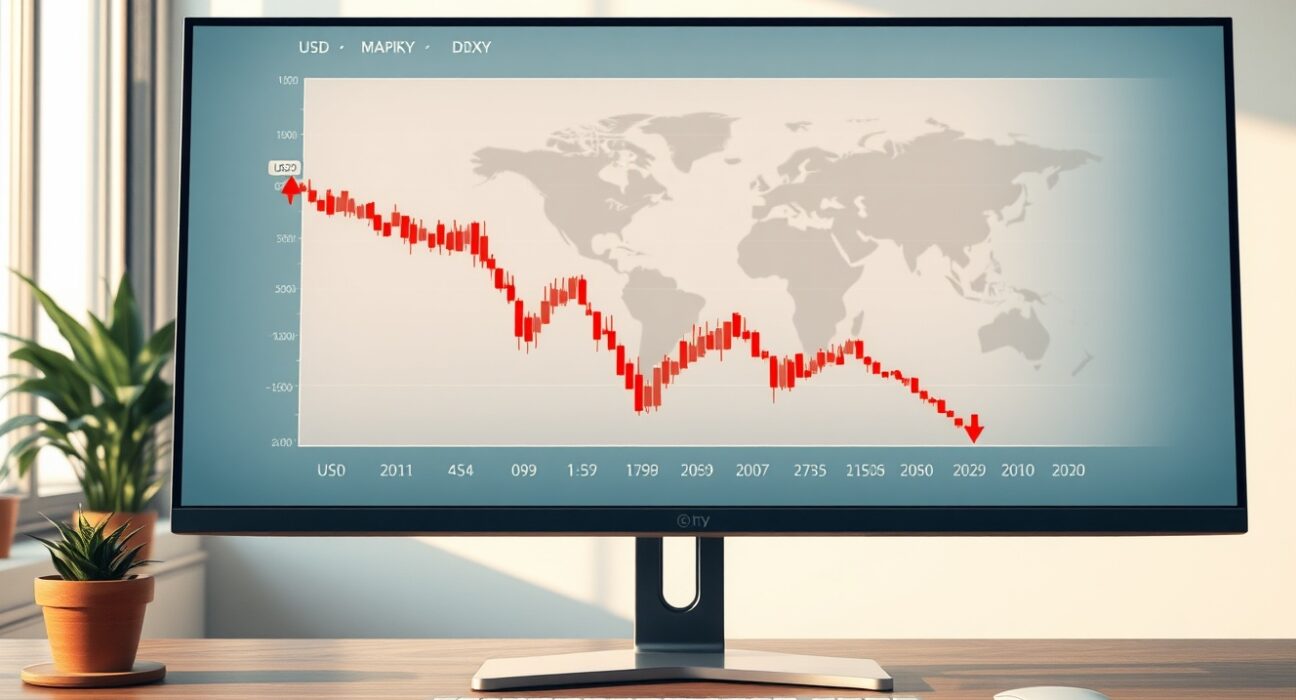
NEW YORK, March 2025 – The U.S. dollar extended its sharp decline in global trading sessions today, pressured by a potent dual catalyst: burgeoning hopes for a diplomatic breakthrough between the United States and Iran and unexpectedly soft U.S. producer price data. Consequently, this development fueled a significant rotation into risk-sensitive assets and weighed heavily on the traditional safe-haven currency.
Dollar Decline Accelerates on Geopolitical Shift
Forex markets witnessed a pronounced sell-off in the U.S. Dollar Index (DXY). The index, which tracks the greenback against a basket of six major peers, fell over 0.8% to touch its lowest level in nearly three weeks. Analysts immediately linked the move to a notable de-escalation in rhetoric between Washington and Tehran. Senior officials from both nations reportedly engaged in back-channel communications facilitated by a European intermediary. Furthermore, market participants interpreted this development as a potential precursor to formal talks. This geopolitical thaw reduces the perceived global risk premium, thereby diminishing the dollar’s appeal as a shelter during uncertainty.
Historically, the dollar strengthens during periods of Middle East tension. However, the current shift signals a recalibration. “The market is pricing in a lower probability of supply disruptions and broader conflict,” noted a veteran currency strategist at a major global bank, whose analysis we are contextualizing here. “Capital is consequently flowing out of the dollar and into currencies linked to growth and commodities.” The euro and the Australian dollar were among the primary beneficiaries of this flow.
U.S. Producer Price Data Adds to Downward Pressure
Simultaneously, domestic economic data provided a fundamental argument for dollar weakness. The U.S. Producer Price Index (PPI) for final demand rose a mere 0.1% month-over-month in February, according to the Bureau of Labor Statistics. This figure came in well below the median economist forecast of 0.3%. On an annual basis, the increase slowed to 1.9%, marking the first reading below 2% since late 2023. This key inflation metric at the wholesale level suggests pipeline price pressures are continuing to moderate.
The implications for Federal Reserve policy are significant. The table below summarizes the recent PPI trend:
| Period | PPI MoM | PPI YoY | Core PPI YoY |
|---|---|---|---|
| Feb 2025 | +0.1% | +1.9% | +2.2% |
| Jan 2025 | +0.3% | +2.2% | +2.4% |
| Dec 2024 | +0.2% | +2.5% | +2.6% |
Market expectations for the timing and pace of future Federal Reserve interest rate cuts shifted immediately. Swaps markets now price in a higher probability of a rate cut at the June FOMC meeting. Since lower interest rates typically reduce the yield advantage of holding a currency, this expectation directly undermines the dollar’s strength.
Expert Analysis on the Combined Impact
The confluence of geopolitical and economic factors creates a powerful narrative. A chief investment officer at a multinational asset management firm explained the mechanics: “Geopolitical peace hopes act as a ‘risk-on’ trigger, pushing investors toward equities and emerging markets. Concurrently, soft PPI data reinforces the ‘lower-for-longer’ rates narrative. This one-two punch is uniquely bearish for the dollar in the short term.” The expert emphasized that while one factor might cause a dip, the combination warrants a more sustained reevaluation of dollar positioning by institutional funds.
This trend also impacts global trade and corporate earnings. A weaker dollar makes U.S. exports more competitive but increases the cost of imports, affecting company profit margins. Moreover, countries and corporations with dollar-denominated debt find their repayment burdens slightly eased.
Broader Market Reactions and Historical Context
The dollar’s retreat triggered wide-ranging movements across asset classes. Notably, global equity markets rallied, with European and Asian indices posting strong gains. Additionally, commodity prices, particularly gold and oil, experienced volatility. Gold initially fell as its safe-haven status became less critical but later found support from the lower real yield environment implied by the inflation data. Brent crude oil prices edged lower on the prospect of reduced Middle East supply risks.
To understand the scale, we can compare this move to similar historical episodes. For instance, the dollar experienced a comparable sell-off in late 2023 following initial signs of disinflation. However, the current event is distinct due to the strong geopolitical component. The market’s reaction underscores its heightened sensitivity to both inflation trajectories and global stability in the post-pandemic era.
- Key Driver 1: Geopolitical De-escalation – Reduced demand for safe-haven assets.
- Key Driver 2: Disinflation Signal – Increased expectations for monetary policy easing.
- Immediate Effect: Capital rotation into higher-yielding and riskier assets.
- Longer-term Watch: Sustainability of the peace dialogue and next month’s CPI data.
Conclusion
The U.S. dollar’s significant decline reflects a market reassessing two core pillars of its value: its role as a geopolitical safe haven and its yield advantage underpinned by interest rate policy. The nascent hopes for U.S.-Iran peace, combined with softer-than-expected producer price inflation, have created a potent bearish cocktail. While these trends may face reversals based on new data or diplomatic setbacks, the March 2025 sell-off highlights the currency’s acute sensitivity to both international relations and domestic economic indicators. Traders will now scrutinize upcoming consumer price data and any official statements from the involved governments for further direction.
FAQs
Q1: Why does hope for peace between the U.S. and Iran weaken the U.S. dollar?
The U.S. dollar is considered a “safe-haven” asset. Investors buy it during times of global uncertainty or conflict. Reduced tension lowers the perceived risk in markets, so investors move money out of the dollar and into riskier, higher-returning investments like stocks or other currencies, causing the dollar’s value to fall.
Q2: How does soft Producer Price Index (PPI) data affect the dollar?
The PPI measures wholesale inflation. Softer-than-expected data suggests inflation is cooling. This makes it more likely the Federal Reserve will cut interest rates sooner. Lower U.S. interest rates make dollar-denominated investments less attractive compared to others, reducing demand for the currency and pushing its value down.
Q3: What is the U.S. Dollar Index (DXY)?
The U.S. Dollar Index (DXY) is a measure of the value of the United States dollar relative to a basket of six major world currencies: the euro, Japanese yen, British pound, Canadian dollar, Swedish krona, and Swiss franc. It is the primary benchmark for the dollar’s international strength.
Q4: Which currencies typically gain when the U.S. dollar weakens?
Currencies seen as linked to global growth or commodity exports often benefit. These include the euro (EUR), Australian dollar (AUD), Canadian dollar (CAD), and emerging market currencies. The Japanese yen (JPY), also a safe-haven, may not gain in this specific scenario driven by reduced risk aversion.
Q5: Could this dollar decline reverse quickly?
Yes, forex markets are highly reactive. A negative development in U.S.-Iran talks, a hawkish comment from a Fed official, or a surprise spike in upcoming inflation data (like the Consumer Price Index) could quickly reverse the trend and cause the dollar to rebound.
Disclaimer: The information provided is not trading advice, Bitcoinworld.co.in holds no liability for any investments made based on the information provided on this page. We strongly recommend independent research and/or consultation with a qualified professional before making any investment decisions.
