
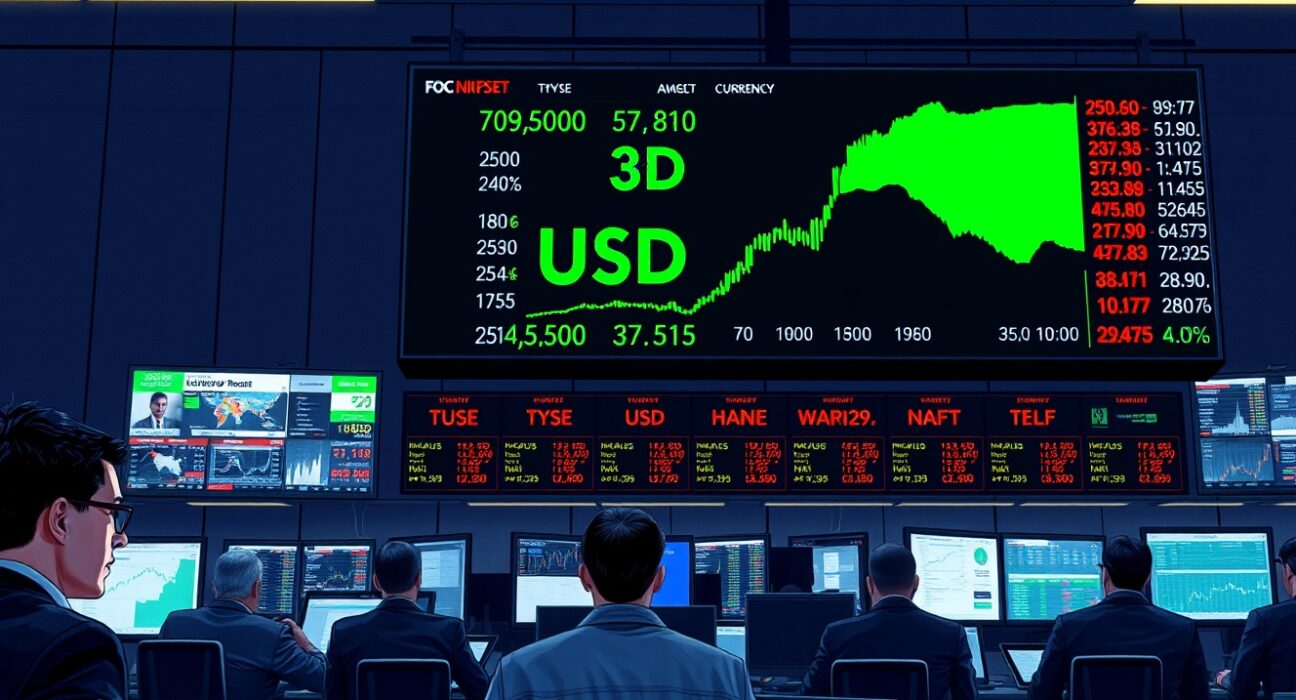
LONDON, April 2025 – The US dollar demonstrates remarkable resilience in global currency markets, holding firm against a basket of major counterparts. This stability emerges as investors and institutions worldwide adopt a posture of heightened caution. The primary driver of this market sentiment is the uncertain and escalating trajectory of the Iran conflict, which continues to inject volatility into financial systems and redirect capital flows toward traditional safe havens.
US Dollar Strength Amid Geopolitical Uncertainty
Currency analysts observe sustained demand for the US dollar across trading sessions. The Dollar Index (DXY), which measures the greenback against six major currencies, has consistently traded within a narrow, elevated band. This performance occurs despite mixed domestic economic data. Consequently, the narrative has shifted from pure monetary policy to one dominated by global risk assessment. Market participants are clearly prioritizing capital preservation. They are funneling investments into assets perceived as stable during international crises.
Furthermore, the euro and British pound have shown particular sensitivity to Middle Eastern developments. The European Union’s geographic and economic proximity to the region creates direct exposure. Asian currencies, including the Japanese yen, have also experienced pressure. The yen’s traditional safe-haven status is being tested by the sheer scale of the dollar’s appeal. Below is a comparison of major currency performances over the past week:
| Currency Pair | Weekly Change | Primary Driver |
|---|---|---|
| USD/EUR (EURUSD) | +1.2% | Geopolitical Risk Aversion |
| USD/GBP (GBPUSD) | +0.8% | Oil Price Volatility |
| USD/JPY (USDJPY) | +1.5% | Broad USD Demand |
| USD/CHF (USDCHF) | +0.5% | Moderate Safe-Haven Flow |
Analyzing the Iran Conflict Trajectory
The situation in the Middle East remains fluid and complex. Recent escalations have moved beyond localized skirmishes, threatening broader regional stability. Key factors influencing market caution include:
- Maritime Security: Critical shipping lanes, including the Strait of Hormuz, face persistent threats. Disruptions here directly impact global energy supplies and trade routes.
- Diplomatic Stalemate: International mediation efforts have yielded little progress. The absence of a clear diplomatic off-ramp prolongs uncertainty.
- Regional Alliances: The conflict’s potential to draw in neighboring states or global powers creates a tail risk that markets are beginning to price in.
Energy markets are acting as a primary transmission channel to currencies. Brent crude oil prices have exhibited sharp intraday swings. Each geopolitical headline triggers a reassessment of supply risks. Higher energy costs, in turn, influence inflation expectations and central bank policy projections for import-dependent economies. This dynamic indirectly supports the dollar, as the United States has achieved greater energy independence in recent years.
Expert Insight on Market Psychology
Dr. Anya Sharma, Chief Strategist at Global Macro Advisors, provides context. “The dollar’s firmness isn’t about outperformance,” she notes. “It’s about being the least-worst option during a classic ‘flight to quality’ event. Historical patterns show that in the initial phases of unforeseen geopolitical crises, liquidity and depth of market become paramount. The US Treasury market, denominated in dollars, remains the world’s deepest pool of safe assets.”
She further explains that market positioning is crucial. “Many funds entered the year underweight the dollar, expecting Fed rate cuts. The conflict has forced a rapid unwind of those positions. This technical flow adds to the fundamental demand, creating a powerful short-term support for the currency.”
Broader Impacts on Global Financial Markets
The caution permeating forex markets extends to other asset classes. Global equity indices have struggled for direction, with sectors like travel, insurance, and industrials underperforming. Conversely, the defense and cybersecurity sectors have seen inflows. Government bond yields in the US and Germany have behaved erratically, torn between safe-haven buying and fears of sustained inflation.
Emerging market currencies and assets are particularly vulnerable. Capital outflows from riskier frontiers have accelerated. Central banks in these nations are now facing a difficult trilemma: defending their currencies, controlling inflation from imported energy, and maintaining economic growth. Many are likely to dip into foreign exchange reserves, which could have longer-term implications for global dollar liquidity.
The Swiss franc and gold have also benefited from safe-haven flows, but their market size limits their capacity to absorb the sheer volume of capital on the move. This reality continues to funnel the largest share of risk-off capital toward the US dollar and dollar-denominated assets.
Historical Context and Potential Scenarios
Analysts are examining parallels with past geopolitical shocks. The initial market reaction shares characteristics with the early stages of the 2014 Crimea annexation and the 2019 Gulf tensions. However, the current scenario involves a more complex web of state and non-state actors. The potential for miscalculation is considered higher.
Market consensus outlines several potential trajectories:
- De-escalation Path: A successful diplomatic intervention leads to a rapid unwind of dollar longs. Commodity currencies and risk assets would rally sharply.
- Contained Conflict Path: Hostilities remain regional but persistent. This leads to sustained volatility, elevated oil prices, and a steady bid for the dollar and gold.
- Escalation Path: A broader regional war triggers a full-scale risk aversion event. The dollar could surge dramatically, causing severe stress in emerging markets and corporate debt.
For now, the market is pricing a high probability of the “Contained Conflict” path. This is reflected in the dollar’s firm but not parabolic rise. Options markets show increased demand for protection against tail risks, indicating that investors are hedging against the less likely but more severe escalation scenario.
Conclusion
The US dollar stands firm as a direct consequence of global market caution. The uncertain trajectory of the Iran conflict serves as the dominant catalyst, overshadowing domestic economic indicators for the time being. This dynamic reinforces the dollar’s entrenched role as the world’s primary reserve and safe-haven currency during periods of geopolitical stress. Market participants will continue to monitor diplomatic channels and on-the-ground developments closely. The path of the conflict will ultimately determine whether the dollar’s strength represents a temporary haven or the beginning of a more prolonged phase of risk aversion. The resilience of the dollar underscores the deep-seated search for stability in an increasingly unstable geopolitical landscape.
FAQs
Q1: Why is the US dollar considered a safe haven during geopolitical crises?
The US dollar benefits from the depth and liquidity of US financial markets, the global role of the dollar in trade and reserves, and the perception of the United States as a politically stable entity. In times of crisis, investors seek assets that are easy to buy and sell in large volumes without moving the market, a criterion US Treasury bonds fulfill.
Q2: How does the Iran conflict directly affect currency exchange rates?
It creates risk aversion, prompting investors to sell assets in perceived riskier regions (like emerging markets or conflict-proximate areas) and buy assets in safer countries. This movement of capital increases demand for the currencies of safe-haven nations, primarily the US dollar and Swiss franc, causing them to appreciate.
Q3: What other assets typically gain value alongside the dollar in such situations?
Traditional safe-haven assets include gold, US and German government bonds, the Japanese yen, and the Swiss franc. Certain sectors, like defense and cybersecurity stocks, may also outperform due to increased geopolitical spending.
Q4: Could the dollar’s strength hurt the US economy?
A significantly stronger dollar makes US exports more expensive for foreign buyers, potentially hurting manufacturing and export-driven sectors. However, it also makes imports cheaper, helping to curb inflation. The net effect depends on the scale and duration of the dollar’s move and the structure of the economy.
Q5: What signs would indicate the market is moving past this cautious phase?
Key signals would include a sustained decline in the Dollar Index (DXY), rising capital flows back into emerging market funds, a stabilization or decline in oil prices driven by geopolitical calm, and a shift in market discourse from risk-aversion to growth and earnings fundamentals.
Disclaimer: The information provided is not trading advice, Bitcoinworld.co.in holds no liability for any investments made based on the information provided on this page. We strongly recommend independent research and/or consultation with a qualified professional before making any investment decisions.