

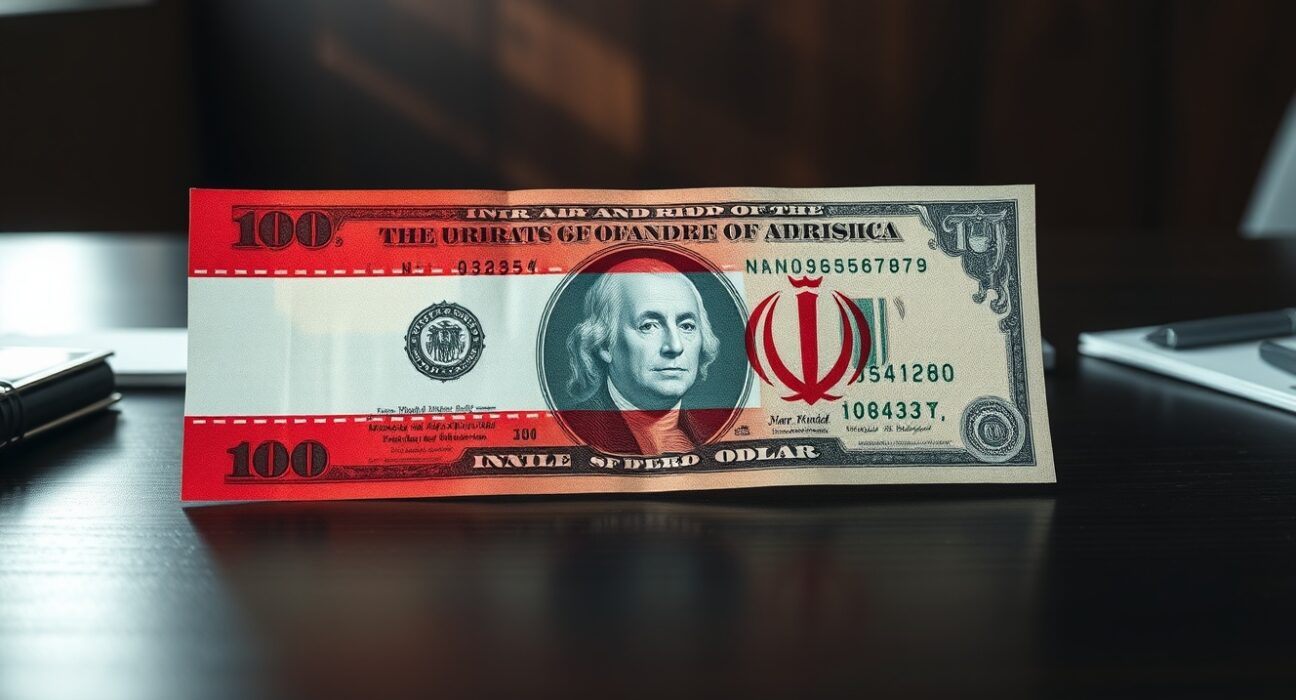
The US dollar registered measured gains in global trading sessions this week, as financial markets closely monitored unfolding diplomatic communications between the United States and Iran. This subtle yet significant currency movement underscores the profound sensitivity of foreign exchange markets to geopolitical developments, particularly those involving major oil-producing nations. Consequently, traders are now recalibrating their positions based on potential shifts in regional stability and energy supply chains.
US Dollar Gains Traction Amid Diplomatic Signals
Forex markets witnessed a firming of the US dollar index (DXY) against a basket of major currencies. This movement coincided with confirmed reports of back-channel discussions between American and Iranian officials. Analysts immediately linked the currency’s strength to a perceived reduction in immediate geopolitical risk premiums. Historically, the dollar often acts as a safe-haven asset during global uncertainty. However, in this specific instance, the prospect of de-escalation is paradoxically providing support by improving the outlook for US economic engagement.
Market participants are digesting statements from both capitals. For example, the US State Department acknowledged “exploratory talks” regarding regional security and the status of the 2015 nuclear deal, known formally as the Joint Comprehensive Plan of Action (JCPOA). Simultaneously, Iranian media reported a “pragmatic exchange” focused on mutual concerns. This diplomatic activity has directly influenced trading desks worldwide.
- DXY Movement: The dollar index rose approximately 0.3% following the news.
- Oil Correlation: Brent crude futures dipped slightly, reflecting eased supply fears.
- Risk Sentiment: Broader market volatility, as measured by the VIX index, softened.
Historical Context of US-Iran Relations and Forex Impact
The relationship between Washington and Tehran has been a persistent driver of volatility in currency and commodity markets for decades. Sanctions regimes, particularly those targeting Iranian oil exports, have repeatedly caused supply shocks. These shocks typically strengthen the dollar due to its role as the primary global reserve and pricing currency for oil. A timeline of key events illustrates this pattern clearly.
| Year | Event | Immediate DXY Impact |
|---|---|---|
| 2015 | JCPOA Signed | Dollar weakened ~1.2% on reduced risk premium |
| 2018 | US Withdraws from JCPOA, Reimposes Sanctions | Dollar strengthened ~2.5% on safe-haven flows |
| 2020 | Tensions Spike After Soleimani Strike | Sharp dollar spike, followed by correction |
| 2023 | Indirect Talks Resume in Oman | Moderate dollar softening observed |
Therefore, the current price action is not an isolated event. It fits within a long-established pattern where diplomatic progress correlates with a stabilization or strengthening of the dollar, as global trade and financial flows adjust to a less tense environment. This pattern highlights the currency’s dual role as both a safe haven and a conduit for global commerce.
Expert Analysis on Market Mechanics
Financial institutions are publishing research notes that parse the mechanics behind the dollar’s move. “We are observing a classic recalibration of risk-adjusted yields,” noted a senior currency strategist at a major European bank, whose analysis is frequently cited by the Financial Times. “While reduced tension typically weakens a safe-haven currency, in this case, it also improves the outlook for US economic growth and trade. It potentially removes a persistent drag on confidence.”
Furthermore, central bank reserve managers are constantly assessing such developments. A move towards sustained diplomacy could influence the long-term composition of global foreign exchange reserves. Some analysts suggest it might slow any marginal diversification away from the dollar, as one key geopolitical argument for diversification loses some urgency. However, this remains a long-term consideration rather than a short-term trading factor.
Broader Implications for Global Currency Markets
The dollar’s movement has created ripple effects across the forex landscape. Typically, a stronger dollar pressures emerging market currencies and commodities priced in USD. However, the cause of this strength—diplomatic engagement—mitigates some of that pressure. Currencies of nations with strong trade ties to the Middle East, such as the Indian rupee and the Chinese yuan, experienced reduced volatility. This stability suggests markets view productive talks as a net positive for regional economic activity.
Meanwhile, the euro and Japanese yen, major counterparts in the DXY index, showed muted reactions. Their trajectories remain more tightly bound to domestic monetary policy divergences with the Federal Reserve. This highlights an important nuance: while geopolitics can drive short-term forex fluctuations, medium-term trends are still dominated by interest rate differentials and economic growth forecasts. The current situation presents a complex overlay of these fundamental drivers.
Conclusion
The US dollar’s recent appreciation serves as a clear market verdict on the significance of renewed U.S.-Iran diplomacy. This movement reflects a sophisticated recalculation of geopolitical risk, future energy supply stability, and global trade prospects. While the immediate gains may be modest, they signal a pivotal moment where diplomacy begins to outweigh confrontation in market psychology. The trajectory of the US dollar will continue to hinge on the substance and sustainability of these diplomatic efforts, offering a real-time barometer of geopolitical progress for traders and policymakers alike.
FAQs
Q1: Why would the US dollar rise on positive diplomatic news? Isn’t it a safe-haven currency?
The dollar serves dual roles. While it is a safe haven in crises, it is also the world’s primary reserve and trade currency. Reduced geopolitical risk can strengthen it by improving the global trade outlook, in which the dollar is central, and by bolstering confidence in US economic leadership.
Q2: How does Iran diplomacy specifically affect the dollar’s value?
Iran is a major oil producer. Diplomacy that stabilizes the Middle East and ensures steady oil supply reduces global economic uncertainty. This benefits the dollar as the currency used for most oil transactions. It also reduces the risk premium baked into asset prices.
Q3: What other financial assets are most sensitive to US-Iran relations?
Crude oil prices are the most directly sensitive, typically falling on diplomatic progress and spiking on tensions. Global stock markets, especially energy sector equities, and the currencies of oil-importing nations are also highly reactive.
Q4: Could successful diplomacy lead to a sustained, long-term rally for the dollar?
Not necessarily. Short-term moves are driven by geopolitical news flow. Long-term dollar trends depend more on US economic performance, Federal Reserve interest rate policy, and relative growth compared to other major economies like the Eurozone and China.
Q5: How are forex traders positioning themselves in response to this development?
Traders are likely reducing extreme “long dollar” positions built purely on geopolitical fear. They are adopting more nuanced strategies that consider the improved global growth outlook from stability, which may involve pairs like USD/commodity currencies, rather than simply betting on broad dollar strength.
Disclaimer: The information provided is not trading advice, Bitcoinworld.co.in holds no liability for any investments made based on the information provided on this page. We strongly recommend independent research and/or consultation with a qualified professional before making any investment decisions.
