

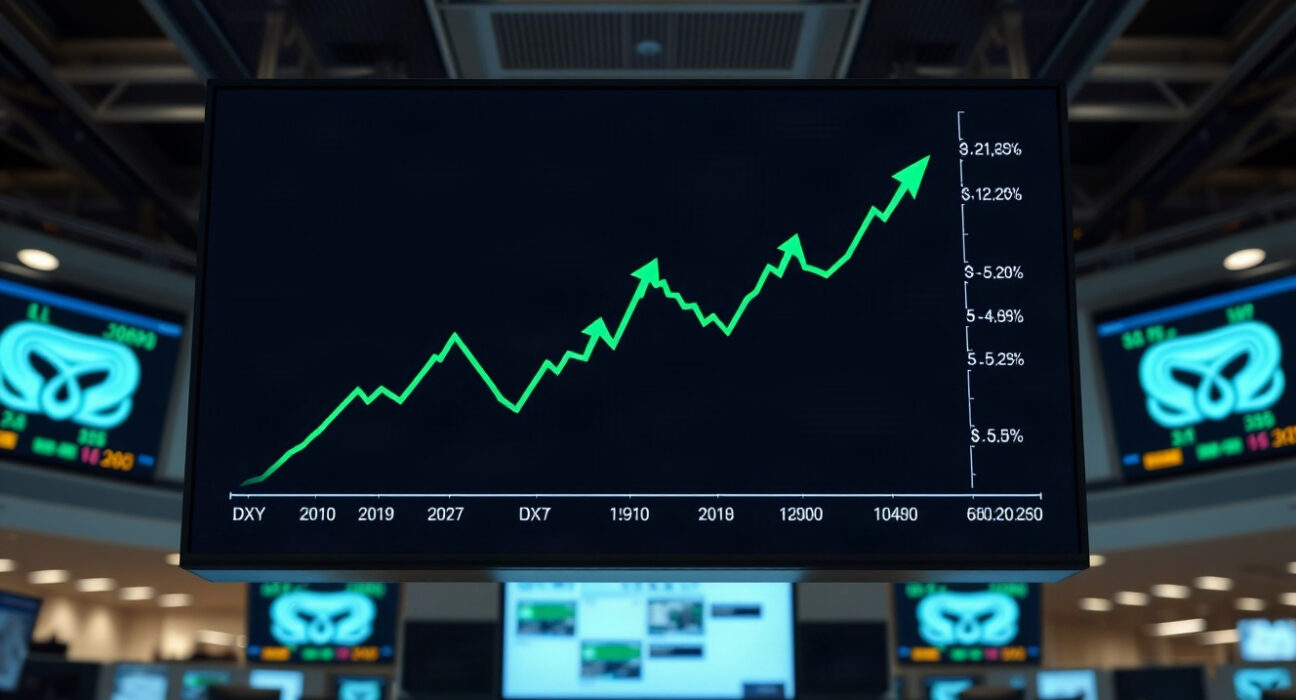
The U.S. dollar index (DXY) has climbed notably in recent sessions, moving higher as investors weigh fiscal policy uncertainties and reassess the Federal Reserve’s interest rate trajectory. As of mid-May 2025, the index, which measures the greenback against a basket of six major currencies, has risen approximately 2% from its April lows, reflecting renewed demand for dollar assets amid global economic headwinds.
What is Driving the Dollar’s Recovery?
The dollar’s recent strength is largely attributed to a combination of fiscal concerns and monetary policy expectations. The U.S. government’s fiscal position remains a focal point, with ongoing debates over debt ceiling and budget negotiations creating uncertainty. However, instead of undermining confidence, these concerns have paradoxically boosted the dollar as investors seek the relative safety of U.S. Treasuries. Additionally, the Federal Reserve’s cautious stance on rate cuts, signaled in recent speeches by policymakers, has supported the dollar by keeping yields on U.S. debt attractive compared to other developed economies.
Market Implications and Global Impact
The dollar’s climb has broad implications for global markets. A stronger dollar typically pressures emerging market currencies and can tighten financial conditions worldwide, as many countries hold dollar-denominated debt. For U.S. multinationals, a stronger dollar reduces the value of overseas earnings when converted back to dollars, potentially weighing on corporate profits. Conversely, a robust dollar can help contain U.S. inflation by lowering the cost of imported goods, which may give the Fed more room to maintain its current policy stance.
What Should Investors Watch Next?
Investors are closely monitoring upcoming U.S. economic data, particularly inflation reports and employment figures, for clues on the Fed’s next move. The dollar’s trajectory will also depend on fiscal negotiations in Washington and global risk sentiment. A resolution to the debt ceiling standoff could reduce safe-haven demand for the dollar, while prolonged uncertainty might extend its rally.
Conclusion
The dollar index’s climb reflects a complex interplay of fiscal concerns, Fed policy signals, and global market dynamics. While the greenback’s strength offers certain benefits, it also poses challenges for international trade and emerging economies. As always, market participants should stay attuned to policy developments and economic data to navigate the evolving landscape.
FAQs
Q1: What is the dollar index (DXY)?
The U.S. dollar index (DXY) measures the value of the U.S. dollar relative to a basket of foreign currencies, including the euro, Japanese yen, British pound, Canadian dollar, Swedish krona, and Swiss franc. It is a widely used benchmark for the dollar’s overall strength in global markets.
Q2: How does fiscal policy affect the dollar?
Fiscal policy, including government spending and taxation, can influence the dollar through its impact on economic growth, inflation, and interest rates. Uncertainty about fiscal policy can drive investors to safe-haven assets like the dollar, while expansionary fiscal measures may lead to higher deficits and potentially weaken the currency over time.
Q3: Why does a stronger dollar matter for global markets?
A stronger dollar affects global trade and finance by making U.S. exports more expensive and imports cheaper. It can also increase the burden of dollar-denominated debt for emerging markets, potentially leading to capital outflows and currency depreciation in those economies. Central banks and investors worldwide monitor the dollar’s movements closely for these reasons.
Disclaimer: The information provided is not trading advice, Bitcoinworld.co.in holds no liability for any investments made based on the information provided on this page. We strongly recommend independent research and/or consultation with a qualified professional before making any investment decisions.
