

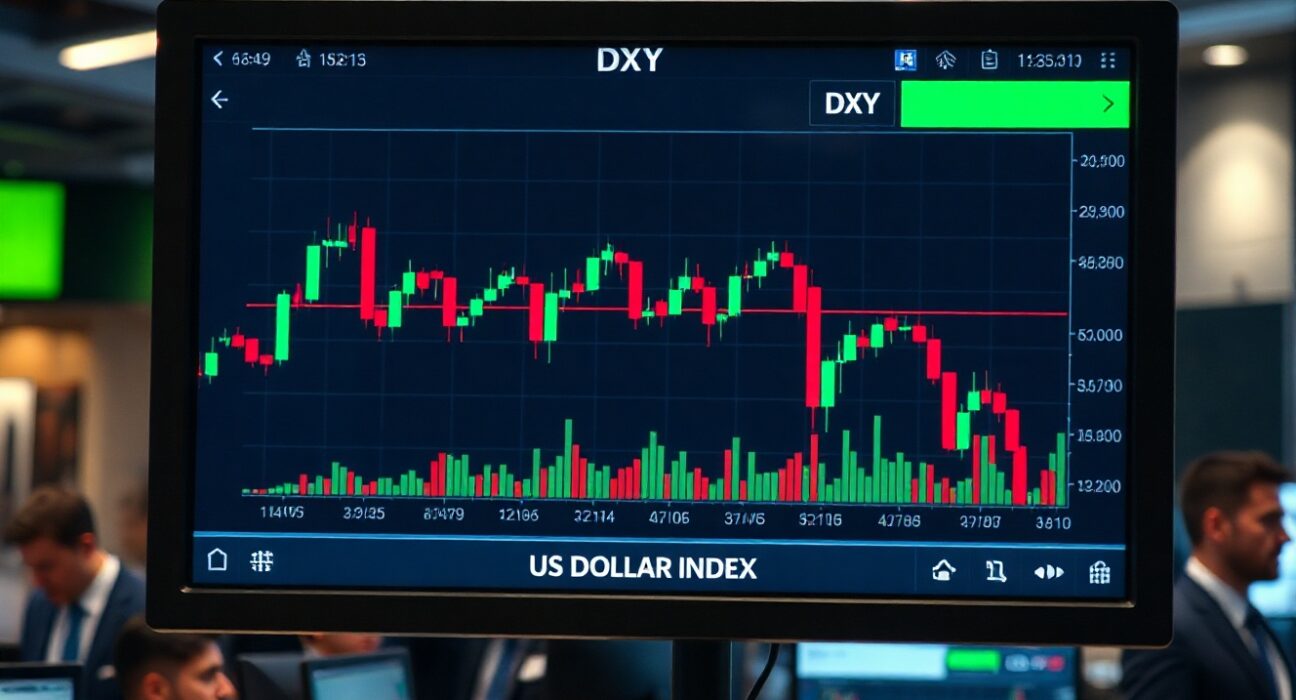
The US Dollar Index (DXY) has declined for a fourth consecutive session, reflecting growing market conviction that the Federal Reserve may begin cutting interest rates sooner than previously anticipated. As of the latest close, the index, which measures the greenback against a basket of six major currencies, has fallen by roughly 1.2% over the four-day stretch, touching its lowest level in over two months.
What’s Driving the Dollar’s Decline?
The persistent slide in the dollar index is primarily attributed to shifting expectations around US monetary policy. Recent economic data, including softer inflation figures and a cooling labor market, have prompted traders to price in a higher probability of rate cuts by mid-2025. The CME FedWatch tool now shows a 65% chance of a quarter-point cut at the June meeting, up from 45% just a week ago.
Additionally, comments from Federal Reserve officials have been increasingly dovish. In a speech on Tuesday, Fed Governor Christopher Waller noted that “the current policy stance is well-positioned to respond to evolving risks,” which markets interpreted as a signal that the central bank is open to easing. This marks a notable shift from the hawkish tone that dominated most of 2024.
Global Implications of a Weaker Dollar
A softer dollar has broad implications for global markets. Emerging market currencies, which often struggle when the dollar strengthens, have rallied over the past week. The MSCI Emerging Markets Currency Index is up 0.8% in the same period, with the South Korean won and the Brazilian real leading gains.
Commodity prices have also responded, as a weaker dollar makes dollar-denominated assets cheaper for foreign buyers. Gold futures climbed to $2,380 per ounce on Wednesday, up 2.5% from last week’s close. Oil prices have seen a more muted reaction, with Brent crude hovering near $82 a barrel, as supply concerns offset currency effects.
What This Means for Investors
For investors, the dollar’s slide presents both opportunities and risks. Exporters in the US may find their goods more competitive abroad, but multinational corporations could see reduced earnings when translating foreign profits back to dollars. Meanwhile, holders of dollar-denominated debt in emerging markets may find relief as their repayment burdens ease.
Currency strategists advise caution, noting that the dollar’s trajectory remains highly sensitive to upcoming data releases, particularly the next non-farm payrolls report due in two weeks. “The market is pricing in a soft landing, but any surprise in inflation or employment could quickly reverse this trend,” said Jane Liu, senior FX strategist at Barclays.
Conclusion
The dollar index’s four-day decline underscores a pivotal moment for global markets, as investors reposition for a potential shift in US monetary policy. While the current trend points toward a weaker dollar, its sustainability depends on incoming economic data and Fed communication. As always, market participants should brace for volatility and avoid overcommitting to a single directional view.
FAQs
Q1: What is the Dollar Index (DXY)?
The Dollar Index (DXY) measures the value of the US dollar relative to a basket of six major currencies: the euro, Japanese yen, British pound, Canadian dollar, Swedish krona, and Swiss franc. It is a widely used benchmark for the dollar’s overall strength in global markets.
Q2: Why does the dollar weaken when the Fed cuts rates?
When the Federal Reserve cuts interest rates, US assets become less attractive to foreign investors due to lower yields, reducing demand for the dollar. This dynamic typically leads to a depreciation of the currency.
Q3: How does a weaker dollar affect emerging markets?
A weaker dollar generally benefits emerging markets by easing debt repayment burdens (since many borrow in dollars) and boosting export competitiveness. It also often attracts capital flows into higher-yielding emerging market assets.
Disclaimer: The information provided is not trading advice, Bitcoinworld.co.in holds no liability for any investments made based on the information provided on this page. We strongly recommend independent research and/or consultation with a qualified professional before making any investment decisions.
