

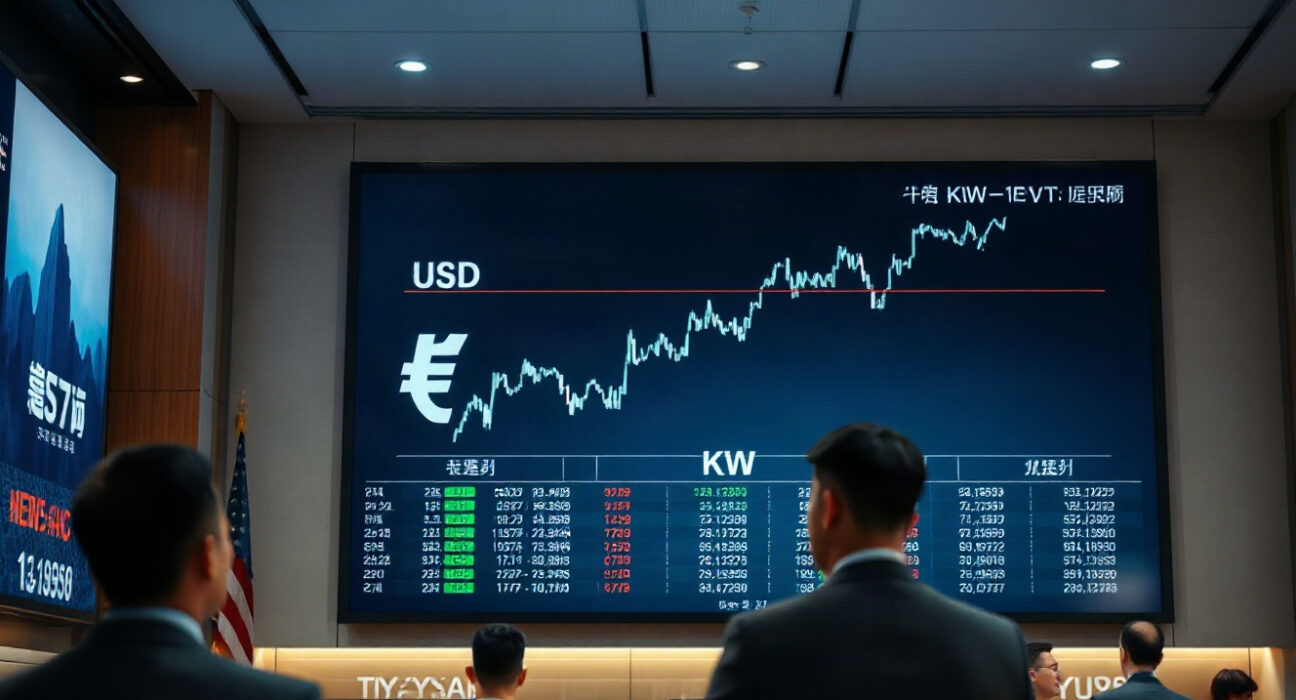
The U.S. dollar traded on the back foot on [date], as Treasury yields eased from recent highs, while the South Korean won strengthened to a one-year peak against the greenback, reflecting shifting investor expectations on interest rates and regional economic momentum.
What’s Driving the Dollar’s Decline?
The dollar index slipped as U.S. Treasury yields pulled back, reducing the currency’s yield advantage. Market participants are recalibrating their outlook on Federal Reserve policy, with softer economic data and cooling inflation expectations fueling speculation that the Fed may pause its rate-hiking cycle sooner than previously anticipated. As of [date], the 10-year Treasury yield was trading around [yield]%, down from its recent high.
South Korean Won’s Surge to One-Year High
The South Korean won climbed to its strongest level in a year against the dollar, buoyed by robust export data and improved investor sentiment toward Asian currencies. The won’s appreciation reflects Korea’s solid trade surplus and expectations that the Bank of Korea may maintain a relatively hawkish stance compared to the Fed. The currency’s rally has implications for Korean exporters, as a stronger won makes their goods more expensive abroad, potentially weighing on future earnings.
Market Implications and Investor Takeaways
For investors, the dollar’s softening and the won’s strength signal a potential shift in global capital flows. A weaker dollar typically benefits emerging market assets, including Asian equities and currencies. However, the move also highlights the growing divergence in monetary policy paths between the U.S. and Asia. Traders should monitor upcoming U.S. inflation data and Fed speeches for further direction, as any surprise could reverse these trends quickly.
Conclusion
In summary, the dollar’s retreat and the won’s one-year high underscore a market adjusting to changing interest rate expectations and regional economic outperformance. While the near-term outlook remains data-dependent, the current dynamics offer valuable insights for currency traders and global investors alike.
FAQs
Q1: Why did the South Korean won hit a one-year high?
The won strengthened due to robust export performance, a solid trade surplus, and expectations that the Bank of Korea will maintain a relatively hawkish monetary policy compared to the U.S. Federal Reserve.
Q2: How does a weaker dollar affect global markets?
A weaker dollar generally makes emerging market assets more attractive, boosts commodity prices, and can ease financial conditions for dollar-denominated debtors, supporting risk appetite.
Q3: What should traders watch next for the dollar and won?
Traders should monitor upcoming U.S. inflation data, Federal Reserve communications, and any shifts in Korea’s economic indicators, as these will likely drive the next major move in these currencies.
Disclaimer: The information provided is not trading advice, Bitcoinworld.co.in holds no liability for any investments made based on the information provided on this page. We strongly recommend independent research and/or consultation with a qualified professional before making any investment decisions.
