
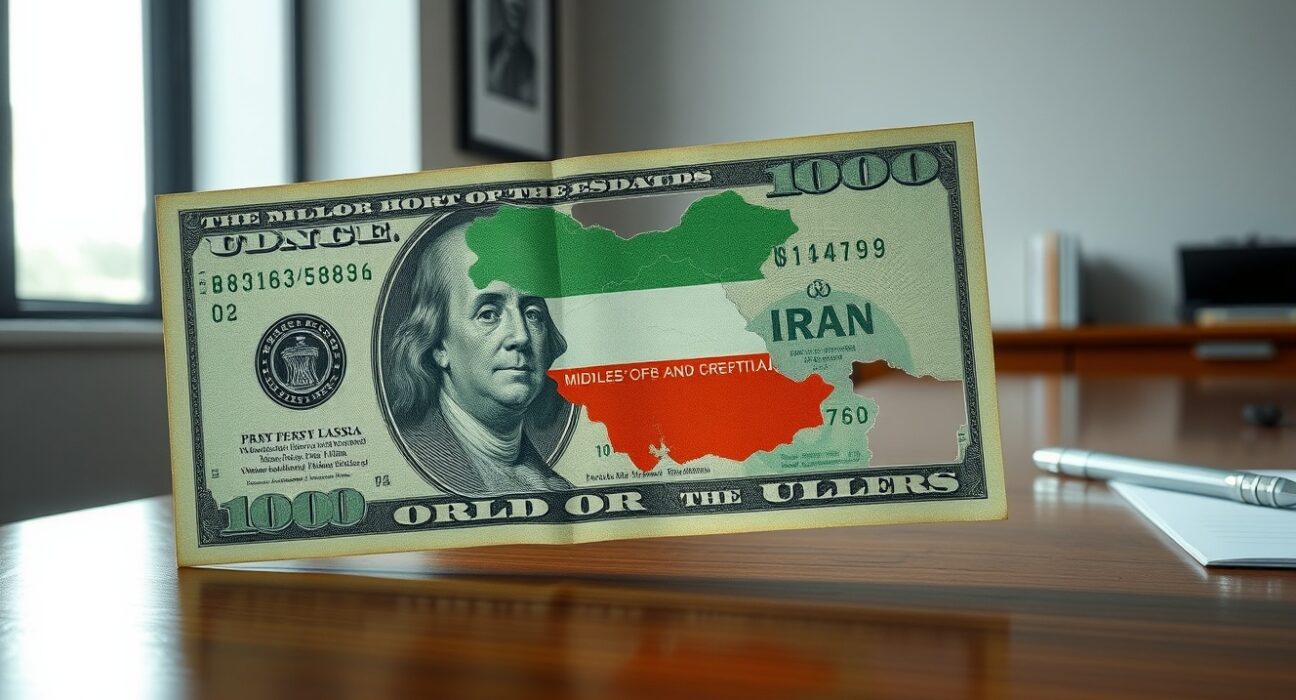
WASHINGTON, D.C. – March 15, 2025 – Global currency markets exhibited a pronounced calming effect today as former President Donald Trump, through his official policy foundation, announced the initiation of direct diplomatic talks with the Islamic Republic of Iran. Consequently, the US Dollar Index (DXY), a key measure of the dollar’s strength against a basket of major currencies, halted a recent period of volatility and found firmer ground. This development marks a significant shift in the geopolitical landscape, directly influencing investor sentiment and risk assessments worldwide.
Dollar Stabilizes Amid Renewed Diplomatic Overtures
The announcement, delivered via a formal statement from the ‘America First Policy Institute,’ immediately reverberated through financial hubs from London to Tokyo. Market analysts observed a swift recalibration of risk premiums attached to Middle Eastern assets and the global oil trade. The dollar’s stabilization, therefore, is not an isolated event but a direct consequence of perceived de-escalation. Historically, geopolitical tensions in the Persian Gulf region have triggered capital flight to the perceived safety of the US dollar and Treasury bonds, often creating artificial strength followed by sharp corrections. This new phase of dialogue, however tentative, suggests a potential reduction in the ‘geopolitical risk premium’ that has long been baked into energy and currency prices.
Forex trading desks reported a noticeable decrease in volatility metrics for major dollar pairs. For instance, the EUR/USD pair traded within a remarkably tight range following the news. “The market is breathing a sigh of relief,” noted senior currency strategist, Dr. Anya Petrova, of Global Macro Advisors. “While the long-term path of any negotiation is uncertain, the mere act of opening a channel replaces speculation with a tangible process. This provides a floor under the dollar and reduces the likelihood of a disorderly spike driven by fear.”
Historical Context and Market Mechanics
To understand this reaction, one must examine the dollar’s role as the world’s primary reserve currency. During periods of international uncertainty, investors traditionally seek refuge in US dollar-denominated assets. This dynamic had been in play for weeks prior to the announcement, driven by regional military posturing. The prospect of dialogue reverses this flow, encouraging a measured reallocation into other currencies and assets. The stabilization reflects a balancing act between residual caution and newfound optimism.
Analyzing the Framework of the Trump-Iran Talks
The proposed talks, described as ‘preliminary and exploratory,’ aim to address a narrow but critical set of issues. According to the released framework, primary discussion points include the status of the Joint Comprehensive Plan of Action (JCPOA), regional security guarantees, and mechanisms for deconfliction. Unlike previous administrations, this initiative is framed as a private diplomatic track, operating parallel to official State Department channels. This unconventional approach has sparked intense debate among foreign policy experts.
Professor Elias Vance of the Georgetown University School of Foreign Service provided context: “The market’s positive response hinges on the credibility of the actors involved. While unofficial, the involvement of a former president carries significant weight. The key metric for sustained dollar stability will be observable, verifiable actions on the ground, not just statements.” The table below outlines the core contrasts between this initiative and prior diplomatic efforts:
| Aspect | 2025 Trump Initiative | Previous JCPOA Diplomacy |
|---|---|---|
| Primary Actors | Private policy foundation & former administration officials | Sitting presidential administration & career diplomats |
| Immediate Goal | Establish communication channel and reduce near-term escalation risk | Comprehensive, legally-binding nuclear agreement |
| Market Impact Driver | Reduction of geopolitical risk premium | Expectation of lifted sanctions and oil supply changes |
Furthermore, the reaction from Gulf Cooperation Council (GCC) nations has been cautiously observant. Their currencies, often pegged to the dollar, also experienced reduced volatility.
Broader Economic Impacts and Sectoral Reactions
The stabilization of the dollar sends ripple effects across multiple asset classes and economic sectors. A steadier dollar provides greater predictability for:
- Multinational Corporations: Earnings forecasts for US-based international firms become less susceptible to sudden foreign exchange losses.
- Commodity Markets: Oil prices (denominated in dollars) typically exhibit an inverse relationship with dollar strength. Stability reduces a key variable in energy pricing.
- Emerging Markets: Nations with dollar-denominated debt face lower refinancing risks when the dollar is not appreciating rapidly.
- Central Bank Policies: The Federal Reserve gains slightly more maneuvering room, as extreme currency volatility is a complicating factor for monetary policy.
However, analysts universally warn against overconfidence. The diplomatic process is fragile, and any perceived setback could trigger a rapid reversion to risk-off sentiment. The current stability represents a pause, not a permanent shift. Continued monitoring of diplomatic communications and on-the-ground military movements remains essential for traders and policymakers alike.
The Role of Institutional Investors
Data from bond and futures markets indicates that large institutional investors were the first to adjust positions. Pension funds and sovereign wealth funds, with longer time horizons, began modestly reducing their overweight positions in classic safe-haven assets. This institutional rebalancing provided the initial momentum for the dollar’s stabilization, which was later followed by retail and algorithmic traders.
Conclusion
The announcement of talks between Donald Trump’s team and Iranian representatives has served as a immediate catalyst for calmer currency markets, leading the dollar to stabilize after a period of uncertainty-driven gains. This event underscores the profound and instantaneous link between geopolitics and global finance. While the path forward for diplomacy remains complex and uncertain, the market has delivered its initial verdict: dialogue is preferable to the alternative. The sustained stabilization of the dollar will now depend entirely on the progression of these talks from announcement to tangible, confidence-building outcomes.
FAQs
Q1: Why does the dollar stabilize when geopolitical talks are announced?
The dollar often strengthens during crises as a ‘safe-haven’ asset. Announcing talks reduces the immediate risk of conflict, leading investors to reallocate funds out of the dollar, which balances supply and demand and creates stability.
Q2: What is the ‘geopolitical risk premium’ mentioned in the article?
It is an additional cost or valuation adjustment that investors apply to assets due to the potential for political or military conflict. It inflates prices for safe-haven assets like the dollar and can suppress prices for riskier assets in affected regions.
Q3: How do these unofficial talks differ from government diplomacy?
Unofficial or ‘track-two’ diplomacy involves non-governmental actors, like former officials or policy groups. It can explore ideas without the formal constraints of state negotiation, but any agreements would require formal government adoption to be implemented.
Q4: Could this dollar stability be temporary?
Yes, absolutely. Currency stability based on diplomatic news is highly sensitive to subsequent developments. Any sign that talks are stalling or failing could quickly reverse the current market calm.
Q5: How does a stable dollar affect the average American consumer?
A stable dollar can lead to more predictable prices for imported goods and for Americans traveling abroad. It also contributes to a more predictable environment for businesses that import or export, which can support steady employment.
Disclaimer: The information provided is not trading advice, Bitcoinworld.co.in holds no liability for any investments made based on the information provided on this page. We strongly recommend independent research and/or consultation with a qualified professional before making any investment decisions.