

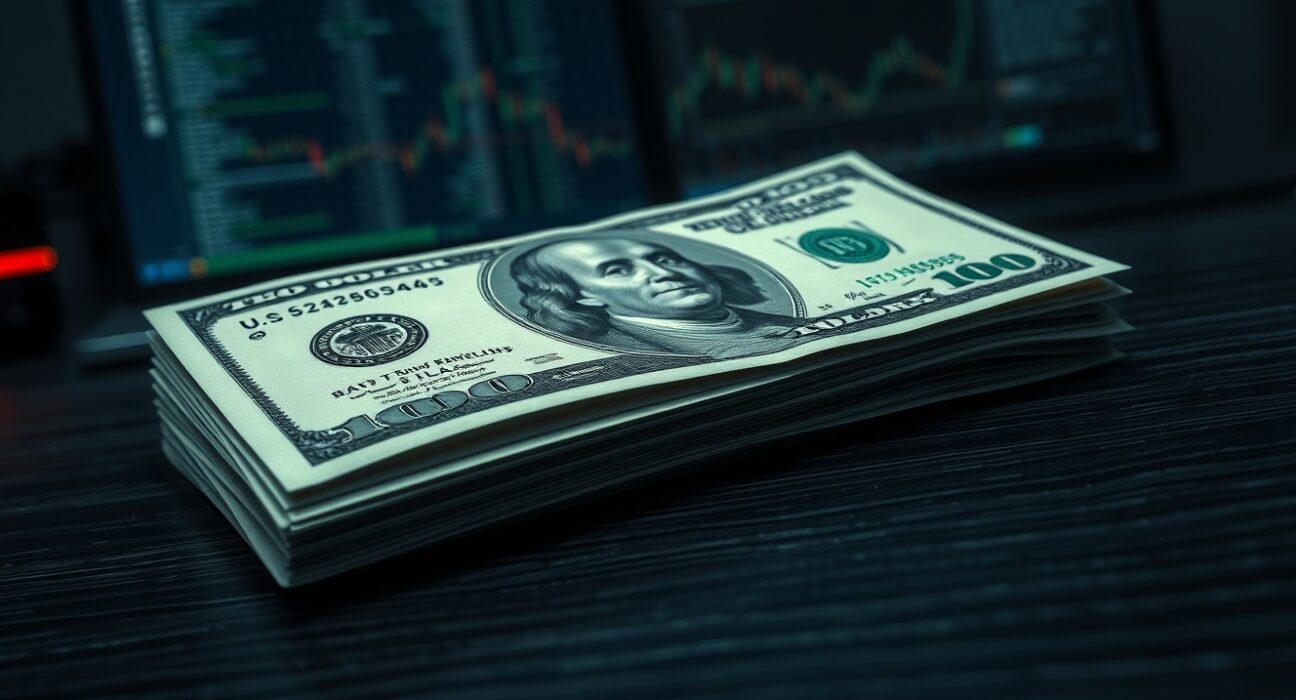
NEW YORK, March 15, 2025 – The U.S. dollar surged against a basket of major currencies today, marking its most significant single-day gain in three months. This sharp appreciation follows a rapid escalation of military and diplomatic rhetoric between the United States and Iran, compelling global investors to seek traditional shelters from geopolitical storm clouds. Consequently, the dollar strengthens as the primary beneficiary of this flight to safety, reversing a recent period of relative weakness.
Dollar Strengthens Amid Renewed Geopolitical Flashpoint
Financial markets reacted swiftly to reports of a potential naval confrontation in the Strait of Hormuz. Analysts immediately noted capital flows out of risk-sensitive assets and into perceived stable stores of value. Historically, the U.S. dollar, Japanese yen, and Swiss franc have served as the world’s premier safe-haven currencies during periods of international strife. However, the dollar’s unique status as the global reserve currency and its deep, liquid markets often make it the default choice for institutional investors during a crisis. This dynamic explains why the dollar strengthens disproportionately compared to its peers when Middle Eastern tensions flare.
Historical Context of U.S.-Iran Relations and Market Impact
The current friction is not an isolated event but part of a decades-long cycle of confrontation. Key flashpoints, such as the 2019 attacks on oil tankers or the 2020 assassination of Qasem Soleimani, provide critical context. During each previous crisis, forex markets exhibited remarkably similar patterns. A comparative analysis reveals the dollar’s consistent performance.
| Event | Date | DXY Index Change (5-Day) |
|---|---|---|
| U.S. Withdraws from JCPOA | May 2018 | +1.8% |
| Tanker Attacks in Gulf of Oman | June 2019 | +1.2% |
| Soleimani Airstrike | Jan 2020 | +0.9% |
| Current Escalation | Mar 2025 | +1.5% (Intraday) |
This pattern underscores a fundamental market truth: geopolitical uncertainty directly fuels demand for the U.S. dollar. Furthermore, the immediate sell-off in crude oil futures, followed by a sharp rebound, adds another layer of complexity to the currency’s movement.
Expert Analysis on Currency Flows and Risk Sentiment
Dr. Anya Sharma, Chief Strategist at Global Macro Advisors, explains the underlying mechanics. “When headlines hit, algorithmic trading systems instantly recalibrate risk parameters,” she states. “This triggers a cascade of orders: selling equities and emerging market currencies, while simultaneously buying U.S. Treasuries and, by extension, dollars. The dollar strengthens not solely on its own merits, but because it is the currency of the world’s deepest and most trusted debt market.” This flight-to-quality movement is a textbook response, yet its intensity varies based on the perceived threat to global energy supplies and trade routes.
Broader Economic Impacts and Global Repercussions
The ripple effects of a stronger dollar are immediate and widespread. For other nations, the consequences are multifaceted:
- Emerging Markets: Countries with high dollar-denominated debt face increased repayment burdens, potentially triggering capital outflows.
- Commodity Prices: A robust dollar typically pressures dollar-priced commodities like gold and oil, though supply disruption fears can override this effect.
- Central Bank Policies: The Federal Reserve must now weigh strong currency-induced disinflation against its domestic growth mandates.
- Corporate Earnings: U.S. multinationals may see overseas revenue translate into fewer dollars, impacting future earnings reports.
Therefore, the scenario where the dollar strengthens creates a complex web of winners and losers across the global economy. European and Japanese exporters, for instance, may gain a competitive edge as their currencies weaken.
Conclusion
The U.S. dollar’s ascent is a direct barometer of rising geopolitical anxiety. As tensions between Washington and Tehran escalate, the currency’s role as the world’s ultimate safe-haven asset is reaffirmed. While the immediate financial market reaction sees the dollar strengthen, the longer-term trajectory will depend on diplomatic developments, energy market stability, and the Federal Reserve’s response to shifting crosscurrents of risk aversion and inflationary pressures. Investors and policymakers alike will monitor the situation closely, understanding that in times of crisis, capital seeks the security of depth and liquidity above all else.
FAQs
Q1: Why does the dollar get stronger when there is bad news?
The U.S. dollar is considered a safe-haven currency. During global crises or geopolitical tensions, investors seek stability. They move capital out of risky assets (like stocks in emerging markets) and into assets perceived as secure, such as U.S. Treasury bonds. Buying these bonds requires U.S. dollars, increasing demand and causing the currency’s value to rise.
Q2: How do U.S.-Iran tensions specifically affect the dollar?
Conflicts in the Middle East threaten global oil supplies, as the region is a major producer. Uncertainty disrupts trade and increases risk aversion globally. The dollar benefits because the U.S. is seen as politically and economically stable compared to the conflict zone, and because oil transactions are primarily settled in dollars, sustaining its fundamental demand.
Q3: What is the DXY Index mentioned in the article?
The U.S. Dollar Index (DXY) is a measure of the value of the U.S. dollar relative to a basket of six major world currencies: the euro, Japanese yen, British pound, Canadian dollar, Swedish krona, and Swiss franc. It is the primary benchmark used by traders and analysts to gauge the dollar’s overall strength in global forex markets.
Q4: Does a stronger dollar help or hurt the average American?
It has mixed effects. It helps by making imported goods and foreign travel cheaper, fighting inflation. However, it hurts U.S. exporters and multinational companies by making their products more expensive for foreign buyers, which can potentially lead to reduced corporate profits and job losses in export-focused industries.
Q5: Are there other assets that benefit from safe-haven flows besides the dollar?
Yes. Other traditional safe havens include gold, which is a tangible store of value; Japanese yen and Swiss francs, which are currencies of nations with large current account surpluses and political stability; and U.S. and German government bonds. During different types of crises, these assets may outperform the dollar, but the dollar’s liquidity often makes it the first port of call.
Disclaimer: The information provided is not trading advice, Bitcoinworld.co.in holds no liability for any investments made based on the information provided on this page. We strongly recommend independent research and/or consultation with a qualified professional before making any investment decisions.
