

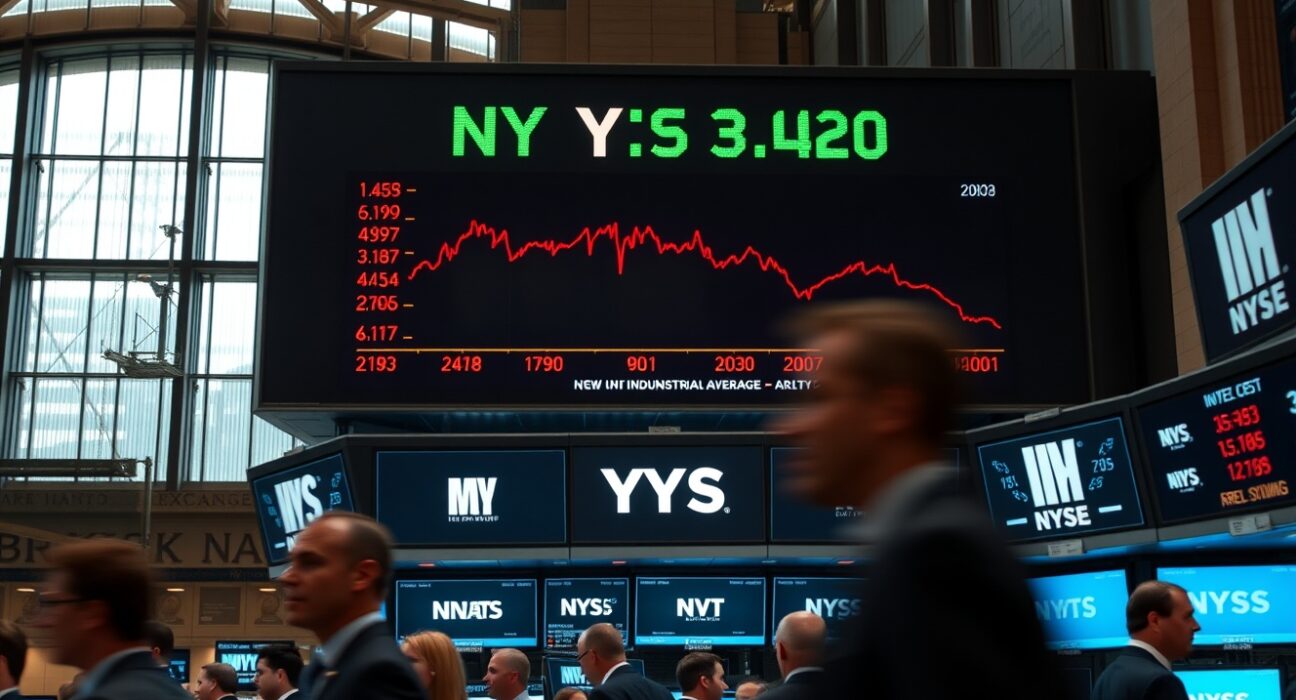
The Dow Jones Industrial Average (DJIA) briefly touched a historic milestone during trading on Wednesday, only to retreat sharply as profit-taking and cautious sentiment took hold. The blue-chip index flirted with the 40,000-point level for the first time, a psychological barrier that had seemed distant just months ago, before closing lower.
A Brief Brush With History
The Dow, which tracks 30 of the largest publicly traded companies in the United States, surged in early trading following a string of better-than-expected corporate earnings reports and renewed optimism about interest rate cuts. At its session high, the index was within a few points of the 40,000 mark, a level that would have represented a gain of roughly 20% over the past 12 months. However, the rally fizzled in the afternoon as selling pressure emerged, with the Dow ultimately closing down 150 points.
The rapid ascent has been fueled by a combination of factors: a resilient labor market, cooling inflation data that has raised hopes for Federal Reserve policy easing, and a surge in artificial intelligence-related stocks. Yet, the pullback suggests that investors are wrestling with valuations that many consider stretched and uncertainty about the pace of future rate cuts.
Market Context and Investor Implications
The Dow’s near-miss of 40,000 comes at a time when other major indices, such as the S&P 500 and the Nasdaq Composite, have also been setting records. However, the breadth of the rally has narrowed, with a handful of mega-cap technology stocks driving most of the gains. This concentration risk has been a growing concern among market strategists.
For the average investor, the milestone is largely symbolic. The Dow, while widely followed, is a price-weighted index that does not reflect the full breadth of the U.S. stock market. Nevertheless, crossing such a round number can have a psychological impact, potentially attracting new retail investors and boosting consumer confidence.
Why This Matters
The brief flirtation with 40,000 underscores the remarkable recovery of U.S. equities from the bear market lows of 2022. It also highlights the tension between bullish momentum and the underlying economic risks, including persistent inflation, geopolitical tensions, and the potential for a slowdown in corporate earnings growth. The pullback may be a healthy correction, or it could signal that the market is due for a more significant downturn.
Conclusion
While the Dow did not close at a new all-time high, the intraday move served as a powerful reminder of the market’s resilience and the optimism driving it. Investors should remain focused on fundamentals, including earnings growth, interest rate trends, and economic data, rather than chasing round-number milestones. The path forward is likely to be volatile, but the underlying strength of the U.S. economy continues to provide a supportive backdrop for equities.
FAQs
Q1: What is the Dow Jones Industrial Average?
The Dow Jones Industrial Average (DJIA) is a stock market index that tracks the performance of 30 large, publicly owned companies based in the United States. It is one of the oldest and most widely followed stock market indices.
Q2: Why is the 40,000-point level significant?
Round-number milestones like 40,000 are psychological markers that can influence investor sentiment and media coverage. While not fundamentally meaningful, they often attract attention from retail investors and signal overall market confidence.
Q3: Should I change my investments based on the Dow hitting a milestone?
No. Financial advisors generally recommend against making investment decisions based on short-term market movements or symbolic milestones. A diversified, long-term strategy aligned with your risk tolerance and financial goals is typically more effective.
Disclaimer: The information provided is not trading advice, Bitcoinworld.co.in holds no liability for any investments made based on the information provided on this page. We strongly recommend independent research and/or consultation with a qualified professional before making any investment decisions.
