

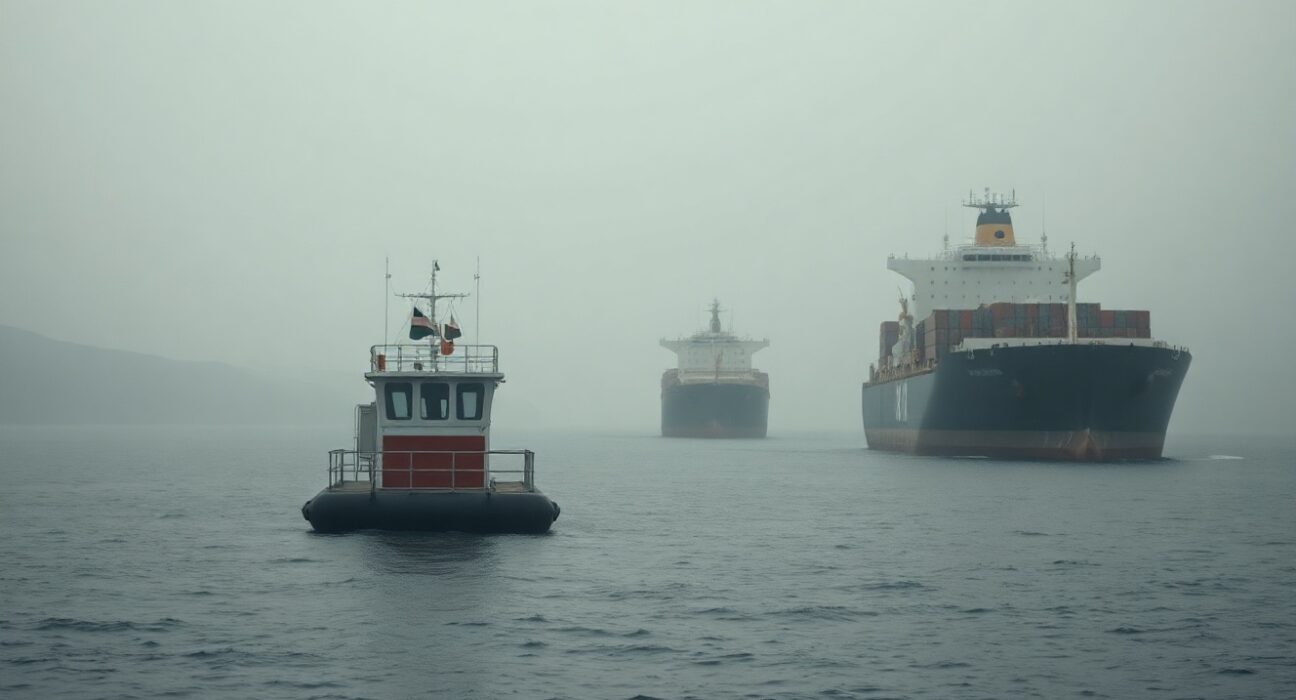
The Dow Jones Industrial Average experienced choppy trading on Wednesday as news emerged that the U.S. government is considering a controversial plan to impose a transit toll on vessels passing through the Strait of Hormuz. The proposal, which has not been formally announced, has already injected fresh uncertainty into global energy markets and raised questions about the potential for supply disruptions.
Market Reaction and Context
The Dow swung between gains and losses during the session, reflecting investor unease over the geopolitical implications of the toll plan. The Strait of Hormuz is a critical chokepoint for global oil shipments, with roughly 20% of the world’s petroleum passing through its narrow waters daily. Any disruption or added cost to transit could have immediate ripple effects on crude prices and, by extension, corporate earnings and consumer spending.
While details of the proposal remain sketchy, sources indicate the administration is exploring a fee structure aimed at increasing U.S. leverage in the region. However, analysts warn that such a move could be perceived as escalatory by Iran and other Gulf states, potentially heightening military tensions.
Geopolitical and Economic Implications
The Strait of Hormuz has long been a flashpoint in U.S.-Iran relations. Previous incidents, including the 2019 attacks on Saudi oil facilities and periodic seizures of tankers by Iranian forces, have demonstrated how quickly regional instability can impact global markets. A formal toll system, even if framed as a security fee, would mark a significant shift in maritime policy.
Impact on Energy Markets
Oil prices edged higher in early trading on the news, with Brent crude rising above $85 per barrel before paring gains. Analysts at Goldman Sachs noted that while the immediate effect on supply is likely minimal, the long-term uncertainty could discourage shipping and raise insurance premiums for vessels transiting the strait. This could lead to higher transportation costs for crude, which would ultimately be passed on to consumers.
Conclusion
The Dow’s wobble reflects a market grappling with yet another geopolitical variable in an already complex environment. While the toll proposal is still in its early stages, the mere possibility of added friction at the Strait of Hormuz is enough to keep traders cautious. Investors will be watching for official statements and further details in the coming days, as any escalation could quickly shift the risk calculus for energy stocks and broader indices.
FAQs
Q1: What is the Strait of Hormuz and why is it important?
The Strait of Hormuz is a narrow waterway between the Persian Gulf and the Gulf of Oman. It is a critical chokepoint for global oil shipments, with about 20% of the world’s petroleum passing through it daily. Any disruption to traffic there can significantly impact global oil prices and supply chains.
Q2: How would a toll affect oil prices?
A toll would increase the cost of shipping oil through the strait, potentially raising global crude prices. It could also discourage some shipping activity, reducing supply and further pushing prices up. The uncertainty alone can lead to speculative price increases.
Q3: Has the U.S. implemented such a toll before?
No. While the U.S. has imposed sanctions and used naval patrols to influence traffic in the region, a formal transit toll for commercial vessels would be a new and significant policy shift. It would likely face legal challenges and international opposition.
Disclaimer: The information provided is not trading advice, Bitcoinworld.co.in holds no liability for any investments made based on the information provided on this page. We strongly recommend independent research and/or consultation with a qualified professional before making any investment decisions.
