


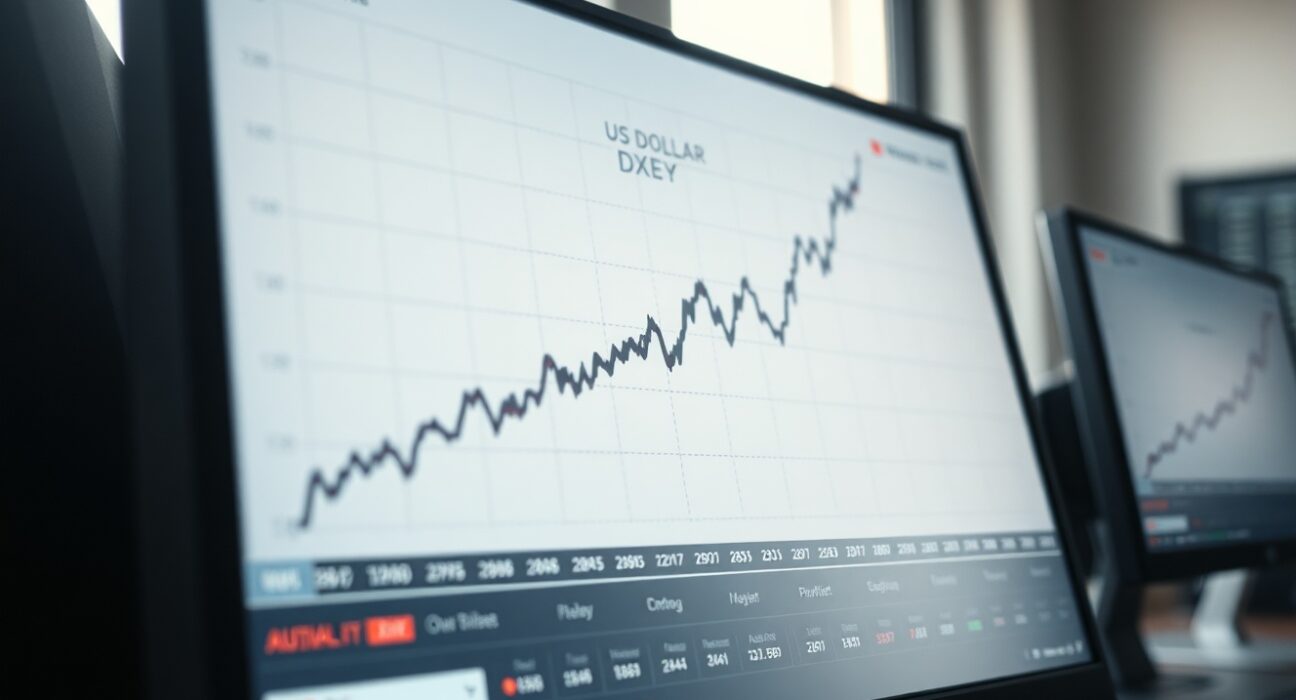
The US Dollar Index (DXY), a critical benchmark measuring the greenback’s strength against six major peers, is climbing toward its highest level in ten months. This significant surge, observed in global markets on October 26, 2025, is directly linked to escalating geopolitical tensions in the Middle East, which are triggering a pronounced flight to safety among international investors.
US Dollar Index (DXY) Reaches a Critical Juncture
Market data reveals the DXY recently breached the 107.50 level, a threshold not seen since late 2024. Consequently, this move places the index within striking distance of its 2024 peak. Analysts attribute this robust performance primarily to the dollar’s traditional role as the world’s premier safe-haven asset. During periods of global uncertainty, capital consistently flows toward US Treasury markets, thereby boosting demand for the currency.
Furthermore, the Federal Reserve’s comparatively hawkish monetary policy stance provides fundamental support. While other major central banks, like the European Central Bank, have signaled potential rate cuts, the Fed maintains a data-dependent but patient approach. This interest rate differential makes dollar-denominated assets more attractive, amplifying the geopolitical bid.
Geopolitical Catalyst: Middle East Tensions Intensify
The immediate catalyst for the latest dollar rally is a sharp deterioration in security across key Middle Eastern corridors. Recent developments include heightened maritime disruptions in critical waterways and renewed concerns over regional conflict spillover. These events directly threaten global energy supplies and trade routes, injecting volatility into equity and commodity markets.

As a result, investors are executing a classic risk-off maneuver. They are selling equities, emerging market currencies, and commodities while simultaneously buying US government bonds and the dollar. This dynamic is clearly visible across forex pairs, with the euro (EUR/USD) and Japanese yen (USD/JPY) showing particular weakness against the resurgent greenback.
Expert Analysis on Market Mechanics
Financial strategists note that the dollar’s strength presents a complex challenge for global policymakers. A stronger dollar makes servicing dollar-denominated debt more expensive for emerging markets. It also exerts disinflationary pressure globally by making imports cheaper in the United States while making US exports more expensive abroad. This environment complicates the policy calculus for other central banks seeking to stimulate growth without triggering currency crises.
Historical precedent supports the current trend. During previous geopolitical crises, such as the initial phases of the Russia-Ukraine conflict, the DXY exhibited similar sharp upward movements. The current rally’s sustainability, however, will depend on the duration and severity of the Middle East situation and any potential diplomatic resolutions.
Broader Impacts on Global Currency Markets
The ripple effects extend far beyond the DXY’s constituent currencies. Commodity-linked currencies like the Australian and Canadian dollars are under pressure due to falling crude oil and base metal prices amid demand concerns. Meanwhile, traditional safe havens like the Swiss franc and gold are also seeing bids, though the dollar’s yield advantage gives it an edge.
For corporations, the strong dollar creates immediate accounting headwinds for US multinationals with large overseas revenues. Conversely, it lowers costs for American companies that rely on imported materials. Traders are now closely monitoring key technical levels on the DXY chart, with a sustained break above 108.00 potentially opening the path toward the 110.00 handle.
Conclusion
The US Dollar Index (DXY) ascent to near 10-month highs underscores the powerful interplay between geopolitics and finance. The flight to safety driven by Middle East tensions, combined with relative monetary policy strength, has created a perfect storm for dollar bullishness. Market participants must now watch for de-escalation signals or further Fed guidance, as these factors will ultimately determine whether the dollar consolidates these gains or extends its rally further.
FAQs
Q1: What is the US Dollar Index (DXY)?
The US Dollar Index is a measure of the value of the United States dollar relative to a basket of six major world currencies: the euro, Japanese yen, British pound, Canadian dollar, Swedish krona, and Swiss franc.
Q2: Why does the dollar strengthen during geopolitical tension?
The US dollar is considered the world’s primary reserve and safe-haven currency. During crises, global investors seek the perceived safety and liquidity of US Treasury markets, increasing demand for dollars.
Q3: How do higher US interest rates affect the DXY?
Higher relative interest rates in the US increase the yield on dollar-denominated assets, attracting foreign investment and boosting demand for the currency, which typically strengthens the DXY.
Q4: What are the consequences of a strong US Dollar Index?
A strong DXY can make US exports more expensive, hurt multinational corporate earnings, increase debt burdens for emerging markets with dollar-denominated loans, and impart disinflationary pressure globally.
Q5: Which currencies have the largest weight in the DXY basket?
The euro (EUR) has the largest weighting at approximately 57.6%, followed by the Japanese yen (JPY) at 13.6% and the British pound (GBP) at 11.9%.
Disclaimer: The information provided is not trading advice, Bitcoinworld.co.in holds no liability for any investments made based on the information provided on this page. We strongly recommend independent research and/or consultation with a qualified professional before making any investment decisions.