

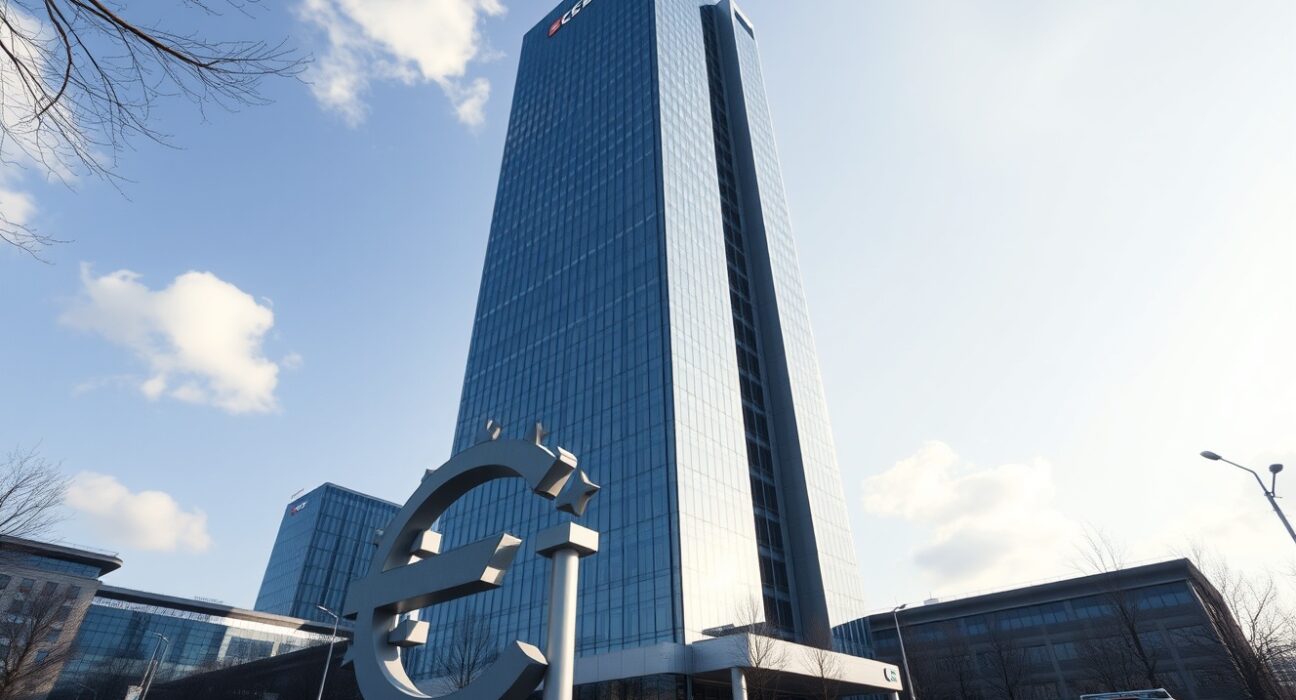
The European Central Bank (ECB) reported on Thursday that negotiated wages in the euro area rose by 2.46% year-on-year in the first quarter of 2026, marking a notable deceleration from the 2.95% increase recorded in the final quarter of 2025. The data, closely watched by policymakers and financial markets, signals a gradual cooling in labor cost pressures across the 20-nation currency bloc.
Wage Growth Trends and Implications
The Q1 2026 figure represents the slowest pace of negotiated wage growth since early 2024, when the indicator stood at 2.3%. The decline from the previous quarter suggests that the tight labor market conditions that fueled wage demands in 2024 and early 2025 are beginning to normalize. The ECB uses negotiated wage data as a key input for assessing underlying inflation dynamics, particularly in the services sector, where labor costs are a major component.
Economists point to several factors behind the easing: a gradual softening in labor demand as economic growth remains modest, lower inflation expectations among workers and unions, and the lagged effects of the ECB’s previous interest rate hikes. However, the pace of deceleration remains moderate, and wage growth is still above levels consistent with the ECB’s 2% inflation target over the medium term.
Market and Policy Context
The ECB has been monitoring wage developments closely as it considers the timing and pace of further monetary policy adjustments. While headline inflation has fallen significantly from its 2022 peak, underlying price pressures—particularly in services—have proven stickier. The latest wage data may provide some reassurance to policymakers that the risk of a wage-price spiral is receding, but it does not yet warrant a shift in the ECB’s cautious stance.
Financial markets reacted modestly to the release, with the euro remaining stable against the US dollar and European government bond yields edging slightly lower. Investors interpreted the data as reducing the likelihood of additional rate hikes, though expectations for a first rate cut remain contingent on further evidence of disinflation in services and domestic demand.
What This Means for Households and Businesses
For households, slower wage growth may temper the pace of real income recovery, particularly if inflation remains above 2%. However, the easing also reduces the risk of a prolonged period of elevated interest rates, which could eventually lower borrowing costs for mortgages and business loans. For employers, especially in labor-intensive sectors like hospitality, retail, and construction, the moderation in wage pressures offers some relief to profit margins after two years of steep increases.
Conclusion
The ECB’s Q1 2026 negotiated wage data confirms a gradual but clear deceleration in labor cost growth across the euro area. While the trend is welcome for policymakers aiming to bring inflation sustainably back to target, the pace of easing remains gradual. The ECB is likely to maintain a data-dependent approach, with future rate decisions hinging on incoming wage, inflation, and growth data. The next key release will be the Q2 2026 wage figures, expected in August.
FAQs
Q1: What are ECB negotiated wages and why do they matter?
Negotiated wages refer to the base pay increases agreed upon in collective bargaining agreements between unions and employers across the euro area. The ECB tracks this data closely because labor costs are a major driver of services inflation and overall price stability. Strong wage growth can fuel persistent inflation, while weak wage growth may signal economic slack.
Q2: How does the Q1 2026 figure compare to historical levels?
The 2.46% year-on-year increase is below the post-pandemic peak of around 4.5% reached in early 2024, but remains above the pre-pandemic average of roughly 2.0% between 2015 and 2019. The current level is still above what many economists consider consistent with the ECB’s 2% inflation target over the medium term.
Q3: Will this data influence the ECB’s next interest rate decision?
It is one of several key inputs. While the deceleration is positive for the inflation outlook, the ECB has emphasized that it needs to see sustained evidence of disinflation, particularly in services and domestic prices. A single quarter of slower wage growth is unlikely to trigger an immediate policy shift, but it strengthens the case for maintaining a pause or considering rate cuts later in 2026 if the trend continues.
Disclaimer: The information provided is not trading advice, Bitcoinworld.co.in holds no liability for any investments made based on the information provided on this page. We strongly recommend independent research and/or consultation with a qualified professional before making any investment decisions.
