

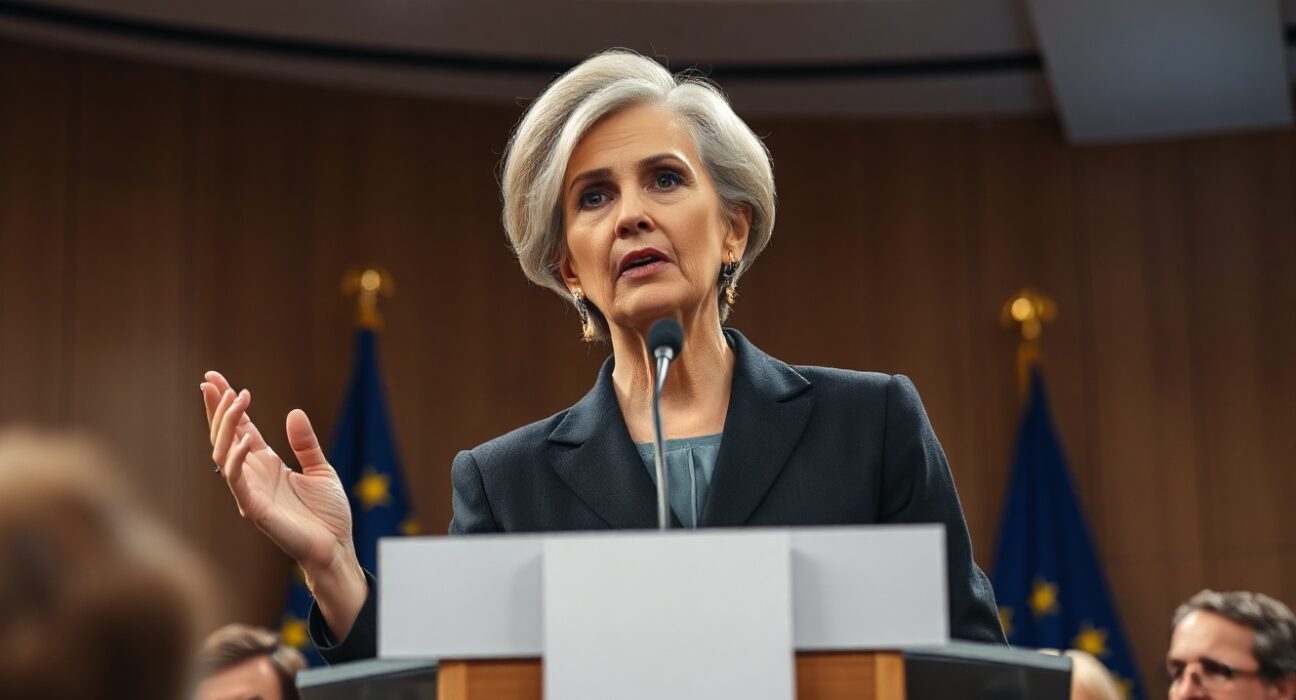
European Central Bank (ECB) President Christine Lagarde has announced plans to create a single, pan-European tokenized financial market, warning that without a reliable settlement asset backed by central bank money, the sector risks becoming fragmented and unstable.
Central Bank Money as a Foundation
Speaking at an ECB conference on June 15, Lagarde revealed that she had consulted over 60 industry stakeholders, many of whom stressed that settlement in central bank money is essential for the large-scale issuance of digital assets. She argued that a risk-free settlement asset is a prerequisite for a cohesive market, and that without it, tokenized finance could splinter into incompatible systems across Europe.
Lagarde also highlighted a critical limitation of existing stablecoin models: tokens backed one-to-one with the euro cannot adjust their supply to meet fluctuating market demand. This rigidity, she noted, renders them unable to provide liquidity during a systemic crisis, potentially amplifying financial stress rather than mitigating it.
The Pontes and Appia Projects
To address these challenges, the ECB plans to advance its Pontes project later this year, which focuses on settling tokenized transactions using central bank money. Concurrently, the Appia project will develop a comprehensive blueprint for a unified European tokenized financial market. These initiatives aim to establish common standards and infrastructure, ensuring that digital assets can be traded and settled seamlessly across borders.
Why This Matters for Investors and Institutions
For financial institutions, a unified tokenized market could reduce costs, increase transaction speed, and enhance transparency. For retail investors, it may eventually open access to a wider range of tokenized assets, from bonds to real estate, under a regulated and stable framework. However, the success of these efforts hinges on the ECB’s ability to coordinate with national regulators and private sector participants.
Lagarde’s comments come at a time when several European countries are experimenting with digital currencies and tokenized securities, but without a common infrastructure. The ECB’s push for central bank money settlement is seen as a move to prevent the kind of fragmentation that has plagued other digital asset markets, such as cryptocurrencies.
Conclusion
The ECB’s roadmap for a tokenized financial market represents a significant step toward integrating digital assets into the mainstream European financial system. By prioritizing central bank money settlement and cross-border standardization, Lagarde aims to build a market that is both innovative and resilient. The coming months will be critical as the Pontes and Appia projects move from planning to implementation.
FAQs
Q1: What is the Pontes project?
The Pontes project is an ECB initiative to settle tokenized transactions using central bank money, ensuring a risk-free foundation for digital asset trading.
Q2: Why does Lagarde oppose stablecoins backed one-to-one with euros?
She argues that such stablecoins cannot adjust supply to meet demand, making them unable to provide liquidity during a crisis, which could destabilize the financial system.
Q3: How will the Appia project affect European financial markets?
The Appia project aims to create a blueprint for a unified European tokenized market, promoting cross-border interoperability and reducing fragmentation among national digital asset systems.
Disclaimer: The information provided is not trading advice, Bitcoinworld.co.in holds no liability for any investments made based on the information provided on this page. We strongly recommend independent research and/or consultation with a qualified professional before making any investment decisions.
