

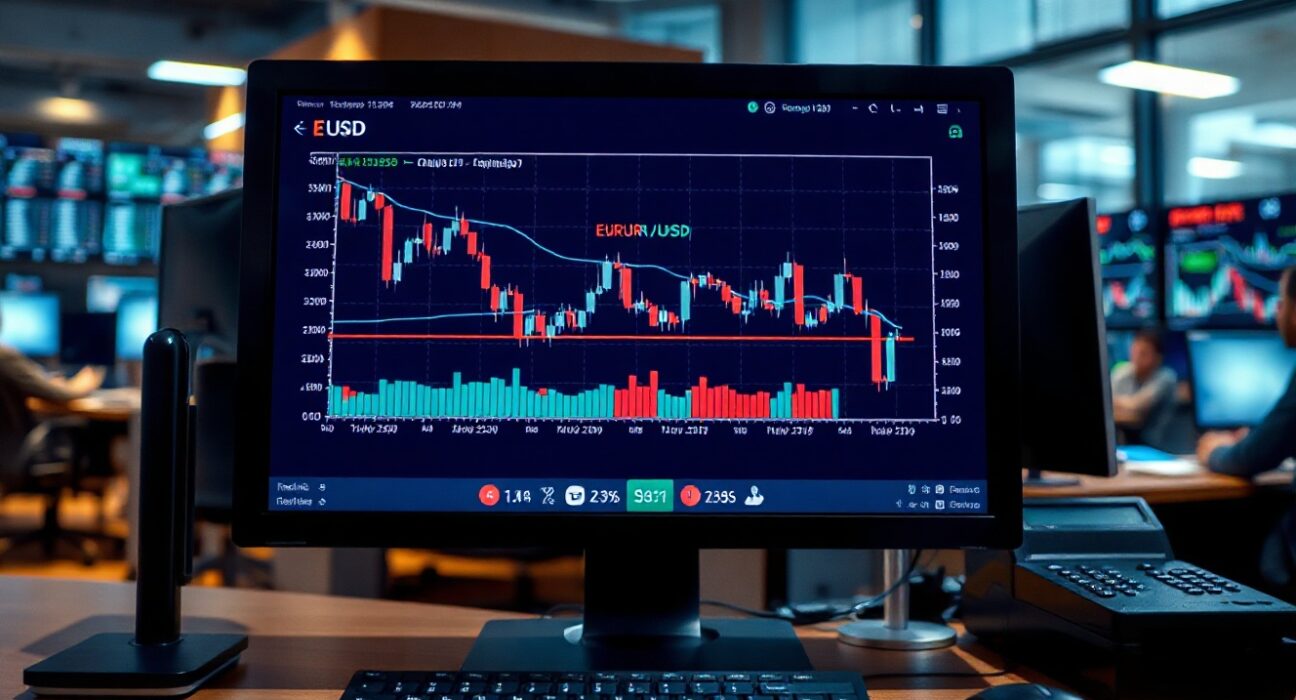
The euro has fallen to its lowest level against the U.S. dollar in over two years, with the EUR/USD pair trading near 1.02 as of mid-February 2025, and valuation models suggest the single currency may now be undervalued, raising questions about the sustainability of the dollar’s strength.
What’s Driving the Euro’s Decline?
The euro’s slide has been driven by a combination of factors, including diverging monetary policies between the European Central Bank (ECB) and the Federal Reserve. While the Fed has maintained higher interest rates to combat inflation, the ECB has signaled a more cautious approach, with some policymakers hinting at potential rate cuts later this year. This interest rate differential has made dollar-denominated assets more attractive to investors, strengthening the dollar and pressuring the euro.
Additionally, economic data from the eurozone has been weaker than expected, with manufacturing output contracting and consumer spending remaining sluggish. Germany, the bloc’s largest economy, narrowly avoided a recession in the fourth quarter of 2024, but growth remains anemic. These factors have weighed on investor sentiment, leading to sustained selling pressure on the euro.
Is EUR/USD Actually Undervalued?
According to purchasing power parity (PPP) models, which compare the relative price of goods and services between countries, the euro is currently trading roughly 15% below its fair value against the dollar. Other valuation metrics, such as the OECD’s PPP-based estimates, suggest a similar undervaluation. However, analysts caution that PPP is a long-term indicator and may not fully capture short-term market dynamics.
Short-term fair value models, which incorporate interest rate differentials and capital flows, still suggest the pair could move lower before stabilizing. “The euro’s undervaluation is evident in long-term valuation frameworks, but the market’s focus remains on policy divergence and growth differentials,” says a senior currency strategist at a European bank. “A meaningful rebound would likely require a shift in Fed policy expectations or a marked improvement in eurozone data.”
What This Means for Traders and Businesses
For currency traders, the current level presents both risks and opportunities. Those who believe the euro is oversold may look for entry points to buy the pair, anticipating a mean reversion. However, momentum traders may continue to sell on rallies, given the prevailing downtrend.
For businesses with cross-border operations, the weaker euro makes European exports more competitive, potentially benefiting manufacturers and tourism sectors. Conversely, U.S. companies with significant sales in Europe may see reduced earnings when converting euros back to dollars. Importers in Europe will face higher costs for goods priced in dollars, such as oil and other commodities.
Conclusion
The EUR/USD pair’s decline to multi-year lows has brought valuation concerns to the forefront. While long-term models suggest the euro is cheap, the short-term outlook remains clouded by policy divergence and economic headwinds. Traders and businesses should closely monitor upcoming central bank meetings and economic data releases for clearer direction.
FAQs
Q1: Why is the euro weak against the dollar?
The euro is weak due to the Federal Reserve’s higher interest rates compared to the European Central Bank, making dollar assets more attractive. Additionally, sluggish eurozone economic data, especially in Germany, has reduced investor confidence in the euro.
Q2: What is purchasing power parity and how does it relate to EUR/USD?
Purchasing power parity (PPP) is an economic theory that compares currencies based on the relative cost of a basket of goods. PPP models suggest the euro is undervalued against the dollar, implying that the exchange rate could eventually move toward the PPP level, though this can take years to play out.
Q3: Should I buy euros now if the currency is undervalued?
Undervaluation does not guarantee a short-term price increase. Currency markets are influenced by many factors, including interest rates and economic data. It’s important to consider your investment horizon and risk tolerance, and ideally consult with a financial advisor before making any currency trades.
Disclaimer: The information provided is not trading advice, Bitcoinworld.co.in holds no liability for any investments made based on the information provided on this page. We strongly recommend independent research and/or consultation with a qualified professional before making any investment decisions.
