

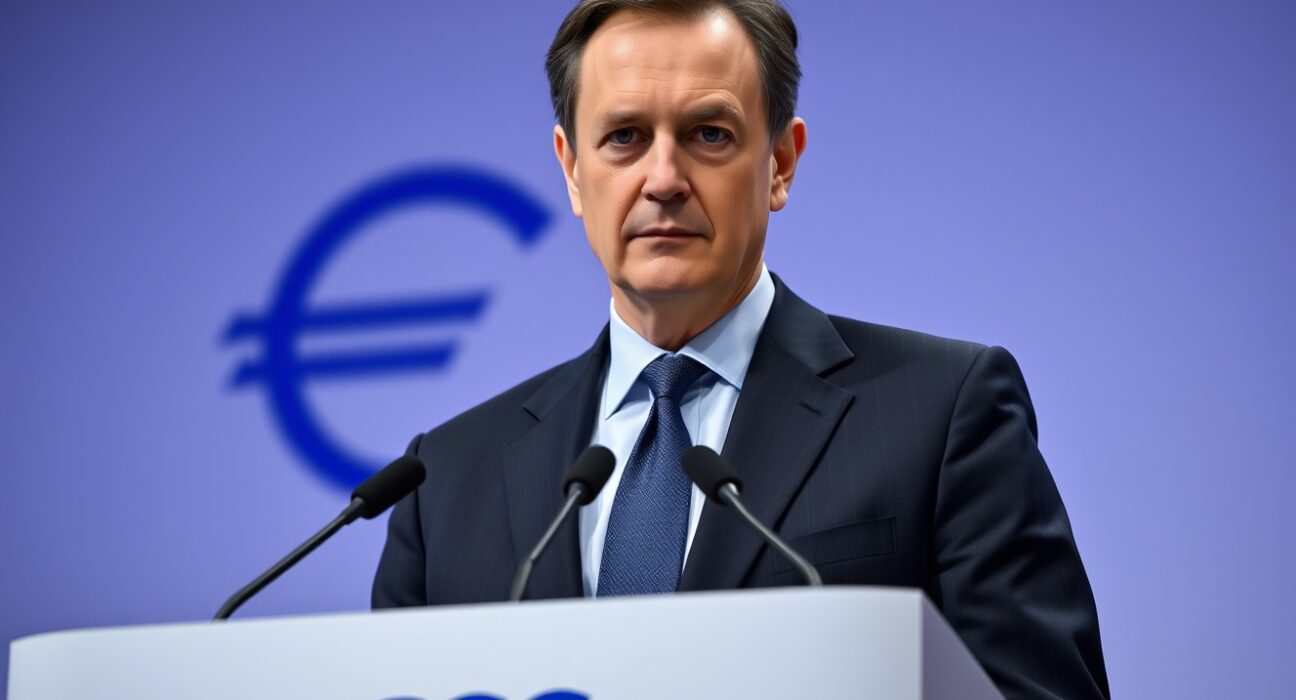
European Central Bank (ECB) board member Joachim Nagel stated on Tuesday that the geopolitical situation in the Middle East remains “very opaque,” underscoring the difficulty for policymakers in assessing the potential economic fallout for the eurozone. Speaking at an event in Frankfurt, Nagel cautioned that the lack of clarity surrounding the region’s stability introduces a significant layer of uncertainty for the European economy and the ECB’s monetary policy trajectory.
Opaque Geopolitical Landscape Complicates ECB Policy Decisions
Nagel’s remarks come amid heightened tensions in the Middle East, which have contributed to volatility in global energy markets and disrupted supply chains. The ECB board member emphasized that the central bank is closely monitoring the situation but cannot yet determine the full extent of its impact on inflation, growth, or financial stability. “We are dealing with a very opaque situation,” Nagel said, according to prepared remarks. “The geopolitical risks are elevated, and the potential economic consequences are difficult to quantify at this stage.”
The comments align with the ECB’s cautious tone in recent months, as the institution balances the need to control inflation against the risk of stoking an economic downturn. Energy prices, in particular, remain a key variable, with any disruption in Middle Eastern oil or gas supplies potentially reigniting inflationary pressures in Europe. Nagel’s assessment suggests that the ECB may maintain a data-dependent approach in the near term, avoiding any firm commitments on future rate moves until the geopolitical picture becomes clearer.
Market Implications and the Broader Eurozone Context
Financial markets have already priced in a degree of uncertainty, with the euro fluctuating against major currencies and bond yields reflecting risk aversion. Nagel’s characterization of the situation as “opaque” may reinforce market expectations that the ECB will proceed cautiously, potentially delaying any further tightening or easing measures. Analysts note that the central bank’s communication strategy is now critical, as mixed signals could amplify volatility.
The eurozone economy is already grappling with sluggish growth, particularly in manufacturing-heavy economies like Germany. An escalation in the Middle East could further weaken business confidence and dampen investment. Nagel did not provide specific forecasts but reiterated the ECB’s commitment to bringing inflation back to its 2% target in a timely manner, while acknowledging that the path forward is clouded by external risks.
Why This Matters for European Consumers and Businesses
For European households and companies, the opacity of the Middle East situation translates into continued uncertainty about energy costs, borrowing rates, and overall economic stability. Businesses that rely on imported energy or have exposure to regional supply chains face heightened planning challenges. Consumers, meanwhile, may see persistent price pressures on fuel and heating, which could affect household budgets and spending patterns. The ECB’s ability to navigate this uncertainty will be crucial in determining whether the eurozone can avoid a prolonged period of stagflation.
Conclusion
ECB board member Joachim Nagel’s candid acknowledgment of the Middle East’s opacity underscores the complexity of the current global economic environment. With geopolitical risks elevated and the outlook clouded, the ECB is likely to remain in a wait-and-see mode, prioritizing flexibility over forward guidance. For now, the central bank’s primary challenge is to manage inflation without undermining a fragile recovery, a task made significantly harder by an unpredictable external landscape. Investors and policymakers alike will be watching for any signs of de-escalation or further disruption in the weeks ahead.
FAQs
Q1: What did ECB board member Joachim Nagel say about the Middle East?
Nagel described the situation as “very opaque,” meaning the central bank cannot clearly assess the potential economic impact on the eurozone due to the high level of uncertainty.
Q2: How could the Middle East situation affect the eurozone economy?
The primary risks include higher energy prices, supply chain disruptions, and reduced business confidence, all of which could slow economic growth and complicate the ECB’s efforts to control inflation.
Q3: Will the ECB change its monetary policy because of this uncertainty?
Nagel’s comments suggest the ECB will maintain a cautious, data-dependent approach, avoiding firm commitments on future rate moves until the geopolitical picture becomes clearer.
Disclaimer: The information provided is not trading advice, Bitcoinworld.co.in holds no liability for any investments made based on the information provided on this page. We strongly recommend independent research and/or consultation with a qualified professional before making any investment decisions.
