

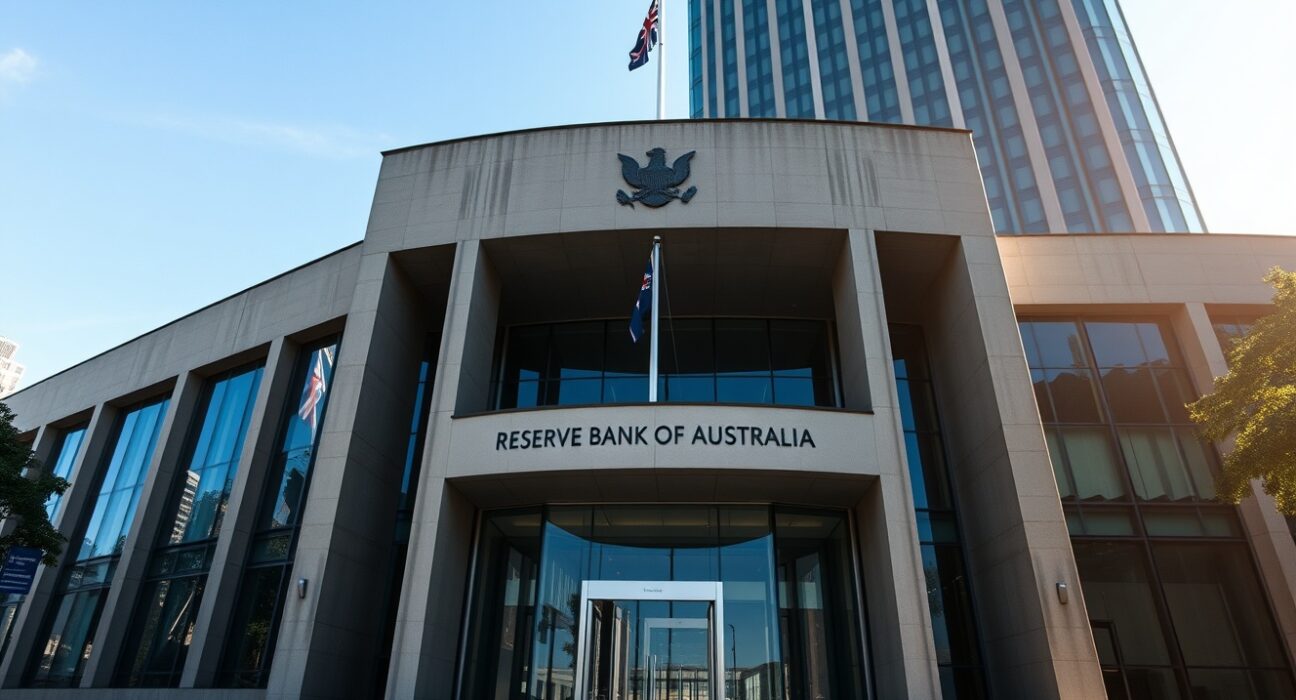
Australia’s economic growth is losing momentum, and the Reserve Bank of Australia’s current monetary policy stance remains restrictive, according to a new analysis from TD Securities. The assessment comes as market participants closely watch for any shift in the central bank’s forward guidance amid cooling domestic demand and global uncertainty.
TD Securities: Growth Headwinds Are Building
Economists at TD Securities have flagged that Australia’s gross domestic product growth is slowing more than previously anticipated. Consumer spending, a key driver of the economy, has softened under the weight of elevated interest rates and persistent cost-of-living pressures. The firm’s analysis suggests that the RBA’s cash rate, held at 4.35% since November 2023, is increasingly acting as a drag on activity rather than a stabilizing force.
While inflation remains above the RBA’s 2–3% target band, the pace of price increases has moderated. TD Securities notes that the central bank is now balancing the need to contain inflation against the risk of tipping the economy into a sharper downturn. The firm expects the RBA to maintain its restrictive posture in the near term, but sees scope for rate cuts later in 2025 if the labor market weakens further.
What ‘Restrictive’ Means for Borrowers and Markets
A restrictive policy stance means that the RBA’s interest rate is set above the neutral rate — the level that neither stimulates nor restrains economic growth. For households and businesses, this translates to higher borrowing costs for mortgages, credit cards, and business loans. The TD Securities report underscores that the full impact of past rate hikes is still feeding through the economy, particularly as fixed-rate mortgages roll over to higher variable rates.
Financial markets have already begun pricing in a higher probability of rate cuts by the end of 2025. The Australian dollar has softened against the US dollar in recent weeks, reflecting changing expectations around the relative pace of monetary easing between the RBA and the Federal Reserve.
Implications for the Housing Market
The restrictive policy environment is also weighing on the housing sector. Home prices in Sydney and Melbourne have shown signs of stabilizing after a period of gains, and auction clearance rates have edged lower. TD Securities warns that a prolonged period of tight policy could lead to a more pronounced correction in property values, particularly if unemployment rises faster than expected.
RBA’s Delicate Balancing Act
The RBA faces a complex trade-off. On one hand, services inflation remains sticky, and the central bank has signaled it wants to see more conclusive evidence that price pressures are sustainably contained. On the other hand, GDP growth has slowed to around 1.5% year-on-year, well below trend, and consumer confidence remains fragile.
Governor Michele Bullock has reiterated that the board is not ruling anything in or out regarding future rate moves. However, the TD Securities analysis adds weight to the view that the RBA may need to pivot toward a more neutral stance sooner than its current rhetoric suggests.
Conclusion
TD Securities’ assessment that RBA policy is restrictive against a backdrop of slowing growth reinforces the growing market narrative that the next move in Australian interest rates is likely downward. While the timing remains uncertain, the balance of risks appears to be shifting toward economic weakness rather than overheating. For Australian borrowers and investors, the key question is not whether rates will fall, but when.
FAQs
Q1: What does it mean when the RBA’s policy is described as ‘restrictive’?
A restrictive policy means the central bank’s interest rate is set at a level that slows economic activity to help control inflation. It makes borrowing more expensive and saving more attractive, which can reduce spending and investment.
Q2: Why is TD Securities saying RBA policy is restrictive now?
TD Securities points to slowing GDP growth, weakening consumer spending, and signs that inflation is moderating. In this environment, the current cash rate of 4.35% is seen as dampening economic activity rather than just stabilizing prices.
Q3: When might the RBA cut interest rates?
Most market analysts, including TD Securities, expect the RBA to begin cutting rates in the second half of 2025, provided inflation continues to ease and the labor market shows clear signs of softening. However, the exact timing remains uncertain and depends on incoming economic data.
Disclaimer: The information provided is not trading advice, Bitcoinworld.co.in holds no liability for any investments made based on the information provided on this page. We strongly recommend independent research and/or consultation with a qualified professional before making any investment decisions.
