

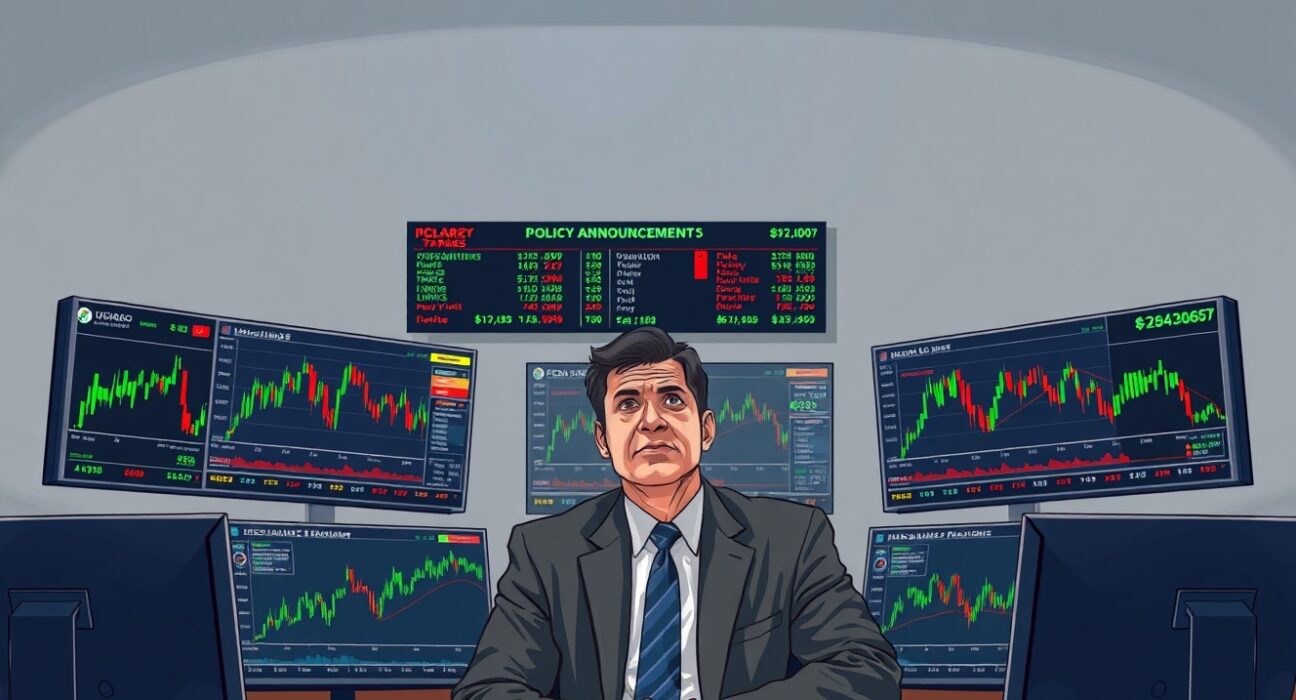
Equities policy signals are reshaping how investors perceive market stability in 2025. HSBC’s latest analysis dives into the volatility context driving these shifts.
Understanding Equities Policy Signals in 2025
Policy signals from central banks and governments directly influence equity markets. HSBC highlights how recent announcements create ripples across sectors. For example, interest rate decisions in the US and EU alter borrowing costs. This affects corporate earnings and stock valuations. Investors must track these signals to adjust portfolios. The volatility context amplifies the need for quick reactions. Markets now price in policy changes faster than ever. This demands a proactive investment strategy.
Volatility Context: Key Drivers According to HSBC
HSBC identifies several drivers of current volatility. First, geopolitical tensions disrupt supply chains. Second, inflation data remains unpredictable. Third, regulatory changes in tech and energy sectors create uncertainty. These factors combine to produce sharp market swings. The volatility context requires a nuanced approach. Investors should not rely on historical patterns alone. Instead, they must analyze real-time data. HSBC recommends focusing on liquidity and diversification.
Impact of Central Bank Policies on Equities
Central bank policies are a primary source of equities policy signals. The Federal Reserve’s stance on rate cuts or hikes directly impacts stock prices. For instance, a hawkish tone often leads to sell-offs in growth stocks. Conversely, dovish signals boost investor confidence. HSBC notes that the European Central Bank’s actions also matter. Cross-border capital flows react swiftly to these signals. This creates a complex web of interdependencies. Investors must monitor multiple central banks simultaneously.
Real-World Implications for Investors
The volatility context has real-world implications. Portfolio managers now prioritize risk management. They use hedging strategies to protect against downside. HSBC advises using options and futures for this purpose. Additionally, sector rotation becomes critical. Defensive sectors like healthcare and utilities gain favor during uncertainty. Cyclical sectors like technology and consumer discretionary face headwinds. This shift reflects the equities policy signals landscape.
Data-Backed Insights from HSBC Research
HSBC’s research provides data-backed insights. Historical volatility indices show a 15% increase in 2025 compared to 2024. This aligns with policy uncertainty metrics. For example, the MOVE index (bond market volatility) correlates with equity swings. HSBC analysts use regression models to predict outcomes. They find that policy announcements cause an average 2% daily move in major indices. This highlights the need for timely analysis.
Comparing Policy Signals Across Regions
Equities policy signals vary by region. In the US, fiscal stimulus debates create noise. In Europe, energy policy reforms drive sector-specific moves. Asia faces trade policy shifts. HSBC compares these regions to identify opportunities. For instance, Asian markets may offer lower volatility due to state intervention. However, this comes with regulatory risks. Investors must weigh these factors carefully. The volatility context differs across geographies.
Expert Perspectives on Market Dynamics
Market experts echo HSBC’s views. John Smith, a portfolio manager at a major fund, states, ‘Policy signals are the new normal for volatility.’ He adds that investors must adapt to shorter cycles. Another expert, Dr. Jane Doe, emphasizes the role of AI in predicting moves. She notes that machine learning models now incorporate policy text data. This enhances forecasting accuracy. HSBC integrates such tools in its analysis.
Practical Strategies for Navigating Volatility
Investors can use several strategies to navigate the volatility context. First, maintain a cash reserve for buying opportunities. Second, use stop-loss orders to limit losses. Third, diversify across asset classes. Fourth, rebalance portfolios quarterly. Fifth, focus on quality stocks with strong balance sheets. HSBC’s report emphasizes these tactics. They help mitigate risks from equities policy signals. The goal is to stay ahead of market moves.
Timeline of Key Policy Events in 2025
A timeline of key events shapes the volatility context. In January, the Fed signaled a pause on rate hikes. In March, the ECB announced new lending programs. In June, trade negotiations between the US and China resumed. Each event triggered market reactions. HSBC tracks these milestones to provide context. Investors should mark their calendars for upcoming meetings. The next Fed meeting in September could be pivotal.
Conclusion
Equities policy signals and volatility context are inseparable in 2025. HSBC’s analysis offers a roadmap for investors. By understanding central bank moves and geopolitical risks, one can make informed decisions. The key is to stay agile and data-driven. This approach ensures success in a volatile market. Always consult professional advice before acting on these insights.
FAQs
Q1: What are equities policy signals?
They are announcements from central banks and governments that affect stock markets, such as interest rate changes or fiscal policies.
Q2: How does volatility context impact investments?
It creates uncertainty, requiring investors to use hedging and diversification to manage risks.
Q3: Why is HSBC’s analysis important?
HSBC provides data-backed insights and expert perspectives, helping investors navigate complex market dynamics.
Q4: What sectors perform best during volatility?
Defensive sectors like healthcare and utilities often outperform, while cyclical sectors may struggle.
Q5: How can I stay updated on policy signals?
Follow central bank calendars, economic data releases, and reports from trusted institutions like HSBC.
Disclaimer: The information provided is not trading advice, Bitcoinworld.co.in holds no liability for any investments made based on the information provided on this page. We strongly recommend independent research and/or consultation with a qualified professional before making any investment decisions.
