

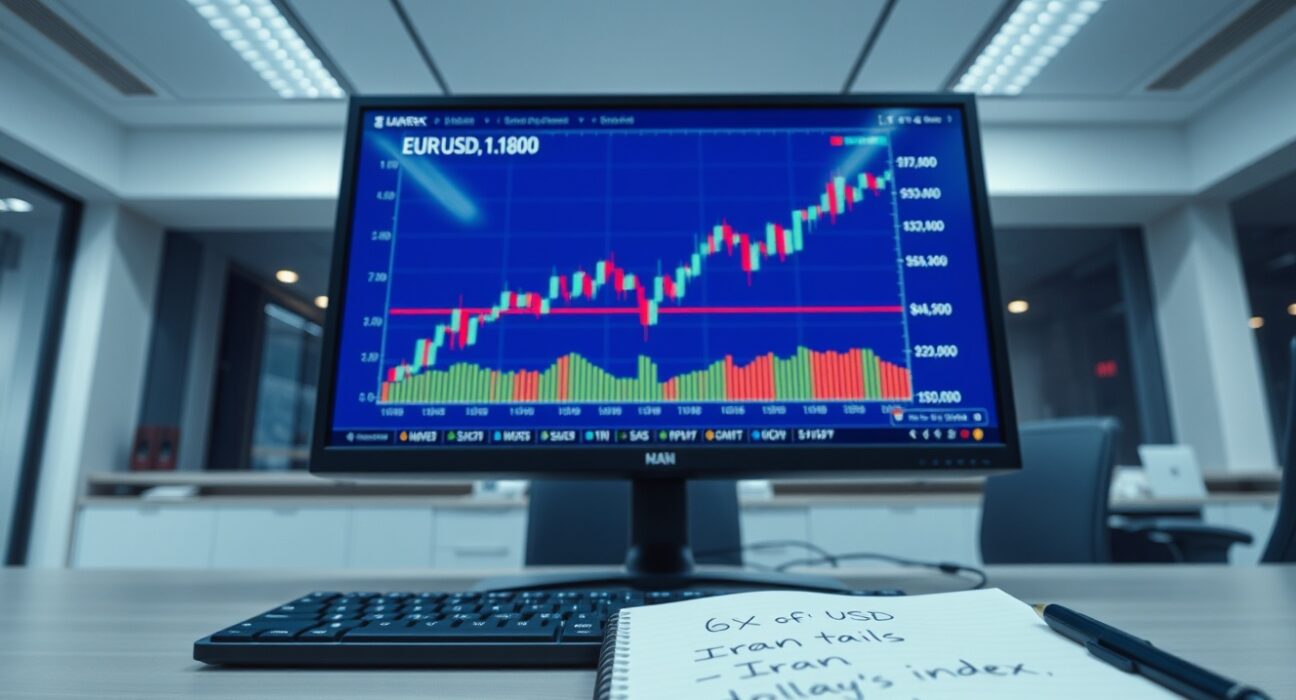
The EUR/USD currency pair is testing significant technical resistance near the 1.1800 level as renewed diplomatic optimism surrounding US-Iran negotiations creates substantial market movement. Market participants globally are closely monitoring these developments, which carry profound implications for energy markets, global trade flows, and currency valuations. This movement represents one of the most substantial single-day gains for the euro against the dollar in recent weeks, reflecting shifting capital flows and risk sentiment.
EUR/USD Technical Analysis and Key Levels
Technical analysts highlight the 1.1800 level as a critical psychological and technical barrier for the EUR/USD pair. This level previously acted as both support and resistance throughout 2024, creating a concentration of trader interest. Furthermore, the 200-day moving average currently resides just above this threshold at 1.1825, adding another layer of technical significance. A sustained break above 1.1800 could potentially open the path toward the 1.1900-1.1950 resistance zone.
Conversely, immediate support now forms around the 1.1750 level, followed by the more substantial 1.1700 handle. Market depth data from major liquidity providers indicates substantial buy orders clustered below 1.1750, suggesting institutional interest in supporting the euro at these levels. The Relative Strength Index (RSI) on the daily chart has moved from neutral territory into bullish momentum, currently reading 58.
Market Structure and Order Flow
Recent Commitment of Traders (COT) reports from the Commodity Futures Trading Commission reveal that speculative net long positions on the euro increased by 12% in the latest reporting period. Meanwhile, hedge funds and asset managers have been gradually reducing their substantial long dollar positions established earlier in the year. This repositioning reflects a broader reassessment of relative monetary policy trajectories between the Federal Reserve and the European Central Bank.
Geopolitical Context: US-Iran Negotiation Timeline
The current market movement finds its primary catalyst in diplomatic communications between Washington and Tehran. Indirect talks mediated through European channels have reportedly made progress on several key issues, including nuclear program verification and sanctions relief timing. Historically, developments in US-Iran relations have produced significant volatility across multiple asset classes, particularly currencies and commodities.
A tentative timeline of recent developments provides crucial context:
- Early March 2025: European mediators convey revised proposals to both capitals.
- Mid-March 2025: Technical working groups resume discussions in Vienna.
- Last Week: Senior officials from both sides acknowledge “constructive” exchanges.
- Current Session: Market pricing reflects approximately 40% probability of a framework agreement within 30 days.
These diplomatic efforts aim to address longstanding concerns about Iran’s nuclear activities while providing economic relief through sanctions modification. The potential normalization of Iran’s oil exports represents the most significant market variable, with analysts estimating an additional 1-1.5 million barrels per day could enter global markets within six months of an agreement.
Impact on Currency Markets and the US Dollar
The US dollar typically functions as a safe-haven currency during periods of geopolitical tension. Consequently, reduced Middle East tensions through successful negotiations often correlate with dollar weakness against major counterparts. This relationship explains much of the current EUR/USD momentum. Additionally, the potential for increased Iranian oil exports could moderate global energy prices, affecting inflation expectations and central bank policies differently across regions.
The DXY US Dollar Index, which measures the dollar against a basket of six major currencies, has declined 0.8% during the current trading session. This broad-based dollar weakness extends beyond the euro, with gains also evident in commodity-linked currencies like the Australian and Canadian dollars. However, the euro’s appreciation has been particularly pronounced due to the European Union’s geographic and economic proximity to the Middle East region.
European Economic Exposure and Banking Sector Implications
European financial institutions maintain more substantial exposure to Iranian trade financing than their American counterparts, despite sanctions. A normalization of relations could potentially reopen significant business channels for European banks and exporters. This prospect has supported eurozone equity markets today, particularly the banking sector, creating positive feedback for the single currency. The STOXX Europe 600 Banks Index is trading 1.2% higher on the session.
Central Bank Policy Divergence Considerations
Beyond immediate geopolitical factors, currency traders are evaluating how potential energy price changes might influence monetary policy. The European Central Bank remains concerned about persistent services inflation and wage growth. Lower energy prices resulting from increased Iranian supply could provide the ECB with additional flexibility regarding the timing of future rate cuts. Conversely, the Federal Reserve has recently emphasized data dependency, with particular focus on the services sector and labor market tightness.
Market-implied policy rates, derived from overnight index swaps, currently suggest the ECB may deliver 75 basis points of easing in 2025, while the Fed is priced for approximately 50 basis points. Any shift in these expectations due to changing inflation dynamics could drive further EUR/USD movement. Upcoming inflation data releases from both the Eurozone and United States will therefore command significant attention in the coming weeks.
Expert Analysis and Market Sentiment
Senior currency strategists at major investment banks offer measured perspectives. “While the geopolitical developments are undoubtedly positive for risk sentiment, the EUR/USD move already incorporates substantial optimism,” notes a lead analyst from a global investment bank. “The technical setup suggests we may see consolidation near current levels until we receive clearer signals about the actual implementation timeline of any agreement.”
Risk reversals, options market instruments that measure sentiment, show a slight bias toward euro calls over puts, indicating modest bullish positioning. However, the skew is not extreme, suggesting traders remain cautious about extending positions significantly above the 1.1800 handle without confirmation of a diplomatic breakthrough.
Comparative Currency Performance Table
The table below illustrates how major currency pairs have reacted to the US-Iran negotiation developments during the current trading session, highlighting the euro’s relative strength.
| Currency Pair | Current Price | Daily Change | Primary Driver |
|---|---|---|---|
| EUR/USD | 1.1792 | +0.85% | Geopolitical Risk Reduction |
| GBP/USD | 1.2635 | +0.45% | Broad USD Weakness |
| USD/JPY | 152.80 | -0.30% | Safe-Haven Flow from JPY |
| AUD/USD | 0.6580 | +0.60% | Commodity Currency Support |
| USD/CAD | 1.3520 | -0.50% | Oil Price Sensitivity |
Conclusion
The EUR/USD pair’s approach toward the crucial 1.1800 level demonstrates how geopolitical developments can rapidly reprioritize market fundamentals. While technical factors and central bank policy expectations remain important, the immediate catalyst stems from diplomatic progress between the United States and Iran. Traders should monitor official statements from negotiating parties alongside key technical levels. Furthermore, the broader implications for global energy markets and inflation trajectories warrant close observation, as these secondary effects may ultimately determine the sustainability of the current EUR/USD move beyond short-term geopolitical optimism.
FAQs
Q1: Why does the EUR/USD pair react to US-Iran negotiations?
The US dollar often strengthens during geopolitical uncertainty as a safe-haven asset. Reduced tensions can weaken the dollar broadly. The euro benefits additionally due to Europe’s geographic and economic ties to the Middle East, particularly regarding energy imports and trade financing.
Q2: What is the significance of the 1.1800 level for EUR/USD?
The 1.1800 level represents a major psychological round number and a technical resistance area that has contained price action multiple times in the past year. A decisive break above could signal a shift in medium-term momentum and attract further buying interest.
Q3: How could an Iran nuclear deal affect global oil prices?
Analysts estimate a finalized deal could return 1 to 1.5 million barrels per day of Iranian oil to global markets within several months. This increased supply could place downward pressure on global benchmark prices like Brent Crude, potentially affecting inflation and central bank policies worldwide.
Q4: Are other currency pairs affected by these developments?
Yes. Commodity-linked currencies like the Australian and Canadian dollars often benefit from improved global risk sentiment and stable energy prices. Safe-haven currencies like the Japanese yen and Swiss franc may see reduced demand during periods of geopolitical de-escalation.
Q5: What should traders watch next regarding this situation?
Traders should monitor official statements from US and Iranian officials, meetings of the Joint Commission in Vienna, and any draft agreement texts. Additionally, oil price movements and broader risk sentiment indicators like equity market performance will provide important context for currency market direction.
Disclaimer: The information provided is not trading advice, Bitcoinworld.co.in holds no liability for any investments made based on the information provided on this page. We strongly recommend independent research and/or consultation with a qualified professional before making any investment decisions.
