
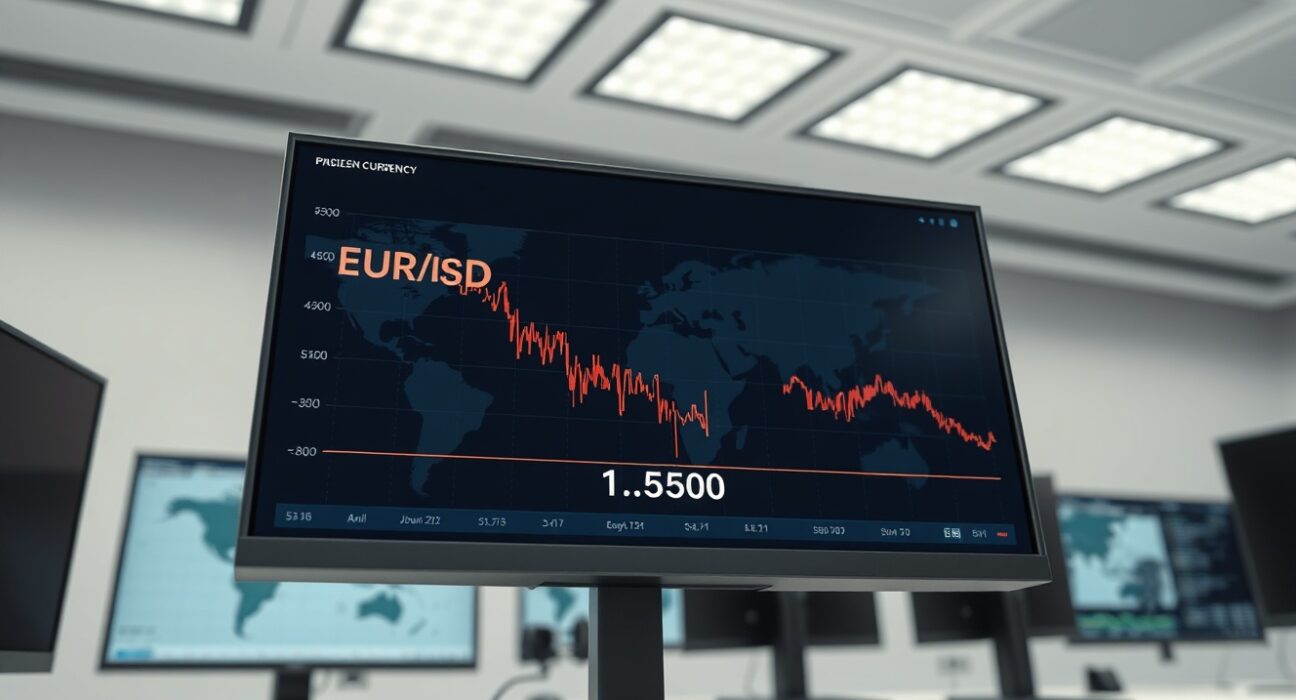
The EUR/USD currency pair, a critical benchmark for global finance, has declined sharply to near the 1.5500 level. This significant move, observed in early trading on March 25, 2025, reflects intense market reactions to escalating geopolitical tensions in the Middle East. Consequently, traders are rapidly reassessing risk, driving capital flows toward traditional safe-haven assets.
EUR/USD Decline Driven by Geopolitical Flight to Safety
Forex markets exhibit high sensitivity to geopolitical instability. The current Middle East crisis has triggered a classic flight-to-safety dynamic. Investors are consequently selling euro-denominated assets perceived as riskier. They are simultaneously buying the US dollar, which retains its status as the world’s primary reserve currency during turmoil. This fundamental shift in capital allocation directly pressures the EUR/USD exchange rate lower.
Market analysts point to specific triggers. For instance, disruptions to key maritime trade routes and concerns over regional energy supplies amplify economic uncertainty. This uncertainty undermines confidence in the Eurozone’s export-dependent economy. Historical data further supports this pattern. Past geopolitical events in the region have consistently resulted in USD strength against major currencies.
Technical and Fundamental Analysis of the Currency Pair
The decline to the 1.5500 handle represents a critical technical breach. This level previously acted as a major support zone throughout early 2025. A sustained break below it could open the path for further declines toward 1.5450. The moving average convergence divergence (MACD) indicator on the daily chart shows strengthening bearish momentum.
From a fundamental perspective, the crisis complicates the monetary policy outlook for both the European Central Bank (ECB) and the Federal Reserve. The ECB now faces a more challenging environment for potential rate cuts. Conversely, the Fed may maintain a hawkish stance for longer if the crisis fuels global inflationary pressures through oil prices.
Expert Insight on Central Bank Dilemmas
Dr. Anya Sharma, Chief Economist at Global Macro Advisors, provides context. “Central banks are now navigating a dual shock,” she explains. “Geopolitical risk premiums are rising in commodity markets, particularly oil. However, demand destruction from the crisis could also slow growth. The ECB’s primary mandate is price stability, but growth concerns are mounting. This creates a significant policy dilemma that markets are pricing into the euro.”
This analysis underscores the complex interplay between geopolitics and monetary policy. Market participants are therefore closely monitoring statements from ECB President Christine Lagarde and Fed Chair Jerome Powell for any guidance shifts.
Broader Market Impacts and Historical Context
The EUR/USD move creates ripple effects across other asset classes. European equity markets, particularly the DAX and CAC 40, have shown correlated weakness. Furthermore, the price of Brent crude oil has surged, exacerbating inflationary concerns. The following table illustrates key market movements observed concurrently with the EUR/USD decline:
| Asset | Movement | Primary Driver |
|---|---|---|
| EUR/USD | -0.8% to ~1.550 | Geopolitical Risk, USD Safe-Haven Demand |
| Brent Crude Oil | +4.2% | Supply Disruption Fears |
| German 10-Year Bund Yield | -12 bps | Flight to Quality & Growth Concerns |
| Gold (XAU/USD) | +1.5% | Alternative Safe-Haven Demand |
Historically, similar geopolitical events have led to sustained periods of USD strength. For example, the initial phases of the Russia-Ukraine conflict in 2022 saw the EUR/USD drop over 5% in a matter of weeks. However, the long-term trajectory often depends on the crisis’s duration and its ultimate impact on relative economic growth between the Eurozone and the United States.
Conclusion
The decline of the EUR/USD pair to near 1.550 serves as a stark barometer of rising geopolitical anxiety. This move underscores the currency market’s immediate function in repricing global risk. The ongoing Middle East crisis directly influences capital flows, central bank expectations, and broader financial stability. Market participants must now monitor diplomatic developments with equal intensity to economic data. The path for the EUR/USD will likely remain volatile, hinging on the conflict’s evolution and its tangible economic consequences.
FAQs
Q1: Why does the EUR/USD fall during a Middle East crisis?
The US dollar is considered a global safe-haven asset. During geopolitical turmoil, investors sell riskier assets (like those denominated in euros) and buy USD, increasing its value relative to the euro.
Q2: What is the significance of the 1.5500 level for EUR/USD?
1.5500 is a major psychological and technical support level. A sustained break below it can signal further bearish momentum and trigger automated selling by algorithmic trading systems.
Q3: How does this crisis affect the European Central Bank’s policy?
It creates a dilemma. Rising oil prices could increase inflation, arguing for higher rates. Simultaneously, the potential for slower economic growth and market instability argues for more accommodative policy, complicating their decision-making.
Q4: Besides EUR/USD, what other markets are impacted?
Global oil prices spike on supply fears. European stock markets often fall. Government bond yields in core Eurozone nations like Germany may drop as investors seek safety. Gold typically rises as an alternative haven.
Q5: Could the euro recover quickly if the crisis de-escalates?
Yes, a rapid diplomatic resolution could trigger a swift but partial retracement of the EUR/USD decline as the geopolitical risk premium evaporates. However, lasting damage to economic confidence or trade flows could limit the recovery.
Disclaimer: The information provided is not trading advice, Bitcoinworld.co.in holds no liability for any investments made based on the information provided on this page. We strongly recommend independent research and/or consultation with a qualified professional before making any investment decisions.