

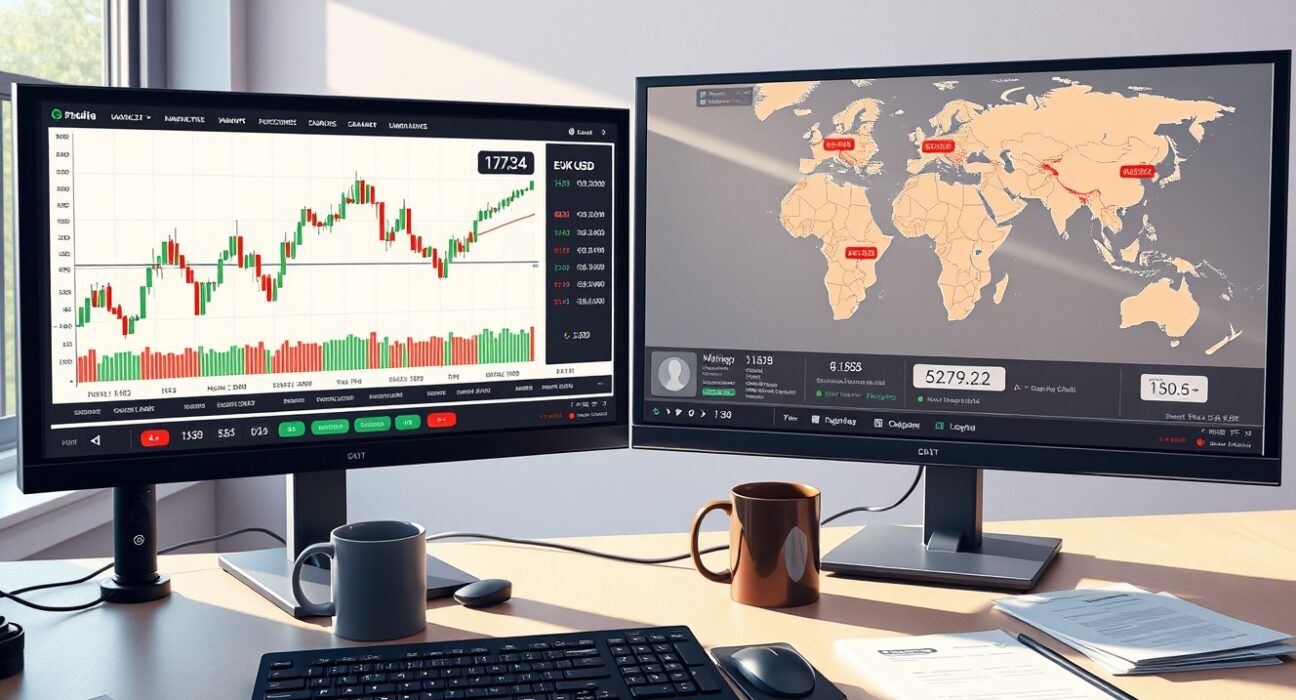
LONDON, March 2025 – The EUR/USD currency pair’s recent rally faces significant vulnerability without immediate de-escalation in Gulf tensions, according to analysis from ING’s global financial markets team. The euro’s gains against the US dollar remain precarious as geopolitical risks in the Persian Gulf region continue to influence global currency flows and investor sentiment.
EUR/USD Rally Shows Technical Vulnerability
Currency analysts at ING have identified multiple pressure points affecting the EUR/USD pair. The euro recently climbed to 1.0950 against the dollar, marking a 2.3% increase from February lows. However, this upward movement lacks fundamental support according to market data. Technical indicators reveal several concerning patterns:
- Relative Strength Index (RSI) approaching overbought territory at 68
- Moving Average Convergence Divergence (MACD) showing weakening momentum
- Fibonacci retracement levels indicating resistance at 1.0980
- Trading volume declining during recent upward moves
Market participants express growing concern about sustainability. The rally primarily reflects short-term positioning rather than structural economic improvements.
Geopolitical Tensions Drive Currency Market Volatility
Persistent tensions in the Persian Gulf region create substantial headwinds for currency markets. Recent incidents have heightened risk aversion among global investors. The Strait of Hormuz remains a critical flashpoint, with approximately 20% of global oil shipments passing through this narrow waterway. Energy market disruptions directly impact currency valuations through multiple channels:
| Impact Channel | Effect on EUR/USD | Timeframe |
|---|---|---|
| Oil Price Shock | Dollar strength as safe haven | Immediate |
| Trade Route Disruption | Eurozone export pressure | 1-3 months | Risk Appetite Reduction | Capital flight from euro assets | Ongoing |
| Central Bank Response | Policy divergence widening | Medium-term |
Historical data reveals clear patterns. Previous Gulf crises typically produced dollar appreciation of 3-5% within 30 days. The current situation shows similar early indicators.
ING’s Analytical Framework for Currency Assessment
ING’s currency strategy team employs a comprehensive assessment model. This framework evaluates multiple variables simultaneously. The model incorporates geopolitical risk scores, economic fundamentals, and market positioning data. Current analysis suggests the EUR/USD faces asymmetric risks. Downside potential significantly exceeds upside opportunities without geopolitical improvement.
The bank’s research indicates specific threshold levels. A breach below 1.0850 could trigger accelerated selling. Conversely, sustained movement above 1.1000 requires genuine de-escalation signals. Market participants monitor diplomatic developments closely. Recent statements from European and Gulf officials provide limited reassurance.
Economic Fundamentals Underpin Currency Vulnerabilities
Structural economic factors compound the EUR/USD’s geopolitical challenges. The eurozone economy shows mixed signals according to recent data releases. Manufacturing PMI readings remain below expansion thresholds in several key economies. Meanwhile, inflation differentials between the Eurozone and United States continue to favor dollar strength.
European Central Bank policy faces constraints. Governing Council members express caution about premature easing. However, economic weakness limits hawkish options. This creates a policy dilemma that pressures the euro. Comparative analysis reveals concerning trends:
- Growth differentials: US outperformance continues through Q1 2025
- Interest rate spreads: 10-year yield gap favors dollar by 125 basis points
- Trade balances: Eurozone surplus narrowing amid energy import costs
- Capital flows: Net portfolio outflows from euro assets recorded
These fundamental headwinds require acknowledgment. Currency markets increasingly price in economic realities alongside geopolitical risks.
Market Positioning and Sentiment Indicators
Commitment of Traders reports reveal shifting market dynamics. Speculative positioning in EUR/USD futures shows notable changes. Net long euro positions decreased by 15% in the latest reporting period. This reduction precedes the recent rally, suggesting technical rather than conviction-driven buying.
Options market data provides additional insights. Risk reversals indicate growing demand for euro put options. This reflects hedging against potential declines. The one-month 25-delta risk reversal stands at -0.8% in favor of euro puts. This represents the most negative reading since November 2024.
Volatility expectations remain elevated. One-month implied volatility for EUR/USD options trades at 7.5%. This exceeds the 6.2% level observed during calm periods. The volatility term structure shows inversion, with near-term expectations exceeding longer-term projections.
Historical Context and Comparative Analysis
Previous geopolitical crises offer valuable lessons for current market conditions. The 2019 Gulf tensions produced a 4.2% EUR/USD decline over six weeks. Similar patterns emerged during 2022 energy market disruptions. Analysis reveals consistent market responses to Gulf instability:
First, initial risk-off sentiment typically strengthens the dollar. Second, energy price spikes pressure eurozone terms of trade. Third, capital flows shift toward perceived safe havens. Fourth, policy responses create currency market divergence. Current conditions mirror these historical precedents.
The 2025 situation includes unique elements however. European energy diversification efforts provide partial insulation. Strategic petroleum reserves stand at higher levels. Alternative supply routes have developed since previous crises. These factors may moderate but not eliminate vulnerability.
Pathways for EUR/USD Stability and Recovery
Several developments could support EUR/USD stabilization according to ING analysis. Diplomatic progress represents the most immediate positive catalyst. Confidence-building measures between regional powers would reduce risk premiums. Multilateral engagement through established forums offers potential pathways.
Economic improvements provide another stabilization avenue. Stronger eurozone data would bolster the currency’s fundamental case. Particularly important are manufacturing surveys and consumer confidence indicators. Inflation convergence with US levels would reduce policy divergence pressures.
Technical factors also offer potential support levels. The 200-day moving average currently sits at 1.0820. This represents a key psychological and technical barrier. Options market positioning suggests substantial interest at this level. Break below this support would signal more significant deterioration.
Conclusion
The EUR/USD rally demonstrates clear vulnerability without Gulf de-escalation according to ING analysis. Geopolitical tensions combine with economic fundamentals to create substantial headwinds. Market positioning and sentiment indicators reinforce this cautious assessment. The currency pair faces asymmetric risks in the current environment. Sustainable recovery requires genuine geopolitical progress alongside economic improvements. Market participants should monitor diplomatic developments closely while maintaining defensive positioning. The EUR/USD outlook remains contingent on external factors beyond traditional economic variables.
FAQs
Q1: What specific Gulf tensions affect EUR/USD most directly?
Maritime security incidents in the Strait of Hormuz and regional political instability create immediate market impacts. These events influence oil prices and global risk sentiment, which directly affect currency valuations through multiple transmission channels.
Q2: How does ING measure currency vulnerability in their analysis?
ING employs a multi-factor model incorporating geopolitical risk scores, technical indicators, economic fundamentals, and market positioning data. The framework assesses both immediate vulnerabilities and structural weaknesses across different time horizons.
Q3: What technical levels are critical for EUR/USD in current conditions?
Key levels include resistance at 1.0980 (Fibonacci level) and support at 1.0850 (recent consolidation low) and 1.0820 (200-day moving average). Breach of these levels typically triggers increased market activity and position adjustments.
Q4: How do oil prices specifically influence EUR/USD movements?
Oil price increases typically strengthen the dollar through multiple mechanisms: increased US energy export revenues, safe-haven flows during uncertainty, and negative impacts on eurozone import costs and inflation differentials.
Q5: What time horizon does ING’s vulnerability assessment cover?
The analysis focuses primarily on the 1-3 month horizon where geopolitical factors exert strongest influence. However, the framework also considers longer-term structural trends that may emerge from sustained tensions or resolution.
Disclaimer: The information provided is not trading advice, Bitcoinworld.co.in holds no liability for any investments made based on the information provided on this page. We strongly recommend independent research and/or consultation with a qualified professional before making any investment decisions.
