
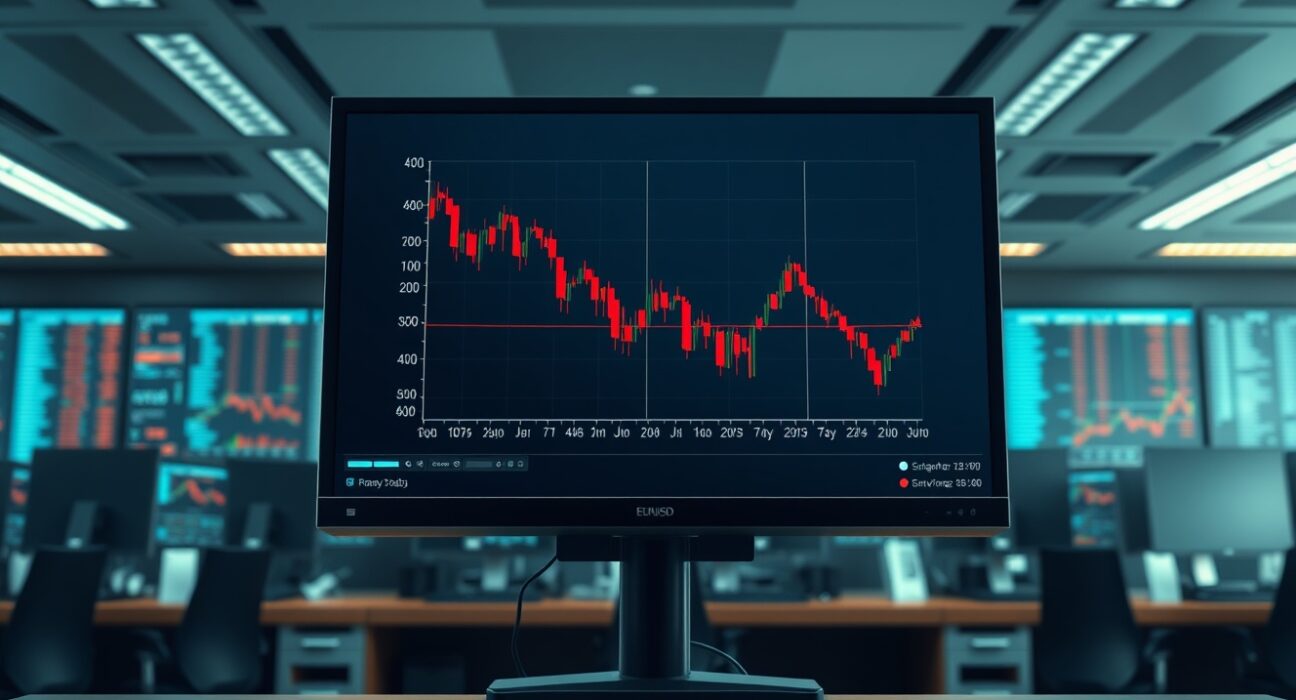
The EUR/USD currency pair faced significant downward pressure in early trading sessions, as former President Donald Trump’s recent comments regarding Iran injected fresh uncertainty into global markets and bolstered demand for the US dollar. This development, observed by traders worldwide, directly challenged the prevailing narrative of regional de-escalation that had provided modest support to risk-sensitive assets. Consequently, the greenback emerged as the primary beneficiary of the renewed geopolitical friction, reversing a brief period of euro resilience. Market analysts immediately began assessing the potential for sustained USD strength against this evolving political backdrop.
EUR/USD Reacts to Geopolitical Shockwaves
Foreign exchange markets exhibited heightened volatility following the publication of Trump’s remarks. The euro initially struggled to maintain its footing against a broadly strengthening dollar. Market participants rapidly priced in a higher geopolitical risk premium, which traditionally favors safe-haven currencies like the USD. This shift in sentiment was evident across multiple trading platforms and currency crosses. Furthermore, the move reflected a recalibration of expectations surrounding Middle Eastern stability and its implications for global energy supplies and trade routes. Trading volumes spiked notably as algorithmic and institutional investors adjusted their positions.
Historical context underscores this reaction. The EUR/USD pair often serves as a liquid barometer for transatlantic risk sentiment. Periods of elevated global tension typically see capital flow into US Treasury markets, appreciating the dollar. This dynamic played out decisively in the hours following the news. The price action erased gains the pair had accrued earlier in the week on softer US economic data. Technical analysts pointed to a breach of key support levels, potentially opening the door for further declines. Meanwhile, implied volatility metrics for euro-dollar options jumped, signaling trader anticipation of continued price swings.
Chart Analysis and Technical Breakdown
A detailed examination of the price charts reveals the immediacy of the market’s response. The sell-off was characterized by a series of large, bearish candlesticks on the hourly chart, indicating strong selling pressure. Key moving averages, which had previously acted as support, were decisively broken. The Relative Strength Index (RSI) dipped into oversold territory, suggesting the move may have been exacerbated by momentum-driven trading. However, the breach of the psychologically important 1.0700 level signaled a potential shift in the medium-term trend. Market depth data showed a clustering of sell orders just below this level, accelerating the decline.

The following table summarizes key technical levels before and after the news:
| Technical Indicator | Pre-News Level | Post-News Level | Change |
|---|---|---|---|
| Spot Price | 1.0745 | 1.0678 | -0.67% |
| 50-Hour Moving Average | 1.0730 (Support) | 1.0742 (Resistance) | Breached |
| Daily ATR (14) | 45 pips | Expanding | Increased Volatility |
| Key Support (Previous) | 1.0720 | 1.0650 | Broken & Lowered |
Trump’s Comments and the USD Safe-Haven Bid
The specific nature of the former president’s statements reignited concerns about a potential hardening of US foreign policy. While the exact wording varied across news outlets, the core message pointed toward a more confrontational stance. This perception directly undermined hopes for diplomatic progress that had been cautiously building in preceding weeks. Consequently, investors sought refuge in assets perceived as stable during international strife. The US dollar, backed by the world’s largest economy and deepest capital markets, naturally attracted these flows. This dynamic illustrates the currency’s enduring role as the global reserve asset during crises.
Several concurrent factors amplified the dollar’s appeal. First, US Treasury yields edged higher as some traders speculated on potential disruptions to oil supplies, which could feed into inflation. Second, the Federal Reserve’s monetary policy stance remains relatively hawkish compared to the European Central Bank, providing a fundamental yield advantage. Third, global equity markets turned negative, prompting a classic flight-to-safety move. The DXY US Dollar Index, which tracks the USD against a basket of six major currencies, rallied sharply, confirming the move was broad-based and not isolated to the euro. This confluence of events created a powerful tailwind for the greenback.
Expert Analysis on Market Psychology
Financial strategists emphasize that markets often react more to the uncertainty generated by geopolitical rhetoric than to specific policy details. The sudden shift in tone disrupted a fragile equilibrium that had allowed traders to focus on macroeconomic fundamentals. “When geopolitical risk spikes, correlation between traditional asset classes increases, and the USD’s unique liquidity profile becomes paramount,” noted a senior forex strategist at a major European bank, referencing standard risk-off playbooks. This environment typically disadvantages the euro, which is more sensitive to regional growth concerns and energy security. Analysts also highlighted that the eurozone’s proximity to the Middle East and dependence on energy imports makes its currency particularly vulnerable to such headlines.
Broader Implications for Forex and Global Markets
The ripple effects extended beyond the EUR/USD pair. Commodity-linked currencies like the Australian and Canadian dollars also softened against the USD. Meanwhile, traditional safe havens like the Swiss franc and Japanese yen saw mixed flows, as the dollar’s dominance captured most of the demand. The event served as a stark reminder of how political discourse can swiftly alter market trajectories. For central banks, including the ECB, renewed dollar strength complicates the inflation outlook by making energy imports (often priced in USD) more expensive in local currency terms. This could influence the timing and pace of future interest rate decisions on both sides of the Atlantic.
Looking ahead, traders will monitor several key developments. First, any official clarification or follow-up statements from US political figures will be scrutinized. Second, market attention will return to scheduled economic data, including US inflation figures and Eurozone PMI surveys, to reassess fundamental drivers. Third, the commitment of large speculators, as seen in weekly CFTC positioning data, will indicate whether this USD bid is viewed as transient or the start of a new trend. The interplay between geopolitics and macroeconomics will likely define trading ranges for the coming sessions. Historical precedent suggests that while initial reactions can be sharp, sustained trends require confirmation from economic fundamentals and consistent policy signals.
Conclusion
The EUR/USD pair experienced a pronounced sell-off driven by geopolitical headlines, specifically former President Trump’s comments on Iran, which bolstered the US dollar as a safe haven. This move highlighted the market’s sensitivity to political risk and its capacity to quickly overshadow other fundamental factors. The breach of key technical levels suggests a fragile environment for the euro in the near term. Ultimately, the trajectory of the world’s most traded currency pair will depend on the evolution of both political rhetoric and underlying economic data, with traders now assigning a higher probability to scenarios of prolonged USD strength.
FAQs
Q1: Why do Trump’s comments on Iran affect the EUR/USD exchange rate?
Geopolitical tensions, especially involving major regions like the Middle East, often trigger a “risk-off” sentiment in financial markets. Investors seek safety in assets like the US dollar, increasing demand and causing it to appreciate against other currencies like the euro. The EUR/USD pair is highly liquid and reacts quickly to such global risk shifts.
Q2: What is a ‘safe-haven’ currency, and why is the USD considered one?
A safe-haven currency is one that tends to retain or increase its value during periods of market stress, geopolitical uncertainty, or economic turmoil. The US dollar is the premier safe-haven currency due to the size and stability of the US economy, the depth of its financial markets, its status as the world’s primary reserve currency, and the unparalleled liquidity of US Treasury bonds.
Q3: Could this move in EUR/USD impact European consumers and businesses?
Yes, a weaker euro against the dollar has several implications. It makes imports from the US and other dollar-linked regions (like commodities priced in USD) more expensive, potentially raising costs for businesses and contributing to inflation. Conversely, it makes European exports cheaper for foreign buyers, which could benefit export-oriented companies.
Q4: How long do geopolitical-driven market moves typically last?
The duration varies significantly. Sharp, initial reactions often occur within hours or days. Whether the move sustains depends on if the geopolitical event escalates into a prolonged crisis, if it begins to materially impact economic data (like oil prices or trade), or if it is overshadowed by other, stronger fundamental drivers like central bank policy decisions or major economic reports.
Q5: Besides EUR/USD, what other financial instruments are sensitive to this type of news?
Other sensitive assets include global stock indices (which often fall on risk-off sentiment), crude oil prices (due to Middle East supply concerns), gold (as an alternative safe haven), and government bond yields (particularly US Treasuries, which see increased demand). The volatility index (VIX) and currency pairs like USD/JPY and USD/CHF also typically react.
Disclaimer: The information provided is not trading advice, Bitcoinworld.co.in holds no liability for any investments made based on the information provided on this page. We strongly recommend independent research and/or consultation with a qualified professional before making any investment decisions.