

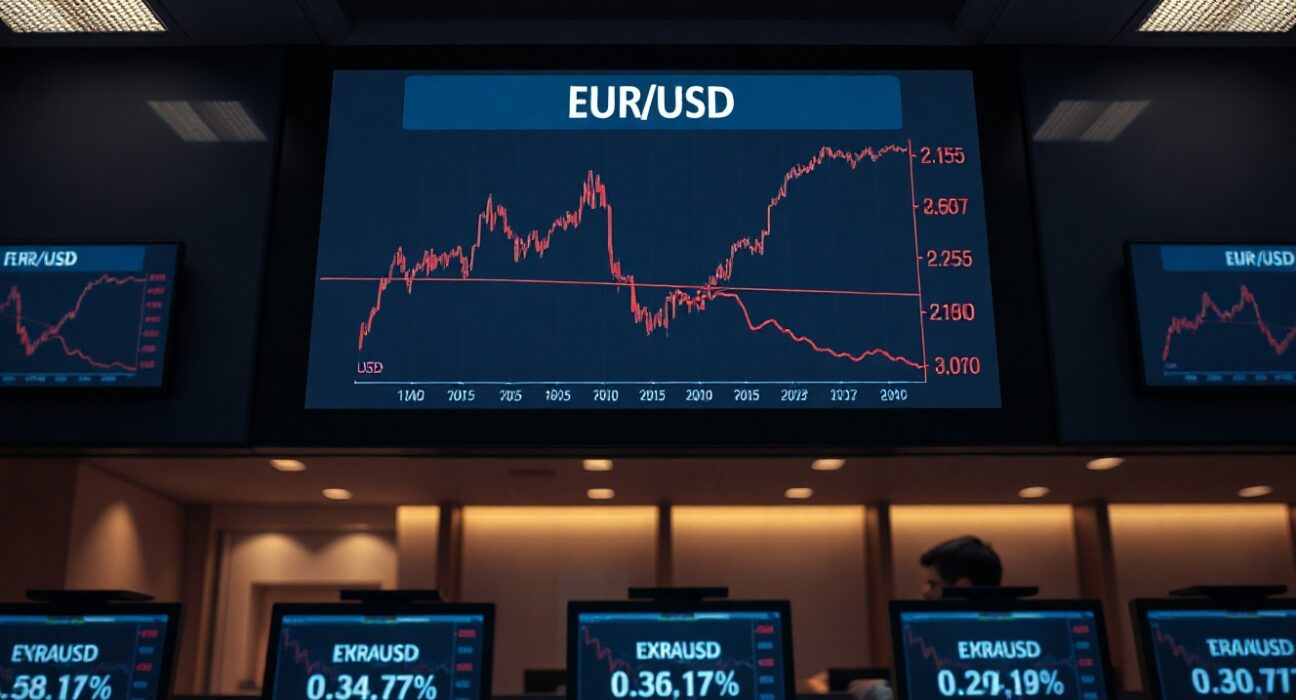
The euro remained under pressure on Tuesday, hovering near three-month lows against the US dollar, as ongoing diplomatic talks between the United States and Iran failed to shift the broader market sentiment that has favored the greenback. Despite some positive signals from the negotiations, the single currency struggled to gain traction amid persistent dollar strength and diverging monetary policy expectations.
Market Context: Dollar Strength Persists
The US Dollar Index has held firm near recent highs, supported by resilient US economic data and a cautious tone from Federal Reserve officials who have pushed back against expectations of early rate cuts. Markets are currently pricing in a slower pace of easing from the Fed compared to the European Central Bank, a dynamic that has kept the dollar well-bid against the euro.
Talks between the US and Iran, which have raised hopes for a potential de-escalation in Middle East tensions, provided a brief moment of relief for risk-sensitive currencies but failed to alter the euro’s trajectory. Analysts noted that any geopolitical risk premium reduction was offset by the euro zone’s own structural challenges.
Why the Euro Is Struggling
The euro zone economy continues to face headwinds from sluggish manufacturing data, weak consumer demand, and political uncertainty in key member states. The ECB’s recent decision to hold rates steady, while signaling potential cuts later in the year, has further undermined the euro’s appeal.
“The market is focusing on the rate differential,” said a senior currency strategist at a London-based bank. “As long as the Fed remains hesitant to cut and the ECB appears more dovish, the euro will struggle to recover meaningfully.”
Impact on Traders and Businesses
For European importers and companies with dollar-denominated debt, the weaker euro means higher costs. Exporters, however, may benefit from improved competitiveness. Currency markets are now watching for the next set of US inflation data and ECB commentary for clearer directional cues.
Conclusion
The euro’s inability to rally despite progress in US-Iran talks underscores the dominance of monetary policy divergence in driving currency markets. Until the ECB signals a more hawkish stance or the Fed moves closer to rate cuts, the single currency is likely to remain under pressure against the dollar.
FAQs
Q1: Why is the euro falling against the US dollar?
The euro is falling primarily due to expectations that the European Central Bank will cut interest rates sooner than the Federal Reserve, making dollar-denominated assets more attractive.
Q2: How do US-Iran talks affect the euro?
Progress in US-Iran talks can reduce geopolitical risk and support riskier currencies, but the euro’s reaction has been muted as broader macroeconomic factors like interest rate differentials dominate.
Q3: What should traders watch next?
Traders should monitor upcoming US inflation data, Fed and ECB speeches, and any shifts in geopolitical tensions that could alter risk sentiment.
Disclaimer: The information provided is not trading advice, Bitcoinworld.co.in holds no liability for any investments made based on the information provided on this page. We strongly recommend independent research and/or consultation with a qualified professional before making any investment decisions.
