

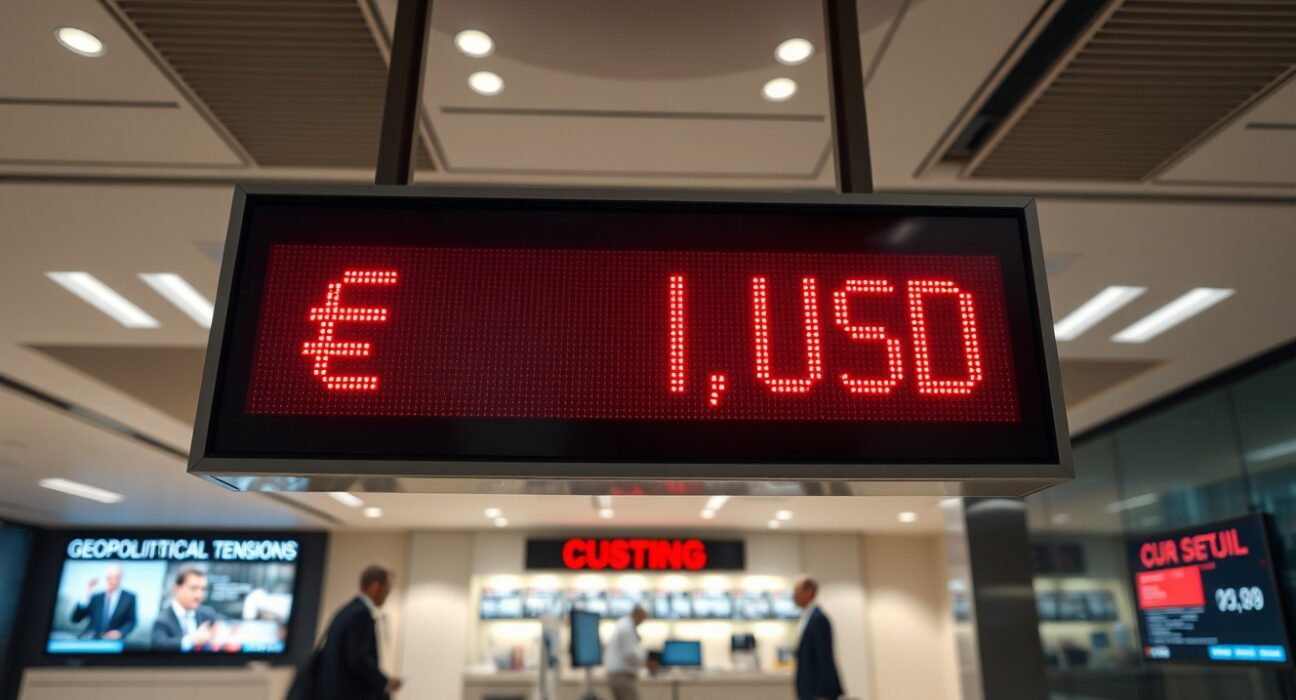
The euro eased against the U.S. dollar on Wednesday, stepping back from a one-week high as traders turned their attention to escalating geopolitical tensions in the Middle East. The common currency’s pullback reflects a broader shift toward safe-haven assets, with the dollar and yen gaining ground amid renewed uncertainty.
Market Reaction to Geopolitical Developments
Currency markets moved cautiously as new reports emerged from the region, prompting investors to reassess risk exposure. The euro, which had rallied earlier in the week on improved eurozone economic data, gave back some of those gains as geopolitical risk premiums returned to the forefront.
Analysts noted that the move was largely technical, with the euro failing to sustain momentum above key resistance levels. The single currency had touched its highest point in seven days before reversing course, as profit-taking and hedging activity picked up.
Safe-Haven Flows Dominate
The U.S. dollar index, which measures the greenback against a basket of major currencies, rose modestly as traders sought refuge in traditional safe havens. The Japanese yen also strengthened, while emerging market currencies faced selling pressure.
Geopolitical events have historically triggered short-term volatility in currency markets, with the dollar and yen typically benefiting from risk-off sentiment. The latest developments add another layer of complexity for forex traders already navigating interest rate decisions from the Federal Reserve and the European Central Bank.
Impact on Eurozone Outlook
While the immediate market reaction has been driven by sentiment, the longer-term impact on the euro will depend on how the situation in the Middle East evolves and whether it affects energy prices or global trade flows. Europe remains sensitive to energy supply disruptions, and any sustained rise in oil prices could weigh on the eurozone economy.
Investors are also watching for any official statements from European policymakers that might signal a shift in economic forecasts or monetary policy stance.
Conclusion
The euro’s retreat from its one-week high underscores how quickly geopolitical developments can alter currency market dynamics. For now, traders are likely to remain cautious, with the dollar and yen benefiting from risk aversion. The coming days will be critical in determining whether this is a temporary pullback or the start of a broader trend.
FAQs
Q1: Why did the euro fall from its one-week high?
The euro fell as traders reacted to escalating geopolitical tensions in the Middle East, which triggered a shift toward safe-haven currencies like the U.S. dollar and Japanese yen.
Q2: How do geopolitical events affect currency markets?
Geopolitical uncertainty often drives investors toward safe-haven assets, strengthening currencies like the U.S. dollar and yen while putting pressure on risk-sensitive currencies like the euro and emerging market currencies.
Q3: What should forex traders watch next?
Traders should monitor developments in the Middle East, as well as any impact on energy prices and central bank policy signals from the Federal Reserve and European Central Bank.
Disclaimer: The information provided is not trading advice, Bitcoinworld.co.in holds no liability for any investments made based on the information provided on this page. We strongly recommend independent research and/or consultation with a qualified professional before making any investment decisions.
