

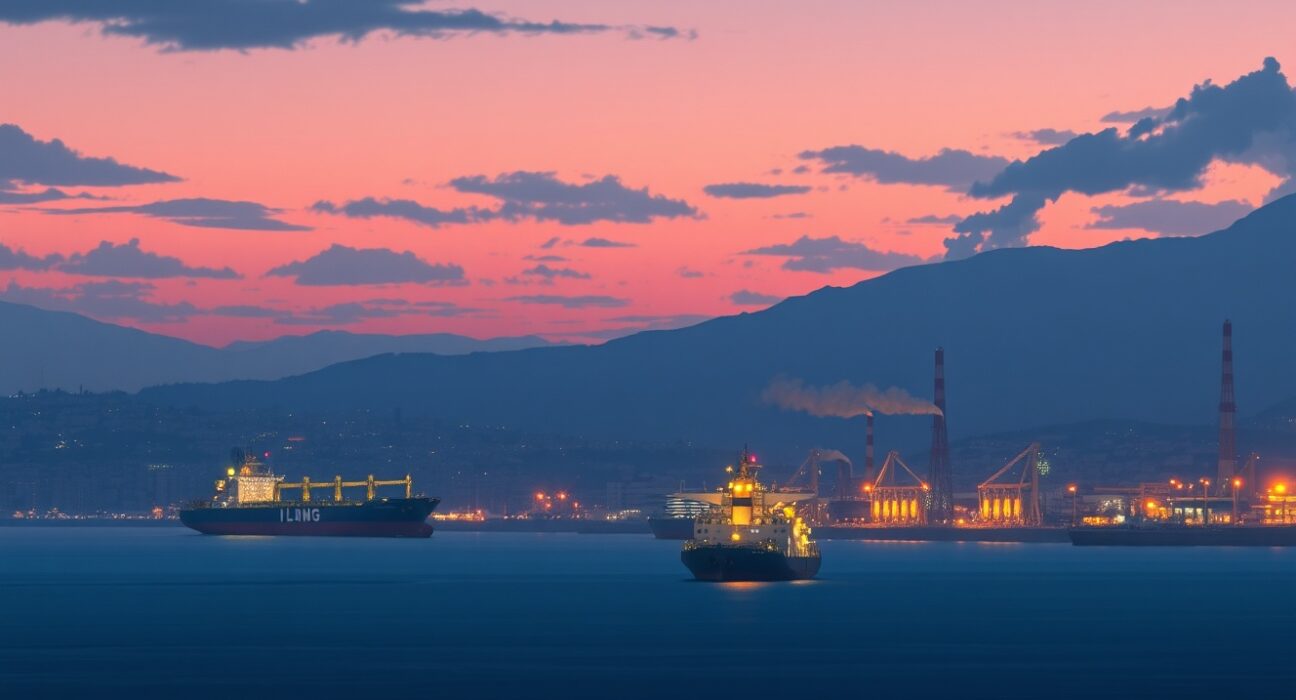
European natural gas markets face a significant transformation in 2025 as a wave of liquefied natural gas (LNG) supply reshapes the continent’s energy landscape, according to recent analysis from Societe Generale. The French financial institution’s research indicates a weaker outlook for European natural gas prices and market fundamentals, marking a pivotal shift from the supply constraints that dominated previous years. This development arrives as global LNG production capacity expands dramatically, creating both opportunities and challenges for European energy security and economic planning.
Natural Gas Market Transformation: The LNG Supply Wave
Societe Generale’s analysis reveals that Europe stands at the precipice of a substantial LNG supply increase. Global liquefaction capacity has expanded by approximately 20% since 2022, with significant contributions from projects in the United States, Qatar, and Australia. This expansion creates a fundamental shift in market dynamics. European import terminals, which operated near capacity during the energy crisis, now face increasing competition for cargoes from Asian markets. Consequently, price differentials between regional benchmarks have narrowed considerably.
The European natural gas storage situation further complicates the outlook. Storage facilities reached record levels exceeding 95% capacity ahead of the 2024-2025 winter season. This robust inventory position reduces immediate supply concerns but simultaneously dampens price support during the injection season. Market participants now monitor injection rates and weather patterns more closely than geopolitical developments, representing a notable normalization from previous years.
Infrastructure and Market Adaptation
European infrastructure has undergone rapid adaptation to accommodate increased LNG volumes. Germany completed its first three floating LNG terminals in 2023, while the Netherlands expanded capacity at the Gate terminal. These developments increase Europe’s regasification capacity by approximately 30 billion cubic meters annually. However, pipeline infrastructure constraints within Europe create regional price disparities that may persist despite abundant LNG availability.
European Natural Gas Price Dynamics and Forecasts
Societe Generale’s price forecasts reflect the changing supply landscape. The institution projects European natural gas prices to average between €25-€30 per megawatt-hour throughout 2025, representing a significant decline from the €40-€50 range observed in 2023. Several factors contribute to this weaker price outlook:
- Supply diversification: Reduced dependence on Russian pipeline gas
- Renewable energy growth: Increased wind and solar generation capacity
- Energy efficiency improvements: Structural demand reduction across industries
- Global competition: Asian buyers securing long-term LNG contracts
The price relationship between European natural gas benchmarks and Asian LNG spot prices has fundamentally changed. Previously, European prices frequently traded at a premium to attract flexible LNG cargoes. Now, with ample supply availability, this premium has largely disappeared, creating more integrated global pricing dynamics.
Industrial and Consumer Impacts
Lower natural gas prices provide substantial relief to European industries and consumers. Energy-intensive sectors including chemicals, fertilizers, and manufacturing benefit from reduced input costs. Household energy bills have declined approximately 15-20% from peak levels, though they remain elevated compared to pre-crisis averages. This price environment supports economic recovery efforts across the continent while reducing inflationary pressures.
Societe Generale’s Analysis: Methodology and Key Findings
Societe Generale’s research team employs a comprehensive methodology combining quantitative modeling with qualitative market intelligence. Their analysis examines multiple scenarios based on weather patterns, economic growth, and policy developments. The institution’s energy analysts monitor real-time data including:
| Data Category | Key Metrics | Current Status |
|---|---|---|
| Supply Fundamentals | LNG import volumes, pipeline flows, storage levels | Abundant with diversification |
| Demand Indicators | Industrial consumption, power generation, heating demand | Structurally lower than 2021 |
| Infrastructure | Terminal utilization, pipeline capacity, interconnector flows | Expanding with some bottlenecks |
| Market Signals | Forward curves, volatility, regional spreads | Normalizing with reduced premiums |
The analysis identifies several structural changes in European natural gas markets. Demand destruction during the energy crisis appears partially permanent, with industrial gas consumption approximately 15% below 2021 levels. Furthermore, renewable energy generation continues displacing gas-fired power, particularly during peak production periods. These factors combine with increased LNG availability to create a fundamentally different market environment.
Global LNG Market Developments and European Implications
The global LNG market expansion represents a double-edged sword for Europe. While increased supply enhances energy security, it also exposes European buyers to greater competition. Asian economies, particularly China and India, continue expanding their LNG import infrastructure and securing long-term supply contracts. This competition may intensify during winter months when heating demand peaks across the Northern Hemisphere.
New LNG projects scheduled for commissioning between 2025-2027 will add approximately 150 million tonnes of annual capacity globally. However, most of this new supply remains uncontracted to specific markets, creating potential volatility as producers seek optimal destinations for their cargoes. European buyers must navigate this evolving landscape while balancing short-term affordability with long-term security requirements.
Policy and Regulatory Considerations
European Union energy policies significantly influence natural gas market dynamics. The REPowerEU plan accelerated LNG infrastructure development while promoting renewable energy and efficiency measures. Current discussions focus on market design reforms, including potential changes to pricing mechanisms and storage obligations. These policy developments create uncertainty for market participants despite improved physical supply conditions.
Conclusion
Societe Generale’s analysis presents a comprehensive picture of Europe’s evolving natural gas landscape. The weaker outlook stems from fundamental shifts in supply availability, demand patterns, and market structure. While increased LNG supply enhances energy security, it simultaneously creates new challenges related to infrastructure utilization and global competition. European natural gas markets have entered a new phase characterized by greater supply diversity but continued vulnerability to global market dynamics. Market participants must adapt to this transformed environment while policymakers balance affordability, security, and climate objectives in their energy strategies.
FAQs
Q1: What does Societe Generale’s analysis say about European natural gas prices?
Societe Generale projects European natural gas prices to average €25-€30 per megawatt-hour in 2025, representing a significant decline from previous years due to increased LNG supply and structural demand reduction.
Q2: How has the global LNG market changed recently?
Global LNG liquefaction capacity has expanded approximately 20% since 2022, with major new projects in the United States, Qatar, and Australia creating increased supply availability and changing global trade patterns.
Q3: What factors contribute to Europe’s weaker natural gas outlook?
Key factors include abundant LNG supply, high storage levels, reduced industrial demand, increased renewable energy generation, and improved energy efficiency across the continent.
Q4: How does increased LNG supply affect European energy security?
Increased LNG supply enhances diversification away from pipeline gas but exposes Europe to global market competition and price volatility, particularly during peak demand periods in Asia.
Q5: What role does infrastructure play in Europe’s natural gas market?
Europe has significantly expanded LNG import infrastructure, but internal pipeline constraints and storage limitations continue creating regional price disparities and market inefficiencies despite abundant supply.
Disclaimer: The information provided is not trading advice, Bitcoinworld.co.in holds no liability for any investments made based on the information provided on this page. We strongly recommend independent research and/or consultation with a qualified professional before making any investment decisions.
