

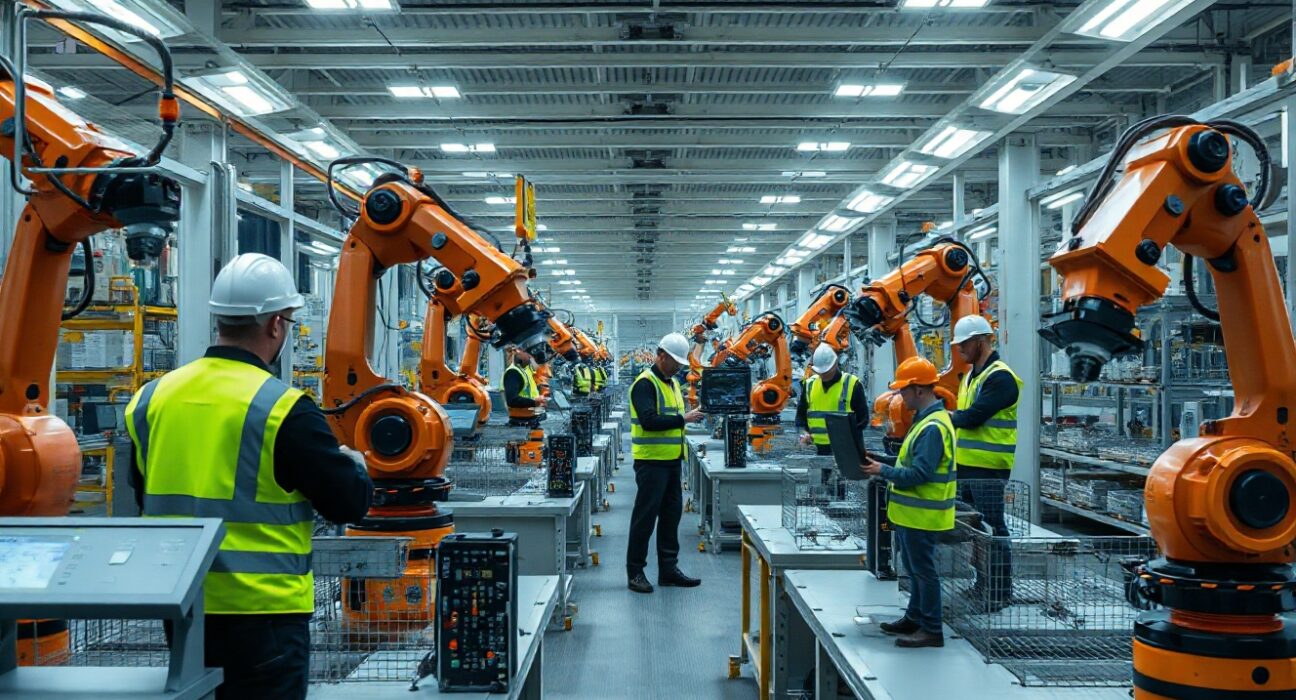
Eurozone industrial production rose 0.1% year-on-year in June, surpassing market forecasts of a 0.8% decline, according to data released by Eurostat. The unexpected uptick, while modest, signals a degree of resilience in the bloc’s manufacturing sector despite persistent headwinds from high energy costs and subdued global demand.
What the Data Shows
The June figure marks a notable improvement from the previous month’s revised contraction of 2.9% year-on-year, indicating a potential stabilization in industrial activity. Month-on-month, production also gained 0.5%, beating expectations of a 0.3% rise. The positive surprise was broad-based, with capital goods and intermediate goods leading the recovery, while energy output remained weak due to ongoing structural adjustments.
Among the largest Eurozone economies, Germany and Italy posted stronger-than-expected output, while France lagged, reflecting divergent industrial trajectories across the currency bloc. The data aligns with recent PMI surveys that hinted at a shallower downturn in manufacturing, though the sector remains far from a robust expansion.
Why It Matters
Industrial production is a key gauge of economic health in the Eurozone, where manufacturing accounts for a significant share of GDP and employment. The better-than-expected reading provides some relief for policymakers at the European Central Bank (ECB), who are balancing inflation concerns against slowing growth. A more resilient industrial sector could reduce the urgency for aggressive rate cuts, though the overall economic outlook remains cautious.
For businesses, the data suggests that the worst of the industrial slump may be passing, offering a glimmer of hope for supply chain partners and exporters. However, analysts caution that the recovery is fragile, with external risks such as weaker Chinese demand and potential energy price spikes still looming.
Implications for the Eurozone Outlook
The June production figures will feed into second-quarter GDP estimates, which are due later this month. While the industrial sector’s resilience is encouraging, services activity and consumer spending remain critical to the bloc’s overall growth trajectory. The ECB will likely view this data as supporting a gradual, data-dependent approach to monetary policy, rather than a signal for immediate action.
Conclusion
Eurozone industrial production’s better-than-expected performance in June offers a modest but positive signal for the bloc’s economy. While challenges persist, the data points to a possible bottoming out of the manufacturing downturn. Policymakers and market participants will watch upcoming releases to confirm whether this marks the start of a sustained recovery or merely a temporary respite.
FAQs
Q1: What does the year-on-year change in industrial production indicate?
The year-on-year change compares industrial output in June 2025 to June 2024, providing a clear view of annual growth trends. A positive reading suggests expansion, while a negative one indicates contraction.
Q2: How does this data affect the European Central Bank’s policy decisions?
Stronger industrial production may reduce pressure on the ECB to cut interest rates quickly, as it signals economic resilience. However, the ECB considers a wide range of indicators, including inflation and services activity, before adjusting policy.
Q3: What sectors contributed most to the June uptick?
Capital goods and intermediate goods were the primary contributors, while energy production remained weak. This suggests investment and supply chain activity are picking up, even as energy-intensive industries continue to struggle.
Disclaimer: The information provided is not trading advice, Bitcoinworld.co.in holds no liability for any investments made based on the information provided on this page. We strongly recommend independent research and/or consultation with a qualified professional before making any investment decisions.
