

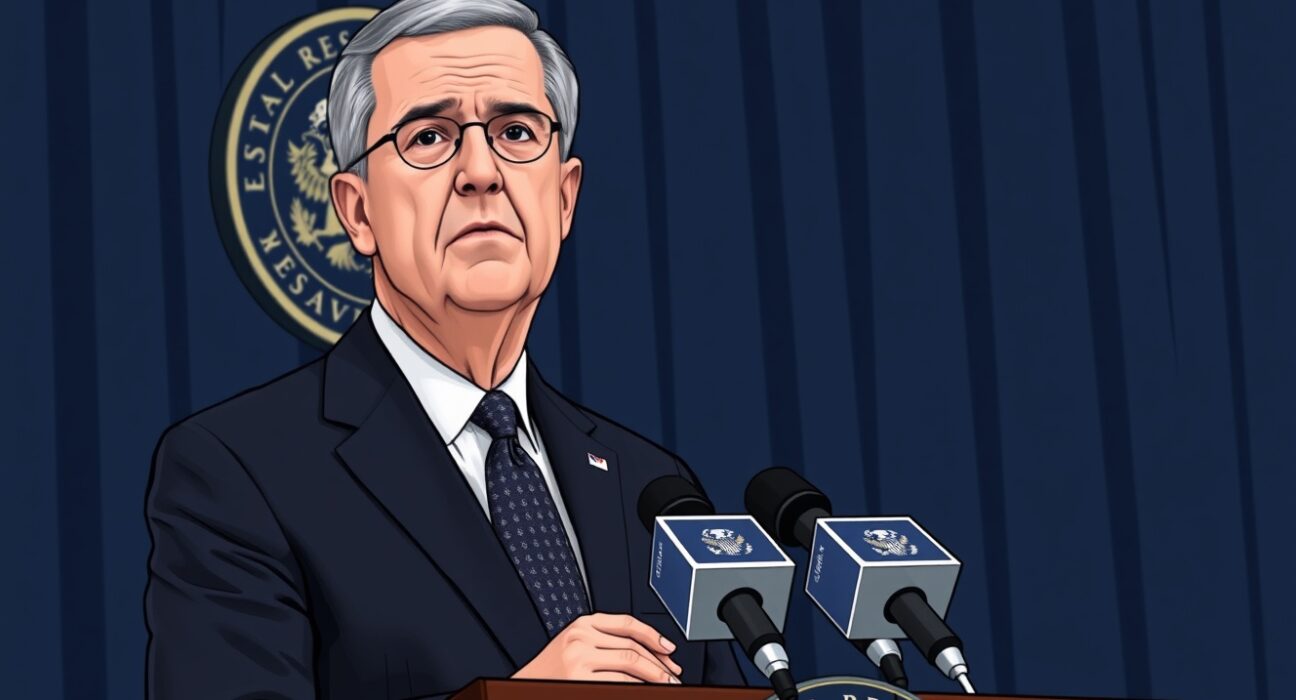
In a significant policy signal, Fed Chair Powell stated that current interest rates are at the upper end of the neutral range and are somewhat restrictive. This announcement, made during a recent press conference, carries profound implications for the U.S. economy and global financial markets.
Washington, D.C. – March 2025 – The Federal Reserve’s latest assessment marks a pivotal moment in its monetary policy cycle. Chair Jerome Powell emphasized the central bank’s cautious approach, noting that the Fed can monitor the situation to see how events unfold before taking action. This statement suggests a potential pause in rate hikes, offering a clearer outlook for investors and businesses.
Understanding the Neutral Range and Restrictive Policy
The neutral range represents a theoretical interest rate level that neither stimulates nor restricts economic growth. When rates are at the upper end of this range, they begin to exert a mild braking effect on economic activity. Powell’s characterization of current rates as somewhat restrictive indicates that the Fed’s tightening cycle has reached a critical juncture.
- Neutral rate: The rate where monetary policy is balanced.
- Restrictive policy: Higher rates that slow borrowing and spending.
- Powell’s signal: A shift toward a more patient stance.
This distinction matters because it directly influences borrowing costs for mortgages, credit cards, and business loans. For consumers, higher rates mean more expensive financing. For the economy, restrictive policy can curb inflation but also risk a slowdown.
Market Reactions and Economic Context
Financial markets responded with cautious optimism. The S&P 500 and Nasdaq both saw modest gains following Powell’s remarks. Bond yields also eased, reflecting reduced expectations for further aggressive rate hikes. However, analysts remain divided on the Fed’s next move.
“This is a clear pivot in communication,” said Dr. Elena Martinez, a former Fed economist. “Powell is signaling that the Fed is comfortable with where rates are, but they remain data-dependent.” The Fed Chair Powell statement aligns with recent economic data showing a cooling labor market and moderating inflation.
| Indicator | Current Level | Trend |
|---|---|---|
| Inflation (CPI) | 3.1% | Declining |
| Unemployment | 4.2% | Stable |
| Fed Funds Rate | 5.5% | Unchanged |
Implications for Borrowers and Investors
For homeowners, mortgage rates may stabilize around current levels. This could revive the housing market, which has struggled with affordability. For businesses, lower uncertainty around rate hikes encourages capital investment. However, the restrictive policy still means higher costs for variable-rate debt.
- Mortgage rates: Expected to remain near 7%.
- Corporate borrowing: Costly but predictable.
- Stock market: Sectors like tech and real estate may benefit.
Historical Perspective on Fed Rate Cycles
Historically, the Fed’s rate hikes have followed a pattern. The current cycle, which began in 2022, is one of the fastest in decades. Powell’s recent comments suggest the Fed is moving from a tightening phase to a holding pattern. This mirrors the approach taken in 2006 and 2018, when rates were kept steady for extended periods.
“The Fed is learning from past mistakes,” noted financial historian Robert K. “Raising rates too quickly can trigger a recession. Powell’s cautious tone is a deliberate strategy.” The neutral range concept is central to this strategy, as it helps the Fed avoid overshooting.
Expert Analysis on the Fed’s Next Steps
Economists widely expect the Fed to hold rates steady at its next meeting. However, if inflation remains sticky, further hikes are possible. Powell’s emphasis on monitoring events underscores the uncertainty. “We are not on a preset course,” he stated, reinforcing the data-dependent approach.
The somewhat restrictive label is also a communication tool. It prepares markets for the possibility that rates may stay higher for longer, even if the Fed does not raise them further. This helps manage expectations without committing to a specific path.
Conclusion
In summary, Fed Chair Powell has provided critical clarity on the state of U.S. monetary policy. By declaring that current rates are at the upper end of the neutral range and are somewhat restrictive, he signals a potential end to the tightening cycle. This development offers a more stable outlook for the economy, though risks remain. Investors and consumers should monitor upcoming economic data for further signals from the Fed.
FAQs
Q1: What does it mean when interest rates are at the upper end of the neutral range?
It means the rate is high enough to neither stimulate nor significantly slow the economy, but is close to becoming restrictive.
Q2: How does Fed Chair Powell’s statement affect mortgage rates?
It suggests rates may stabilize, potentially making home buying more predictable, though still expensive.
Q3: Will the Fed cut rates soon?
Powell indicated the Fed will monitor data before acting, so cuts are unlikely in the near term unless the economy weakens sharply.
Q4: What is a restrictive monetary policy?
It is a policy that uses high interest rates to slow borrowing and spending, typically to fight inflation.
Q5: How should investors react to Powell’s comments?
Investors should expect a period of stable rates, which can benefit stocks and bonds, but remain cautious about inflation data.
Disclaimer: The information provided is not trading advice, Bitcoinworld.co.in holds no liability for any investments made based on the information provided on this page. We strongly recommend independent research and/or consultation with a qualified professional before making any investment decisions.
