

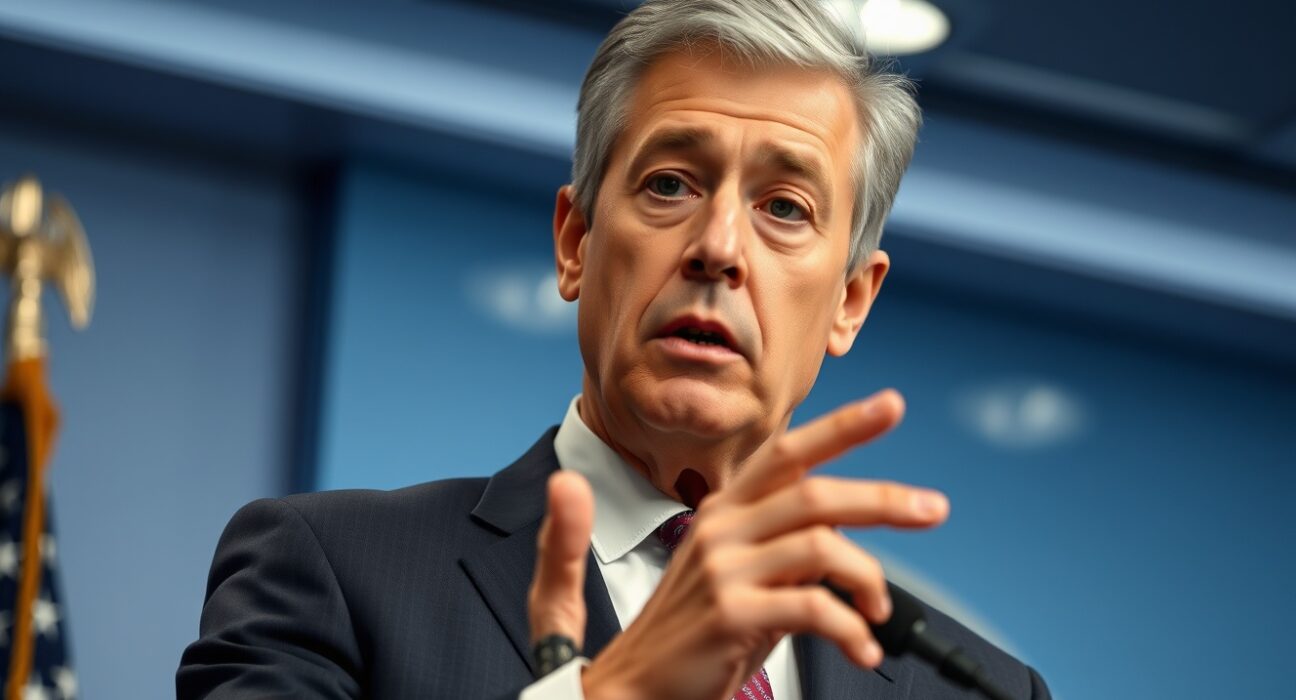
Chicago Federal Reserve President Austan Goolsbee has issued a stark warning that escalating tensions between the United States and Iran represent a significant inflationary shock to the American economy. Speaking at a monetary policy forum on Tuesday, Goolsbee emphasized that the conflict introduces new uncertainties into supply chains and energy markets, complicating the Federal Reserve’s efforts to bring inflation back to its 2% target.
Geopolitical Risk Meets Monetary Policy
Goolsbee’s comments come as crude oil prices have surged more than 8% over the past week following a series of military exchanges in the Persian Gulf. The Chicago Fed president noted that energy price spikes historically feed through to core inflation measures, and the current situation presents a unique challenge because it combines supply disruption risks with already-elevated price pressures.
“A geopolitical shock of this magnitude is not something the Fed can easily offset with interest rate adjustments alone,” Goolsbee stated. “We must be vigilant about second-round effects—where businesses pass higher energy costs to consumers and workers demand higher wages to maintain purchasing power.”
Market Reactions and Economic Projections
Financial markets have already begun pricing in a higher probability of delayed rate cuts. The CME FedWatch Tool now shows a 45% chance of no rate cut at the Fed’s September meeting, up from 30% just two weeks ago. Bond yields have risen, with the 10-year Treasury note climbing to 4.38%, reflecting concerns that inflation may remain stickier than previously anticipated.
Economists at several major banks have revised their inflation forecasts upward by 0.2 to 0.4 percentage points for the second half of 2025, citing the potential for sustained energy price increases. The national average gasoline price has already risen to $3.68 per gallon, a 12-cent increase since the conflict escalated.
Broader Implications for Consumers and Businesses
For American households, the inflationary shock translates directly into higher costs at the pump, increased heating bills, and potentially more expensive goods as transportation costs rise. Small businesses, particularly those in logistics and manufacturing, face margin compression as input costs climb faster than they can adjust prices.
Goolsbee acknowledged that the Fed faces a delicate balancing act. “If we overreact to the supply shock, we risk slowing the economy unnecessarily. If we underreact, inflation expectations could become unanchored,” he explained. The Fed is closely monitoring inflation expectations data, which remain relatively stable but warrant continued vigilance.
Conclusion
The US-Iran conflict introduces a new variable into an already complex inflation outlook. While the Fed maintains its data-dependent approach, Goolsbee’s remarks underscore that geopolitical events now play a central role in monetary policy deliberations. Markets and consumers alike should prepare for a period of elevated uncertainty as the situation evolves.
FAQs
Q1: How does the US-Iran conflict directly affect inflation?
The conflict disrupts oil supply routes and raises energy prices, which increases transportation and production costs across the economy. These costs are often passed to consumers, raising overall price levels.
Q2: Will the Fed raise interest rates in response to this inflationary shock?
Not necessarily. The Fed may choose to look through a temporary supply-driven price spike if inflation expectations remain stable. However, if the shock persists or feeds into broader price increases, rate hikes or delayed cuts become more likely.
Q3: How long could the inflationary effects last?
The duration depends on the conflict’s length and severity. If tensions de-escalate quickly, the impact may be short-lived. A prolonged conflict could embed higher energy costs into the economy for several quarters.
Disclaimer: The information provided is not trading advice, Bitcoinworld.co.in holds no liability for any investments made based on the information provided on this page. We strongly recommend independent research and/or consultation with a qualified professional before making any investment decisions.
