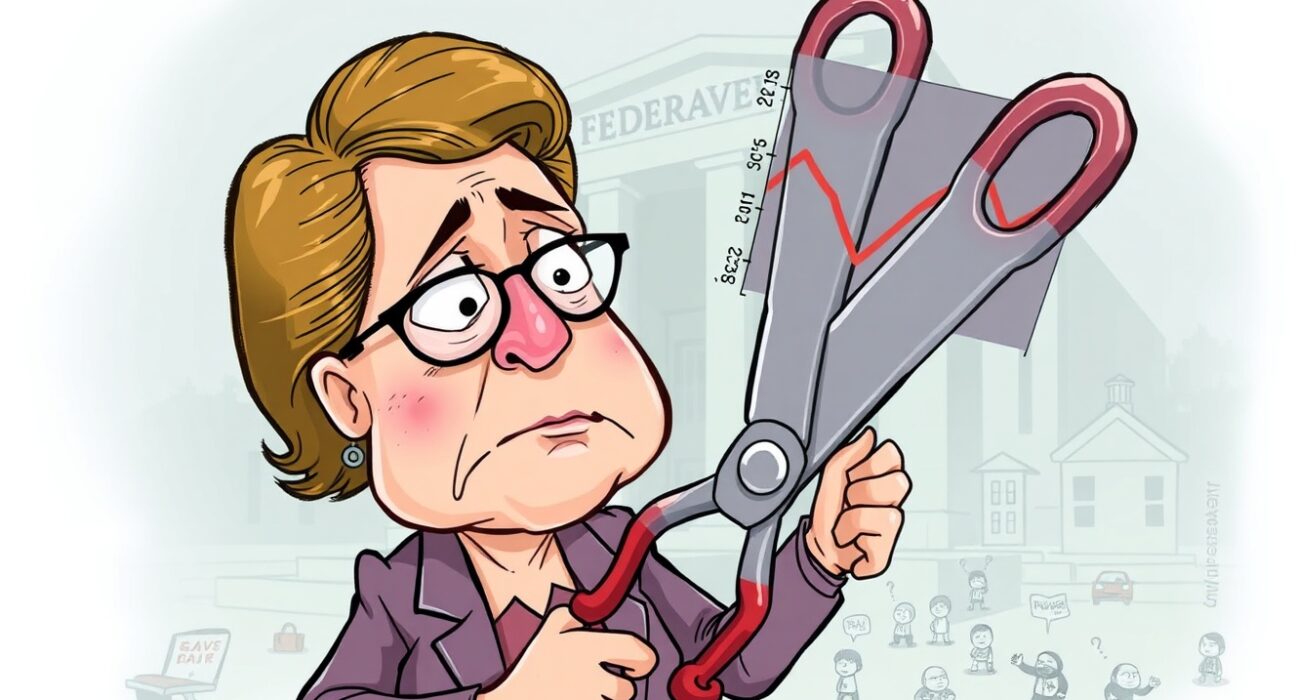
The economic landscape is always shifting, and recent warnings from Federal Reserve Governor Michelle Bowman have put the spotlight squarely on the need for timely Fed interest rate cuts. Her concern? The central bank might be reacting too slowly to a struggling labor market. This isn’t just a technical discussion; it has real implications for jobs and livelihoods across the nation.
Why Are Fed Interest Rate Cuts Being Discussed Now?
Federal Reserve Governor Michelle Bowman recently voiced a compelling argument: the time for decisive action on interest rate cuts has arrived. According to a report by Walter Bloomberg, Bowman expressed significant concern that the central bank is not responding quickly enough to a noticeable weakening in the labor market.
- Urgent Call: Bowman believes that policy adjustments will need to happen more swiftly if these economic risks continue to materialize.
- Preventative Measure: The goal of such cuts would be to proactively address potential economic slowdowns before they become more severe.
- Labor Market Focus: Her primary worry centers on the health of the job market, suggesting it’s not as robust as it once was.
This perspective highlights a crucial debate within the Fed about the appropriate timing and pace of monetary policy changes.
The Alarming Reality of a Weakening Labor Market
What exactly does a ‘weakening labor market’ entail, and why is it such a critical indicator for policymakers? It often signals a slowdown in job creation, an increase in unemployment rates, or even stagnant wage growth. These factors can have a profound impact on the everyday lives of citizens and the overall economic stability.
When the labor market struggles, consumer spending tends to decrease, which in turn affects businesses and economic growth. The Fed’s dual mandate includes maximizing employment and maintaining price stability, making the labor market’s health a top priority.
What Are the Potential Benefits of Swift Fed Interest Rate Cuts?
If the Federal Reserve were to implement swift Fed interest rate cuts, several positive outcomes could potentially emerge. These cuts are a powerful tool designed to stimulate economic activity by making borrowing cheaper for both consumers and businesses.
Here’s how timely cuts could help:
- Boost Investment: Lower rates encourage businesses to borrow more for expansion, leading to new projects and job creation.
- Increase Spending: Consumers might find mortgages, car loans, and credit card debt more affordable, freeing up funds for other purchases.
- Support Employment: By stimulating demand and investment, rate cuts can help prevent job losses and even foster new employment opportunities.
Ultimately, the aim is to inject momentum into the economy, preventing a deeper downturn and supporting a healthier job market.
Navigating the Challenges of Monetary Policy Decisions
While the call for Fed interest rate cuts is clear from some, the decision-making process for the Federal Reserve is incredibly complex. Policymakers must weigh various economic indicators and potential consequences before making a move.
Key challenges include:
- Inflation Concerns: Cutting rates too soon or too aggressively could reignite inflationary pressures, which the Fed has worked hard to control.
- Data Dependency: The Fed relies on a vast array of economic data, and interpreting these signals accurately can be challenging, especially when different indicators point in different directions.
- Global Economic Factors: International economic conditions and central bank actions in other countries can also influence the U.S. economy and the Fed’s decisions.
The balancing act between supporting employment and managing inflation requires careful consideration and a consensus among Fed officials.
In conclusion, Federal Reserve Governor Michelle Bowman’s urgent warning about a weakening labor market underscores a critical moment for U.S. monetary policy. Her advocacy for decisive Fed interest rate cuts highlights a growing concern that delayed action could have significant economic repercussions. The central bank faces the delicate task of navigating these challenges, aiming to support job growth and economic stability without compromising its fight against inflation. The coming months will reveal how the Fed responds to these pressing calls for action, shaping the economic future for millions.
Frequently Asked Questions (FAQs)
What is the Federal Reserve?
The Federal Reserve, often called ‘the Fed,’ is the central banking system of the United States. It conducts the nation’s monetary policy, supervises and regulates banking institutions, maintains the stability of the financial system, and provides financial services to depository institutions, the U.S. government, and foreign official institutions.
What are interest rate cuts?
Interest rate cuts refer to the Federal Reserve’s decision to lower its benchmark interest rate, typically the federal funds rate. This action makes it cheaper for banks to borrow money, which in turn encourages them to lend more to consumers and businesses at lower rates, stimulating economic activity.
How do interest rate cuts affect the labor market?
By making borrowing more affordable, interest rate cuts can encourage businesses to invest, expand, and hire more employees. This can lead to increased job creation, lower unemployment rates, and potentially higher wages, thereby strengthening the labor market.
Who is Michelle Bowman?
Michelle Bowman is a Governor on the Board of Governors of the Federal Reserve System. She is one of the key policymakers responsible for setting the nation’s monetary policy and overseeing the financial system.
Why is a ‘weakening labor market’ a concern?
A weakening labor market indicates that job growth is slowing, unemployment is rising, or wages are stagnant. This is a concern because it can lead to reduced consumer spending, slower economic growth, and financial hardship for individuals and families, potentially leading to a recession.
Did you find this analysis insightful? Share your thoughts and this article with your network on social media to keep the conversation going!
To learn more about the latest explore our article on key developments shaping the economic policy and its future impact on global markets.
Disclaimer: The information provided is not trading advice, Bitcoinworld.co.in holds no liability for any investments made based on the information provided on this page. We strongly recommend independent research and/or consultation with a qualified professional before making any investment decisions.