

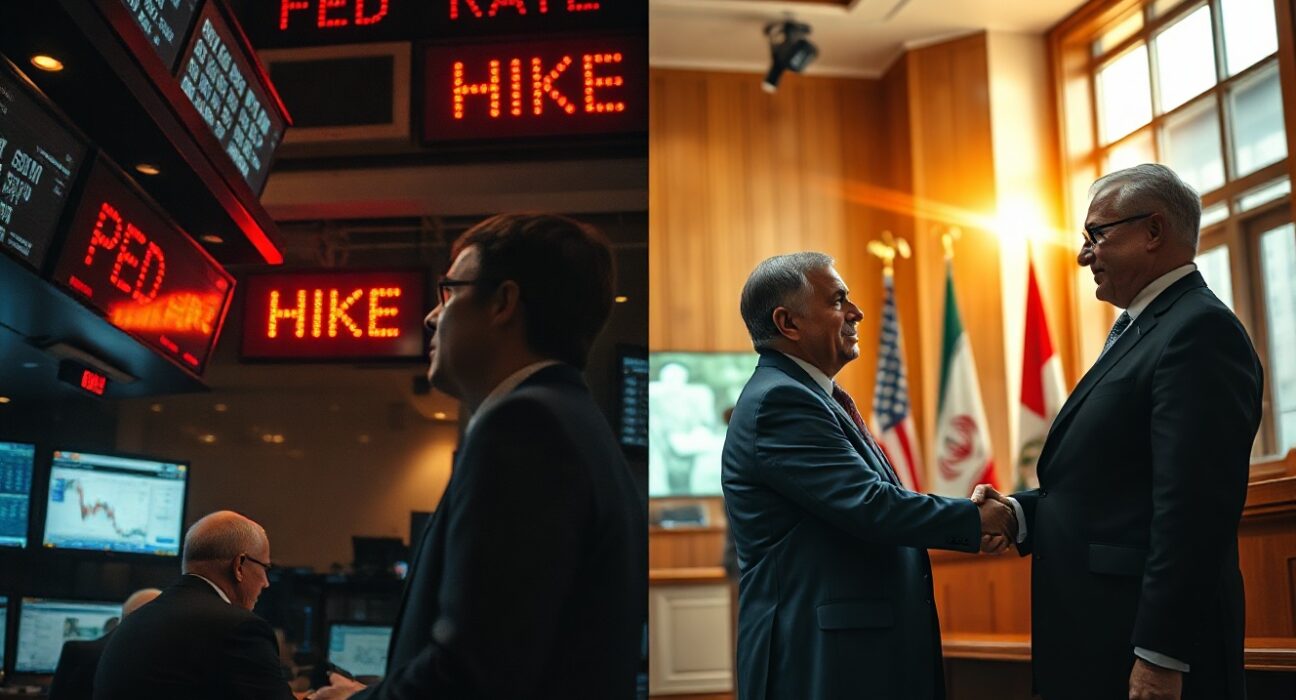
A sharp divergence is emerging across global bond markets as investors weigh renewed fears of Federal Reserve interest rate hikes against the potential for a geopolitical peace dividend tied to easing tensions with Iran. The split reflects deepening uncertainty about the direction of monetary policy and the fragile nature of global risk appetite.
The Fed Factor: Renewed Rate-Hike Anxiety
Market participants are recalibrating expectations after recent comments from Federal Reserve officials suggested that stubbornly elevated inflation data could delay any pivot toward rate cuts. The yield on the benchmark 10-year U.S. Treasury note has climbed in recent sessions, reversing earlier declines driven by hopes of a softer monetary stance. This shift has pressured risk-sensitive assets and reignited debate about whether the central bank will need to raise rates further to contain price pressures.
The bond market is now pricing in a higher probability of at least one additional quarter-point rate hike by mid-2026, a stark contrast to the easing expectations that dominated early in the year. Analysts point to resilient consumer spending and a tight labor market as key factors keeping the Fed on a hawkish footing.
The Iran Peace Dividend: A Counterweight
Simultaneously, diplomatic signals suggesting progress in nuclear negotiations with Iran have injected a countervailing force into bond markets. A potential agreement could unlock significant shifts in global energy supply, easing oil prices and reducing geopolitical risk premiums that have inflated safe-haven demand for U.S. debt.
European and Asian bond markets have responded more favorably to these developments, with yields in Germany and Japan showing less upward pressure than their U.S. counterparts. This divergence underscores how regional exposures to energy costs and geopolitical stability are driving distinct market reactions.
What This Means for Investors
The competing forces create a complex environment for fixed-income investors. U.S. Treasuries face headwinds from domestic rate-hike risks, while international bonds may benefit from reduced geopolitical tensions. Portfolio managers are increasingly hedging against further volatility, with options markets showing elevated demand for protection against sharp yield moves.
The situation also has implications for currency markets. The U.S. dollar, which had weakened on rate-cut expectations, has found support from the renewed hawkish Fed stance. Meanwhile, currencies of oil-importing nations could strengthen if an Iran deal materializes, adding another layer of complexity for global investors.
Conclusion
The current split in global bond markets reflects a tug-of-war between domestic monetary tightening and international geopolitical easing. For now, the Fed narrative appears to dominate U.S. debt pricing, but the Iran peace dividend remains a wild card that could reshape yield curves if diplomatic efforts gain traction. Investors should brace for continued cross-currents as both factors evolve.
FAQs
Q1: Why are bond markets splitting between U.S. and international markets?
A1: U.S. bonds are pressured by renewed Fed rate-hike fears due to persistent inflation, while international bonds are buoyed by hopes of an Iran peace deal that could lower energy costs and geopolitical risk.
Q2: How would an Iran peace dividend affect Treasury yields?
A2: A successful agreement could reduce safe-haven demand for U.S. Treasuries, potentially raising yields, but it might also ease inflation pressures, which could moderate Fed hawkishness over time.
Q3: What should fixed-income investors watch next?
A3: Key indicators include upcoming Fed statements, U.S. inflation data, and diplomatic progress in Iran negotiations. Diverging central bank policies across regions will also drive relative value opportunities.
Disclaimer: The information provided is not trading advice, Bitcoinworld.co.in holds no liability for any investments made based on the information provided on this page. We strongly recommend independent research and/or consultation with a qualified professional before making any investment decisions.
