
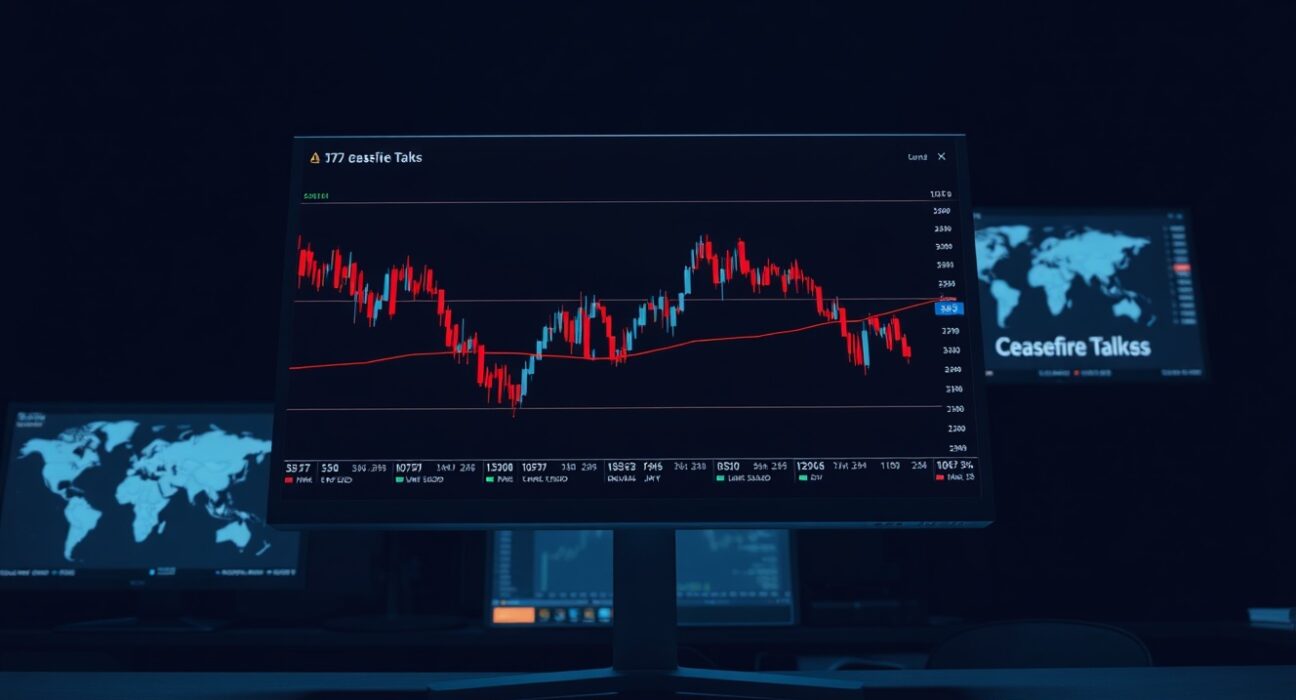
Global currency markets experienced a sharp reversal in sentiment on Thursday, as a nascent risk rally lost significant steam following reports of a precarious ceasefire agreement between the United States and Iran. The initial optimism that had buoyed commodity-linked and risk-sensitive currencies evaporated, triggering a flight to traditional safe havens and underscoring the forex market’s acute sensitivity to geopolitical developments. This shift highlights the complex interplay between diplomatic headlines and capital flows, reminding traders that geopolitical risk remains a primary driver of short-term volatility.
Forex Today: Analyzing the Ceasefire Impact on Major Pairs
The immediate market reaction was stark and swift. Consequently, the US Dollar Index (DXY), a measure of the dollar against a basket of six major currencies, found strong bids after an initial dip. Meanwhile, the Japanese Yen (JPY) and Swiss Franc (CHF) – perennial safe havens – appreciated notably against their counterparts. Specifically, the USD/JPY pair retreated from earlier highs, while EUR/CHF faced pronounced selling pressure. Conversely, currencies tied to global growth and commodity exports, such as the Australian Dollar (AUD) and Canadian Dollar (CAD), pared their earlier gains. This price action demonstrates a classic risk-off rotation, where traders exit positions in growth-linked assets and seek shelter in currencies perceived as stable during uncertainty.
The ceasefire’s shaky foundations, reported by multiple diplomatic sources, introduced several critical questions for forex traders. Firstly, the longevity of the agreement is in serious doubt. Secondly, the enforcement mechanisms appear unclear. Finally, regional actors have not yet fully endorsed the terms. These uncertainties directly translate into market risk, compelling institutional investors to reassess their exposure to emerging markets and growth-sensitive currency blocs. Market analysts immediately pointed to rising implied volatility in forex options, particularly for pairs involving Middle Eastern petro-currencies like the Saudi Riyal (SAR) and the UAE Dirham (AED), which are pegged to the dollar but whose underlying economies are sensitive to regional stability.
Chart Analysis and Technical Breakdown
A closer examination of key forex charts reveals the technical damage inflicted by the geopolitical news. The EUR/USD pair, for instance, failed to sustain a break above its 50-day moving average, a critical technical level watched by algorithmic traders. The subsequent rejection and sell-off confirmed strong resistance, potentially setting the stage for a retest of lower support zones. Similarly, the GBP/USD chart showed a clear bearish engulfing candlestick pattern on the four-hour timeframe, a classic reversal signal that often precedes further declines.
Expert Insight: Geopolitics as a Market Catalyst
“Forex markets are discounting mechanisms,” explains Dr. Anya Petrova, Head of Geopolitical Strategy at Global Macro Advisors. “The initial rally priced in a durable de-escalation. However, the subsequent sell-off reflects the market’s rapid reassessment upon digesting the fragile details. Historically, ceasefire announcements create volatility spikes, but sustained currency trends only develop once verification and compliance are established over weeks, not hours. Traders are now pricing in a higher probability of a breakdown, which supports the US dollar and yen in the near term.” This analysis is supported by data from the Commodity Futures Trading Commission (CFTC), which showed a sharp increase in net long positions for the Swiss franc in the latest reporting period, indicating institutional positioning for safety.
The impact extends beyond major pairs. Emerging market currencies, which had benefited from the earlier ‘risk-on’ environment, faced immediate headwinds. The South African Rand (ZAR) and Mexican Peso (MXN) both gave up ground against the dollar. This pattern underscores a fundamental truth in forex trading: global liquidity flows toward stability during crises. The table below summarizes the key movements in major forex pairs following the news:
| Currency Pair | Pre-News Trend | Post-News Reaction | Key Driver |
|---|---|---|---|
| USD/JPY | Bullish | Bearish Reversal | Safe-Haven Yen Demand |
| EUR/USD | Testing Resistance | Rejected Lower | Broad USD Strength |
| AUD/USD | Rallying | Sharp Pullback | Commodity & Risk Sell-Off |
| USD/CHF | Sideways | Declined | CHF Safe-Haven Flows |
The Broader Context: Energy Prices and Central Bank Policy
This forex movement cannot be isolated from other asset classes. Crucially, the shaky ceasefire directly influences global energy markets. Initially, oil prices fell on the prospect of reduced Middle Eastern supply disruptions. However, they subsequently rebounded as traders questioned the deal’s durability. This volatility in crude oil creates secondary effects for currency pairs like USD/CAD and NOK/USD, which are highly correlated to energy prices. Furthermore, this geopolitical uncertainty complicates the landscape for major central banks. The Federal Reserve, for example, must now weigh resilient US economic data against a potential new source of global instability that could tighten financial conditions independently.
For the European Central Bank (ECB), a stronger euro driven purely by safe-haven flows – rather than economic strength – presents a communication challenge. Similarly, the Bank of Japan may face renewed pressure if sustained yen strength threatens its inflation goals. Therefore, the path of monetary policy, a core determinant of long-term currency valuation, now intersects with this unpredictable geopolitical event. Traders will scrutinize upcoming statements from Fed Chair Jerome Powell and ECB President Christine Lagarde for any acknowledgment of these new risks.
Conclusion
The events of this trading session offer a powerful case study in modern forex market dynamics. The fleeting risk rally and its subsequent stall underscore how quickly digital capital flows can reverse course based on geopolitical developments. For participants in forex today, the key takeaways are the renewed dominance of safe-haven currencies and the market’s low tolerance for diplomatic ambiguity. Moving forward, currency trends will likely remain hostage to verifiable progress – or the lack thereof – in the US-Iran situation, with volatility poised to stay elevated until a clearer, more stable picture emerges.
FAQs
Q1: What caused the risk rally to lose steam in forex markets?
The primary catalyst was the emergence of details suggesting the US-Iran ceasefire agreement is fragile and potentially unstable. This geopolitical uncertainty triggered a classic ‘risk-off’ response, where traders sold growth-linked currencies and bought perceived safe havens like the US dollar, Japanese yen, and Swiss franc.
Q2: Which currency pairs were most affected?
Pairs involving commodity currencies (AUD/USD, USD/CAD) and emerging market currencies (USD/ZAR, USD/MXN) saw sharp pullbacks. Meanwhile, pairs like USD/JPY fell as the yen strengthened, and EUR/CHF declined due to Swiss franc buying.
Q3: How does a shaky ceasefire impact the US Dollar Index (DXY)?
Typically, it provides support. The US dollar benefits from its status as the world’s primary reserve currency during periods of global uncertainty. While not a pure safe-haven like the yen, it often attracts flows due to the depth and liquidity of US Treasury markets, which are seen as a secure asset.
Q4: Could this affect upcoming central bank decisions?
Yes, potentially. Increased geopolitical risk and market volatility are factors central banks monitor. They could make policymakers more cautious about tightening monetary policy if financial conditions tighten excessively or if the uncertainty threatens global growth forecasts.
Q5: What should forex traders watch next?
Traders should monitor: 1) Official statements from US and Iranian officials verifying the ceasefire terms, 2) Price action in oil markets (Brent Crude), as it influences correlated currencies, and 3) Any shifts in CFTC positioning data showing institutional moves into or out of safe-haven currencies.
Disclaimer: The information provided is not trading advice, Bitcoinworld.co.in holds no liability for any investments made based on the information provided on this page. We strongly recommend independent research and/or consultation with a qualified professional before making any investment decisions.