

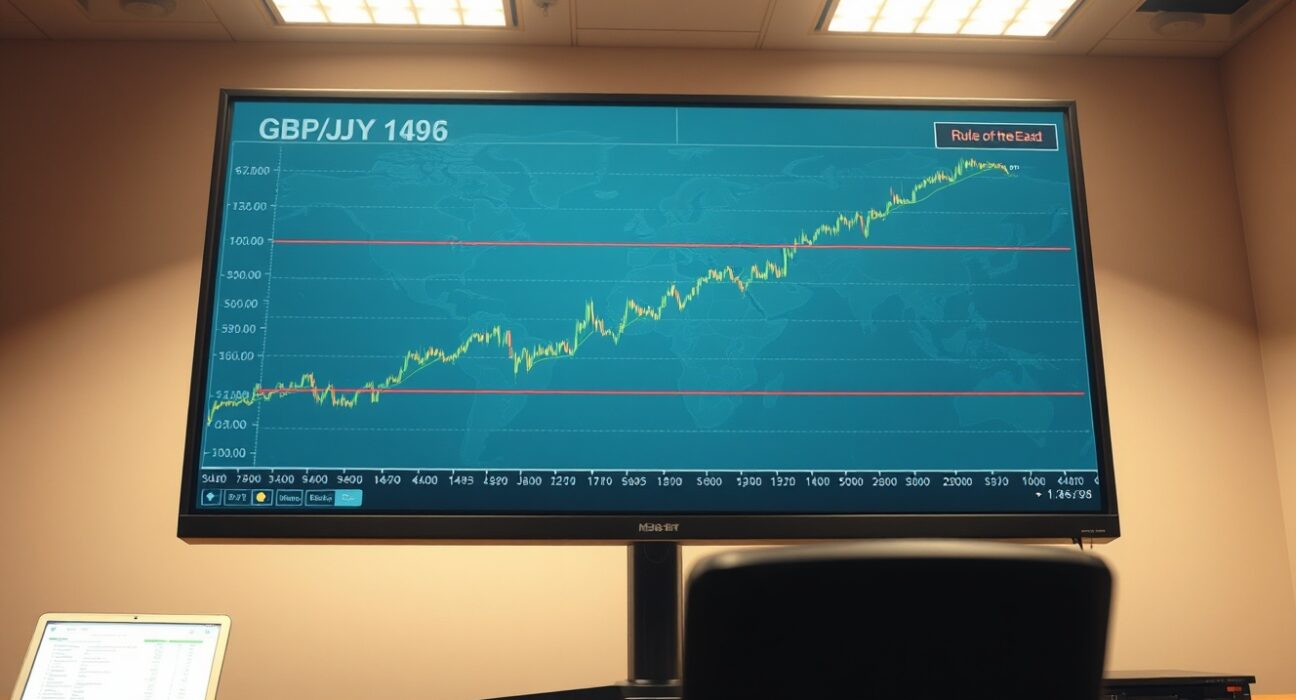
The British Pound Sterling advanced sharply against the Japanese Yen in early London trading on Thursday, March 13, 2025, as escalating tensions in the Middle East triggered a significant flight from the traditional safe-haven Yen. Consequently, the GBP/JPY currency pair breached key technical levels, reflecting a profound market reassessment of energy security risks and their divergent impact on the UK and Japanese economies.
GBP/JPY Technical Breakout and Immediate Market Reaction
Market data shows the GBP/JPY pair surged over 1.8% to touch a multi-week high. This move represents one of the most substantial single-day gains for the cross in recent months. Traders rapidly sold the Japanese Yen across the board. Meanwhile, the Pound found relative strength despite broader risk aversion. The Bank of England’s comparatively hawkish stance on inflation provided underlying support. Furthermore, the UK’s status as a net energy producer offered a contrast to Japan’s almost total import dependency.
Analysts immediately identified the primary catalyst. Specifically, reports of a potential disruption to a major maritime chokepoint for global oil shipments sparked the panic. This event triggered a classic risk-off sentiment, but with a crucial twist. Historically, the Yen strengthens during geopolitical crises. However, this scenario directly threatens Japan’s economic lifeline.
- Key Resistance Breach: The pair decisively broke above the 188.50 level.
- Volume Spike: Trading volume was more than double the 30-day average.
- Correlation Shift: The typical inverse correlation between the Yen and oil prices broke down.
The Geopolitical Trigger: Middle East Energy Supply Fears
The fears center on the Strait of Hormuz, a narrow passage between Oman and Iran. Notably, approximately 20% of global oil consumption passes through this waterway. Any threat to this transit immediately impacts global energy prices and logistics. Recent naval incidents and heightened rhetoric have raised the perceived risk premium. Consequently, Brent crude futures jumped over 4% in tandem with the forex move.
Japan imports nearly all of its crude oil and liquefied natural gas. Most of these imports transit through the Middle East. Therefore, supply fears translate directly into potential import cost inflation and economic vulnerability for Japan. In contrast, the United Kingdom is a net exporter of energy. While affected by global price swings, its direct exposure is markedly lower. This fundamental disparity explains the asymmetric currency response.
Expert Analysis on Currency Market Dynamics
Dr. Alisha Chen, Head of Currency Strategy at Global Macro Advisors, provided context. “This is a textbook example of a terms-of-trade shock driving currency pairs,” Chen stated. “The market is pricing in a deterioration in Japan’s trade balance due to soaring energy import costs. Simultaneously, the UK’s balance may see less negative impact. The Yen is losing its safe-haven appeal in this specific crisis because Japan is on the frontline of the economic consequences.”
Historical data supports this analysis. During the 2019 tanker attacks in the Gulf of Oman, the Yen initially weakened before recovering. The current reaction appears more pronounced. Market participants now view prolonged disruption as a higher-probability event. Additionally, Japan’s monetary policy remains ultra-accommodative, limiting its appeal for capital seeking shelter.
Broader Market Impacts and Interconnected Risks
The currency move reverberated across other asset classes. Japanese government bond yields edged higher on inflation concerns. The Nikkei 225 stock index fell sharply, underperforming other regional markets. UK FTSE 100 energy stocks, however, rallied on the higher oil price. This divergence highlights how a single geopolitical event can create winners and losers.
The situation also pressures the Bank of Japan. The central bank faces a complex dilemma. It must balance its commitment to yield curve control with a rapidly weakening currency that imports inflation. Governor Kazuo Ueda recently acknowledged that exchange rates are a factor in policy. Yet, the BoJ has shown extreme reluctance to alter its course. Any hint of policy normalization could trigger massive market volatility.
| Factor | Impact on GBP | Impact on JPY |
|---|---|---|
| Energy Price Spike | Mixed (Producer/Consumer) | Strongly Negative (Importer) |
| Safe-Haven Demand | Neutral | Weakened (Context-Specific) |
| Central Bank Policy Stance | Hawkish (Supportive) | Dovish (Negative) |
| Terms of Trade Outlook | Stable to Improving | Deteriorating |
Historical Context and Forward-Looking Scenarios
Past Middle East crises offer limited but insightful parallels. The 1990 Gulf War saw Yen strength on pure safe-haven flows. The 2022 Ukraine war initially weakened the Yen due to energy import fears, a pattern more similar to today. The current event suggests markets are applying the 2022 template more rapidly. This indicates a learning effect and a reassessment of Japan’s structural vulnerabilities.
Looking ahead, analysts outline several potential scenarios. A rapid de-escalation could see the Yen recoup some losses. Conversely, a prolonged crisis or actual supply disruption would likely extend the GBP/JPY uptrend. The critical threshold for Japan is the cost of energy imports relative to its current account surplus. A sustained break above certain oil price levels could force a policy response.
Conclusion
The sharp rise in GBP/JPY underscores how geopolitical events filter through currency markets via economic fundamentals. The Middle East energy supply fears have uniquely penalized the Japanese Yen by targeting Japan’s core vulnerability. While the Pound Sterling is not immune to global risk aversion, its relative energy independence and hawkish central bank provide a buffer. The trajectory of the GBP/JPY pair will remain tightly linked to developments in the Middle East, serving as a real-time barometer for both geopolitical risk and its asymmetric economic impact.
FAQs
Q1: Why is the Japanese Yen weakening during a geopolitical crisis?
Typically a safe-haven, the Yen is weakening because this specific crisis directly threatens Japan’s energy supply. The nation imports almost all its oil and gas from the Middle East. Therefore, the event worsens Japan’s trade outlook, outweighing general safe-haven demand.
Q2: How does the UK’s energy situation differ from Japan’s?
The United Kingdom is a net exporter of energy, producing oil and gas from the North Sea. While affected by global prices, it does not face the same import dependency risk. This fundamental difference explains the Pound’s relative strength in the GBP/JPY pair.
Q3: What is the Strait of Hormuz and why is it important?
The Strait of Hormuz is a narrow maritime passage between Oman and Iran. It is the world’s most important oil transit chokepoint, handling about 20% of global consumption. Disruption here immediately impacts global oil prices and shipping logistics.
Q4: Could the Bank of Japan intervene to support the Yen?
While possible, direct currency intervention is rare and often a last resort. The Bank of Japan is more focused on its yield curve control policy. A sustained weak Yen that fuels excessive inflation might prompt verbal intervention or a reconsideration of monetary policy.
Q5: What are the key levels to watch for the GBP/JPY pair now?
Traders are watching whether the pair can sustain its break above the 188.50 resistance. A close above 189.00 would signal further bullish momentum. On the downside, a move back below 187.00 would suggest the initial panic is subsiding.
Disclaimer: The information provided is not trading advice, Bitcoinworld.co.in holds no liability for any investments made based on the information provided on this page. We strongly recommend independent research and/or consultation with a qualified professional before making any investment decisions.
