

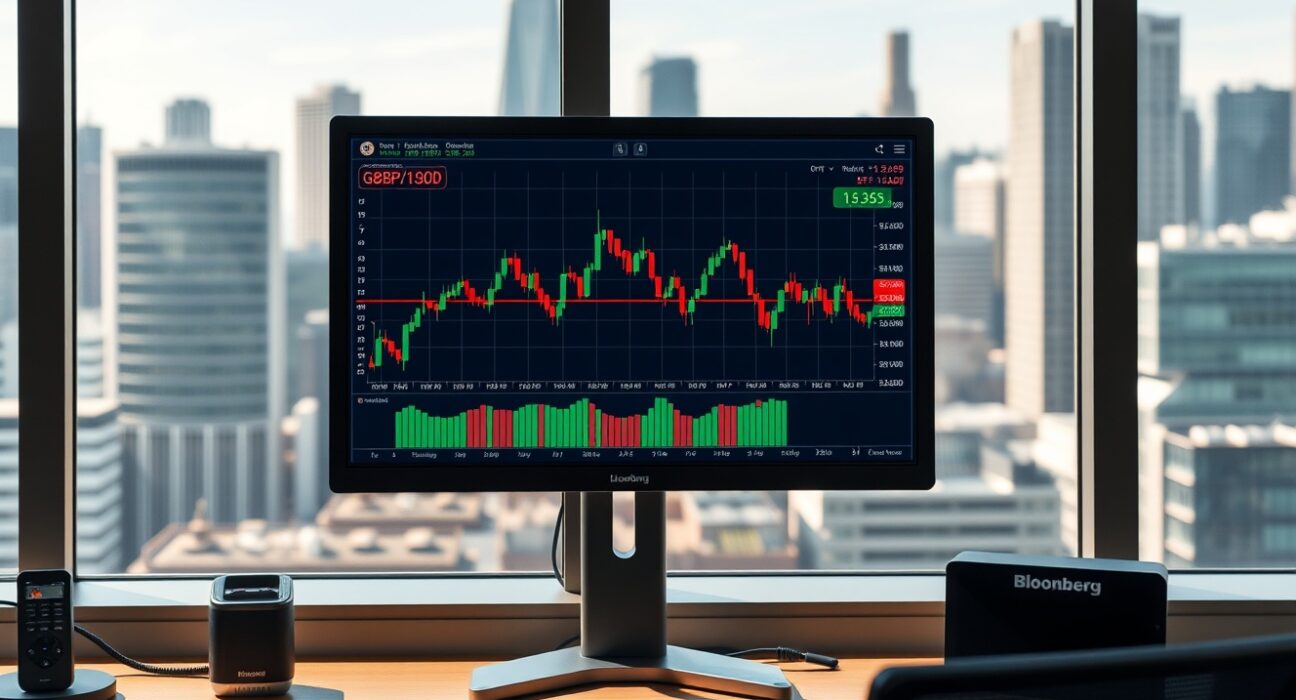
London, March 2025 – The GBP/USD currency pair faces significant pressure as political uncertainty converges with evolving monetary policy expectations from the Bank of England. Financial markets currently demonstrate heightened sensitivity to both domestic political developments and central bank signaling. Consequently, traders and analysts closely monitor these interconnected factors that drive currency valuation. This comprehensive analysis examines the current dynamics shaping one of the world’s most traded currency pairs.
GBP/USD Technical and Fundamental Landscape
Recent trading sessions reveal notable volatility in the GBP/USD pair. Market participants react to shifting sentiment regarding UK economic prospects. The currency pair’s movement reflects complex interactions between political events and monetary policy expectations. Technical analysis shows key support and resistance levels being tested repeatedly. Meanwhile, fundamental factors continue to exert substantial influence on price action.
Economic data releases from both the United Kingdom and United States create regular volatility spikes. Additionally, comparative interest rate expectations between the Bank of England and Federal Reserve drive longer-term trends. Currency markets particularly respond to inflation differentials and growth projections. Therefore, analysts must consider multiple timeframes and data points when assessing GBP/USD direction.
Political Factors Influencing Sterling Valuation
UK political developments create substantial noise in currency markets. Election cycles, policy announcements, and geopolitical positioning all impact investor confidence. Market participants typically react to perceived political stability or instability. Recent parliamentary debates and legislative proposals have generated particular attention. Furthermore, international trade negotiations continue to influence sterling’s relative strength.
Historical patterns demonstrate that political uncertainty often correlates with currency volatility. However, markets eventually price in new political realities. The current environment features multiple overlapping political narratives. Consequently, traders must distinguish between temporary noise and substantive policy changes. This distinction proves crucial for accurate currency forecasting.
Expert Analysis of Political Market Impact
Financial institutions like ING provide regular assessments of political market impacts. Their analysts examine how legislative changes affect economic indicators. These experts also evaluate how political rhetoric translates into actual policy. Market reactions frequently precede official policy implementation. Therefore, understanding political processes becomes essential for currency traders.
Recent research indicates several key political factors currently influencing GBP:
- Fiscal policy direction and government spending plans
- Regulatory environment for financial services and trade
- International relations and trade agreement developments
- Political stability indicators and leadership continuity
Bank of England Monetary Policy Expectations
Market pricing for Bank of England interest rate decisions has softened noticeably. This shift reflects evolving economic data and inflation trends. Central bank communications receive intense scrutiny from currency markets. Each speech and report potentially moves GBP valuation. The Monetary Policy Committee’s voting patterns provide additional signals.
Current expectations suggest a more cautious approach to further rate hikes. Inflation metrics show gradual improvement toward target levels. However, wage growth and services inflation remain elevated concerns. The Bank of England must balance multiple economic objectives simultaneously. Their policy decisions consequently carry significant currency implications.
| Date | Policy Signal | GBP/USD Reaction |
|---|---|---|
| February 2025 | Hawkish MPC minutes | +0.8% appreciation |
| January 2025 | Dovish inflation report | -1.2% depreciation |
| December 2024 | Unchanged rates | Minimal movement |
| November 2024 | Surprise hike | +1.5% appreciation |
Comparative Central Bank Analysis
The Federal Reserve’s policy trajectory significantly impacts GBP/USD dynamics. Interest rate differentials between the UK and US drive capital flows. Currently, markets anticipate different timing for policy normalization. This expectation gap creates trading opportunities and risks. Currency pairs naturally reflect relative economic strength.
Recent Federal Reserve communications suggest a patient approach. Their focus remains on sustainable inflation reduction. Meanwhile, the Bank of England faces distinct domestic challenges. These differing circumstances produce divergent policy paths. Consequently, the GBP/USD pair experiences pressure from both directions.
Technical Analysis Perspectives
Chart patterns reveal important support and resistance levels for GBP/USD. Moving averages provide trend direction signals. Momentum indicators show whether moves have sustainable strength. Volume analysis confirms the significance of price movements. Technical traders use these tools to identify entry and exit points.
Recent price action demonstrates several technically significant developments:
- Key support levels tested multiple times
- Trend line breaks indicating momentum shifts
- Volume spikes accompanying major news events
- Pattern formations suggesting potential breakouts
Economic Data and Currency Correlation
Regular economic releases create volatility in currency markets. Employment figures particularly influence monetary policy expectations. Inflation reports directly impact interest rate projections. Growth data affects currency valuation through economic strength perceptions. Trade balance numbers reveal external sector health.
The UK economic calendar features several high-impact releases monthly. Market participants prepare for potential surprises around these events. Historical analysis shows consistent patterns in currency reactions. However, context matters greatly for interpreting data releases. The current economic backdrop shapes how markets process new information.
Market Sentiment and Positioning Data
Commitment of Traders reports reveal institutional positioning in GBP futures. These reports show whether large traders are net long or short. Extreme positioning often precedes market reversals. Sentiment indicators provide additional context for price action. Retail trader positioning offers contrary indicators at times.
Recent positioning data suggests moderate bullish sentiment toward sterling. However, this sentiment remains vulnerable to shifting narratives. Market participants continuously reassess their views based on new information. Positioning adjustments consequently create price movements. Understanding sentiment extremes helps identify potential turning points.
Risk Management Considerations
Currency traders must implement robust risk management strategies. Position sizing determines potential loss exposure. Stop-loss orders protect against adverse movements. Correlation awareness prevents concentrated risk. Volatility adjustments account for changing market conditions.
The current GBP/USD environment requires particular risk management attention. Political events can create sudden, unpredictable movements. Central bank surprises generate immediate volatility spikes. Therefore, traders should maintain appropriate position sizes. They should also monitor news flows continuously during trading sessions.
Conclusion
The GBP/USD currency pair navigates complex political and monetary policy crosscurrents. Political noise creates short-term volatility while Bank of England expectations shape longer-term trends. Market participants must distinguish between temporary disruptions and fundamental shifts. Technical analysis provides framework for price action interpretation. Fundamental analysis offers context for valuation assessment. Successful trading consequently requires integrating multiple analytical perspectives. The evolving relationship between political developments and central bank policy will continue driving GBP/USD movements in coming months.
FAQs
Q1: What are the main factors currently affecting GBP/USD?
The primary factors include UK political developments, Bank of England policy expectations, comparative central bank trajectories with the Federal Reserve, economic data releases from both countries, and broader market risk sentiment.
Q2: How does political uncertainty typically affect currency values?
Political uncertainty generally increases currency volatility and often leads to depreciation as investors seek more stable environments. However, the actual impact depends on specific circumstances and whether uncertainty translates into substantive policy changes.
Q3: What does “softer BoE pricing” mean in currency markets?
Softer Bank of England pricing refers to reduced market expectations for interest rate hikes or increased expectations for rate cuts. This typically puts downward pressure on sterling as lower interest rates make the currency less attractive to yield-seeking investors.
Q4: How do technical and fundamental analysis differ in forex trading?
Technical analysis focuses on price patterns, chart formations, and historical data to predict future movements. Fundamental analysis examines economic indicators, central bank policies, political developments, and macroeconomic factors that drive currency valuation.
Q5: What timeframes do professional traders consider for GBP/USD analysis?
Professional traders typically analyze multiple timeframes simultaneously, including intraday charts for entry timing, daily charts for trend direction, and weekly/monthly charts for broader context. Different factors influence various timeframes, requiring integrated analysis approaches.
Disclaimer: The information provided is not trading advice, Bitcoinworld.co.in holds no liability for any investments made based on the information provided on this page. We strongly recommend independent research and/or consultation with a qualified professional before making any investment decisions.
