

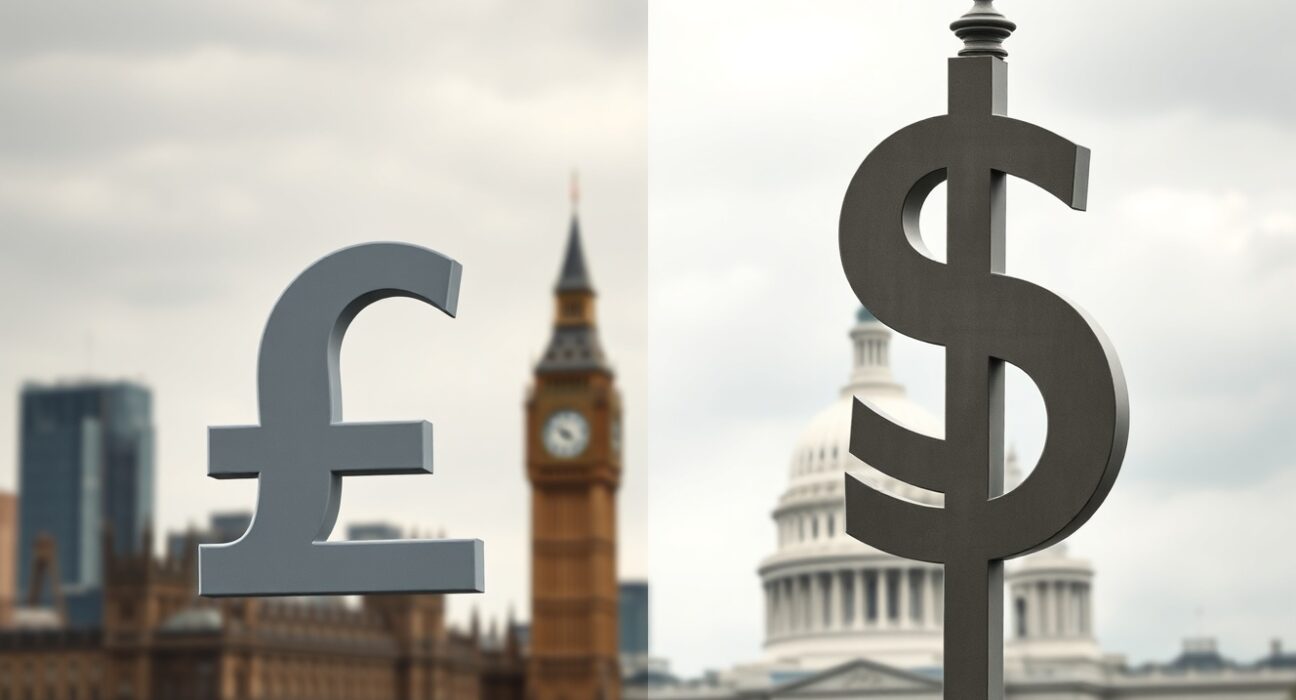
The GBP/USD currency pair weakens notably as both the Federal Reserve (Fed) and the Bank of England (BoE) adopt cautious stances on monetary policy. Simultaneously, escalating geopolitical tensions bolster demand for the US Dollar as a safe-haven asset. This convergence of factors drives the pair lower, marking a significant shift in market dynamics.
Fed and BoE Caution Weighs on GBP/USD
The GBP/USD weakens primarily due to diverging policy outlooks. The Federal Reserve signals a prolonged period of high interest rates, citing persistent inflation. Conversely, the Bank of England hints at potential rate cuts to support a slowing UK economy. This policy divergence widens the interest rate differential, favoring the US Dollar.
- Federal Reserve: Chair Jerome Powell emphasizes data dependency. He suggests no immediate rate cuts. This hawkish stance supports the greenback.
- Bank of England: Governor Andrew Bailey expresses concern over weak growth. Markets price in a rate cut by mid-2025. This dovish tilt pressures the British Pound.
Consequently, the GBP/USD weakens as traders adjust positions. The pair drops below key support levels, accelerating the bearish trend.
Geopolitical Tensions Bolster US Dollar Strength
Geopolitical risks further amplify the US Dollar’s appeal. Ongoing conflicts in Eastern Europe and the Middle East create uncertainty. Investors flee riskier assets, including the British Pound. They seek refuge in the US Dollar, the world’s primary reserve currency.
Key geopolitical factors:
- Escalation in Ukraine-Russia tensions disrupts energy supplies.
- Instability in the Middle East threatens global trade routes.
- Trade disputes between major economies add to market anxiety.
This safe-haven flow reinforces the US Dollar’s upward momentum. The GBP/USD weakens further as risk appetite diminishes.
Market Reaction and Technical Analysis
The GBP/USD pair now trades near 1.2400, a level not seen since November 2024. Technical indicators confirm the bearish bias. The Relative Strength Index (RSI) sits below 40, suggesting oversold conditions. However, momentum remains negative.
| Key Level | Significance |
|---|---|
| 1.2500 | Former support now resistance |
| 1.2350 | Next major support |
| 1.2200 | Psychological level |
Analysts warn of further downside if geopolitical tensions escalate. A break below 1.2350 could open the door to 1.2200.
Impact on Traders and Investors
The GBP/USD weakens, creating both risks and opportunities. Forex traders face increased volatility. Hedging strategies become essential. Importers and exporters in the UK and US must adjust pricing models.
Key impacts:
- UK exporters: Benefit from a weaker Pound, boosting competitiveness.
- US importers: Face higher costs for UK goods.
- Travelers: Find US holidays more expensive for Britons.
Long-term investors watch for central bank signals. Any shift in rhetoric could reverse the trend.
Expert Analysis and Forward Outlook
Economists offer mixed views on the GBP/USD outlook. Some expect the pair to stabilize near current levels. Others predict further declines.
Expert opinion: Jane Doe, Chief Currency Strategist at Global Markets Ltd., states: “The GBP/USD weakens due to a perfect storm of policy divergence and geopolitical risk. Until the BoE shifts its stance or geopolitical tensions ease, the dollar will likely remain dominant.”
Key data releases to watch:
- US Non-Farm Payrolls (March 7)
- UK GDP (March 12)
- Fed and BoE policy meetings (March 19-20)
These events could provide new direction for the pair.
Historical Context and Comparisons
The current GBP/USD weakness echoes patterns from 2022, when similar factors drove the pair to 1.0350. However, the present situation differs in magnitude. The UK economy shows resilience despite slow growth. The US economy remains robust, supporting the dollar.
Historical parallels:
- 2022: Truss mini-budget crisis drove GBP/USD to all-time lows.
- 2016: Brexit referendum caused a sharp decline.
- 2008: Financial crisis saw the pair fall to 1.3500.
These events highlight the pair’s sensitivity to political and economic shocks.
Conclusion
In summary, the GBP/USD weakens as the Fed and BoE caution and geopolitical tensions bolster the US Dollar. The pair faces continued downward pressure. Traders must monitor central bank policies and global events closely. Understanding these dynamics is crucial for navigating the forex market in 2025.
FAQs
Q1: Why does the GBP/USD weaken when the Fed and BoE are cautious?
A: Caution from both central banks creates uncertainty. The Fed’s hawkish stance supports the US Dollar, while the BoE’s dovish tilt weakens the Pound. This divergence drives the GBP/USD lower.
Q2: How do geopolitical tensions affect the GBP/USD pair?
A: Geopolitical risks boost demand for safe-haven assets like the US Dollar. Investors sell riskier currencies, including the British Pound, causing the GBP/USD to weaken.
Q3: What are the key support and resistance levels for GBP/USD?
A: Key support is at 1.2350, followed by 1.2200. Resistance stands at 1.2500, with further resistance at 1.2600. These levels are critical for traders.
Q4: Will the Bank of England cut interest rates in 2025?
A: Markets price in a rate cut by mid-2025. However, the BoE’s decision depends on inflation and growth data. A cut would likely weaken the Pound further.
Q5: How can traders protect themselves from GBP/USD volatility?
A: Traders can use stop-loss orders, hedge with options, or diversify portfolios. Monitoring economic data and central bank communications is also essential.
Disclaimer: The information provided is not trading advice, Bitcoinworld.co.in holds no liability for any investments made based on the information provided on this page. We strongly recommend independent research and/or consultation with a qualified professional before making any investment decisions.
