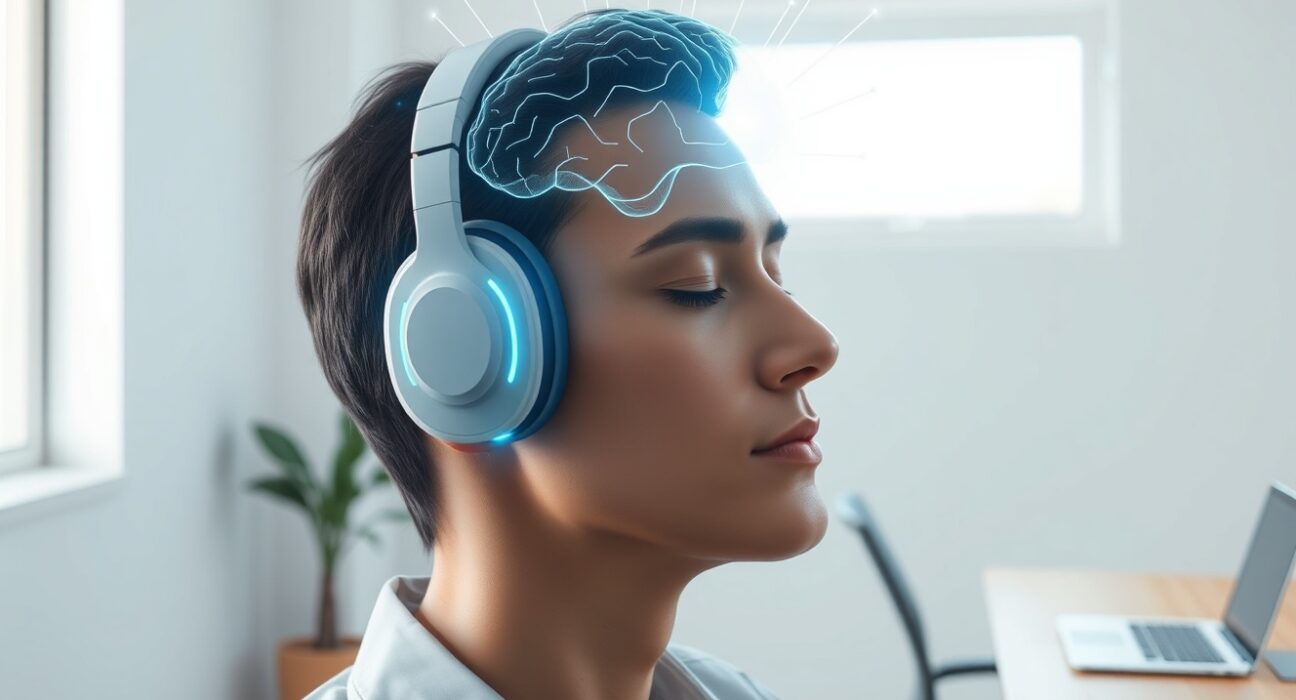
Neurable, a Boston-based brain-computer interface (BCI) startup, has announced a strategic shift. The company now seeks to license its non-invasive mind-reading technology to consumer wearables manufacturers. This move marks a significant step toward bringing neural sensing into everyday products like headphones, hats, and glasses.
Neurable’s Non-Invasive BCI Technology Explained
Neurable specializes in non-invasive BCI. Unlike Elon Musk’s Neuralink, which requires surgical implantation, Neurable uses external EEG sensors. These sensors detect electrical activity in the brain. An AI system then processes these signals to provide real-time cognitive performance data.
The technology measures focus, relaxation, and mental workload. It does this without requiring any medical procedure. Users simply wear a device with integrated sensors. This approach dramatically lowers the barrier to entry for neural data collection.
In December 2024, Neurable raised $35 million in Series A funding. The company plans to use these funds to scale commercialization. This week, it announced a licensing model for original equipment manufacturers (OEMs).
How the Licensing Platform Works
Neurable’s licensing platform allows OEMs to integrate its brain-sensing technology directly into existing hardware. This includes headphones, hats, glasses, and headbands. Manufacturers retain full control over product design, user experience, and distribution.
According to Neurable’s press release, the platform is AI-powered. It combines EEG sensors with signal processing algorithms. The system can scan brain activity, analyze it with AI, and provide actionable insights about a person’s cognitive state.
This approach contrasts with Neuralink’s invasive model. Neurable emphasizes that no surgery is needed. The company positions its technology as a practical, scalable solution for consumer markets.
Partnerships and Early Applications
Neurable has already tested its technology through partnerships. One notable collaboration is with HP Inc.’s HyperX gaming brand. Together, they created a headset designed to help gamers optimize focus and performance.
Another partnership involves iMotions, a human behavior research platform. Neurable’s technology assists iMotions in research initiatives. These early applications demonstrate the technology’s versatility across gaming, research, and productivity.
CEO Ramses Alcaide declined to disclose new partnerships. However, he confirmed the company is expanding its focus across multiple domains. These include health, athletics, productivity tools, and gaming.
From Specific to Scalable
Alcaide explained the company’s evolution. In the past, Neurable focused on specific partnerships to prove commercial viability. Now, having demonstrated traction, the company aims to make brain sensing ubiquitous.
“We’ve demonstrated that we’re getting great traction,” Alcaide said. “Let’s make this as ubiquitous as heart rate sensors on your wrist.” This statement reflects a clear ambition to normalize neural data collection in consumer electronics.
Privacy and Data Protection Concerns
Brain data is inherently more intimate than heart rate data. Neurable addresses this with robust privacy protections. The company ensures user data is protected and anonymized.
Alcaide stated that Neurable follows HIPAA standards. The company encrypts and anonymizes all neural data. This goes above and beyond what many startups implement at this stage.
When asked about AI training, Alcaide clarified that user consent is required. “We can with user consent,” he said. “But we do it in a very specific way.” That process involves asking users for permission to use their data for specific experiments.
“We are not collecting the data, just training on it willy nilly,” Alcaide emphasized. This targeted approach to data usage is designed to build trust with consumers.
Regulatory Compliance and Industry Standards
Neurable’s privacy policy provides detailed guidelines for data access and usage. The company aligns with HIPAA standards, which are typically required for medical data. This compliance adds a layer of credibility and trustworthiness.
The BCI industry faces unique regulatory challenges. Neural data is not yet fully regulated in most jurisdictions. Neurable’s proactive stance on privacy could set a benchmark for the industry.
Market Context: The BCI Industry in 2025
The BCI market is rapidly evolving. Neuralink continues to dominate headlines with its invasive approach. However, non-invasive solutions like Neurable’s are gaining traction for consumer applications.
Industry analysts project significant growth. The global BCI market could reach $5 billion by 2028. Consumer wearables represent a substantial portion of this growth. Neurable’s licensing model positions it to capture a share of this expanding market.
Competitors include companies like Kernel, NextMind, and MindMaze. Each offers different approaches to neural sensing. Neurable differentiates itself through its non-invasive, licensing-based model.
Timeline of Neurable’s Development
- 2017: Neurable founded by Ramses Alcaide
- 2019: First prototype demonstrated at CES
- 2022: Partnership with HP HyperX announced
- 2024: $35 million Series A funding raised
- 2025: Licensing platform launched for OEMs
Impact on Consumer Electronics
Integrating BCI into wearables could transform multiple industries. In health, devices could monitor mental fatigue or stress levels. In athletics, they could optimize training by measuring focus and recovery.
Productivity tools could use neural data to recommend breaks or task switches. Gaming headsets could adjust difficulty based on player engagement. These applications could create entirely new product categories.
Alcaide believes the industry is at an inflection point. “There finally exists a real business model in neuro-technology that is scalable,” he said. This optimism is backed by tangible partnerships and funding.
Challenges and Risks
Despite the potential, challenges remain. Consumer acceptance of neural data collection is uncertain. Privacy concerns could slow adoption. Regulatory frameworks for neural data are still developing.
Technical challenges also exist. EEG sensors require good contact with the skin. Hair, movement, and sweat can interfere with signal quality. Neurable’s technology must overcome these limitations for reliable consumer use.
Competition from larger tech companies is another risk. Apple, Google, and Meta have invested in neural interface research. Their resources could outpace smaller startups like Neurable.
Expert Perspectives on BCI Licensing
Industry experts view Neurable’s licensing model as a pragmatic approach. By partnering with established OEMs, Neurable avoids the high costs of manufacturing and distribution. This allows the company to focus on its core technology.
Dr. Sarah Johnson, a neurotechnology researcher at MIT, commented: “Licensing is a smart strategy for non-invasive BCI. It lets the technology reach consumers faster through products they already use.” This perspective aligns with Neurable’s stated goals.
However, some experts caution about data ethics. “Neural data is deeply personal,” said Dr. Michael Chen, a privacy advocate. “Companies must be transparent about how they use it. Neurable’s HIPAA compliance is a good start, but more regulation may be needed.”
Conclusion
Neurable’s decision to license its non-invasive BCI technology marks a pivotal moment for consumer wearables. By offering a scalable, privacy-conscious platform, the company aims to make brain sensing as common as heart rate monitoring. With $35 million in funding and partnerships with major brands like HP HyperX, Neurable is well-positioned to lead this emerging market. However, consumer trust, regulatory clarity, and technical reliability will determine its long-term success. As Alcaide noted, the neuro-technology industry has reached an inflection point. The next few years will reveal whether mind-reading wearables become a mainstream reality.
FAQs
Q1: What is Neurable’s brain-computer interface technology?
Neurable’s BCI uses non-invasive EEG sensors and AI to read brain activity. It measures focus, relaxation, and cognitive performance without requiring surgery.
Q2: How does Neurable’s licensing model work?
OEMs can integrate Neurable’s brain-sensing technology into their own products, such as headphones, hats, and glasses. They retain control over design and distribution.
Q3: Is Neurable’s technology safe and private?
Yes. Neurable follows HIPAA standards, encrypts data, and anonymizes it. User consent is required for any data used to train AI models.
Q4: What products currently use Neurable’s technology?
Neurable has partnered with HP HyperX for a gaming headset and iMotions for research. More products are expected as licensing expands.
Q5: How does Neurable differ from Neuralink?
Neuralink requires brain surgery to implant chips. Neurable uses external sensors that can be worn on the head without any medical procedure.
Disclaimer: The information provided is not trading advice, Bitcoinworld.co.in holds no liability for any investments made based on the information provided on this page. We strongly recommend independent research and/or consultation with a qualified professional before making any investment decisions.