

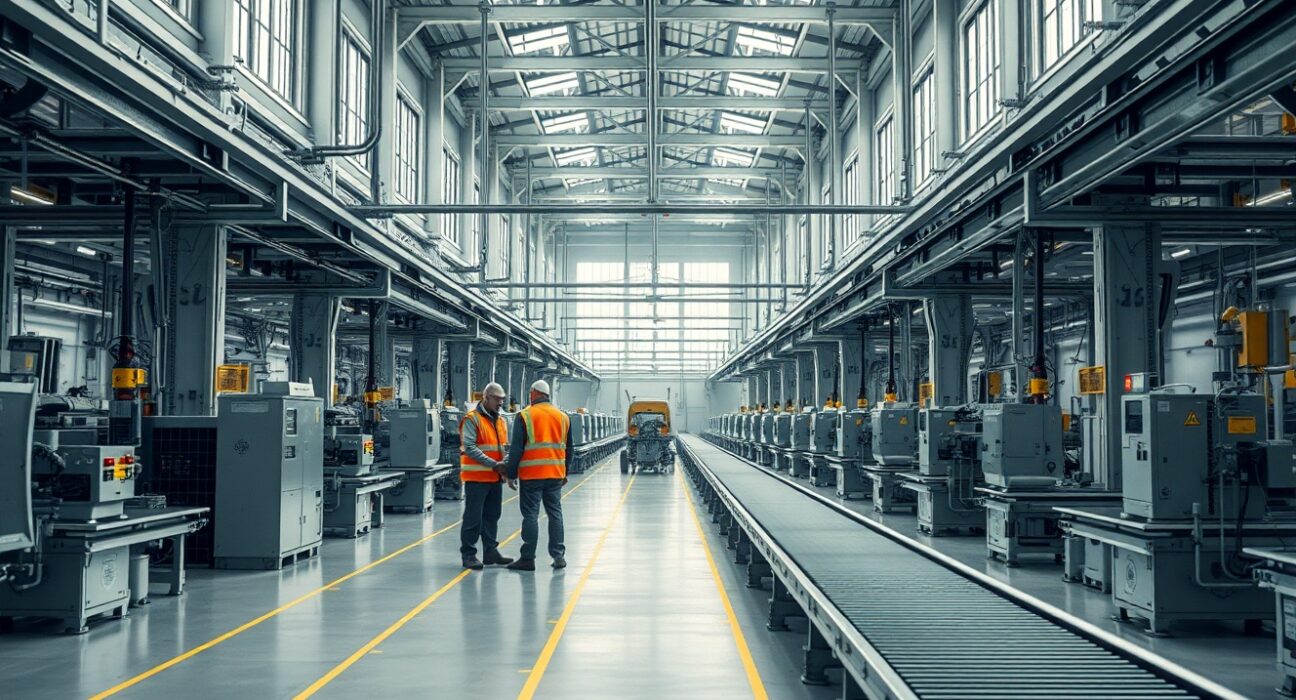
Germany’s manufacturing sector showed no signs of recovery in June, as the HCOB Flash Germany Manufacturing Purchasing Managers’ Index (PMI) fell to exactly 50.0, down from 52.0 in May. The reading, which matched market expectations, indicates that the sector has moved from mild expansion to a state of stagnation, raising fresh concerns about the broader health of Europe’s largest economy.
What the Flash PMI Reading Reveals
The flash PMI, based on preliminary survey data from around 85% of total responses, is a closely watched early indicator of economic activity. A reading above 50 signals expansion, while below 50 points to contraction. The drop to the neutral 50.0 threshold suggests that the brief recovery seen in April and May has lost momentum. Key sub-indices, including new orders and output, are reported to have weakened, with manufacturers citing subdued domestic demand and ongoing uncertainty in export markets.
Context and Broader Implications
The June figure follows a volatile spring for German industry. After a prolonged downturn in 2024, the manufacturing PMI had climbed back into expansion territory in April for the first time in nearly a year, offering a glimmer of hope. However, the latest data suggests that the recovery remains fragile and uneven. Analysts point to persistent headwinds: high energy costs, a slower-than-expected rebound in Chinese demand, and lingering caution among businesses regarding investment. The stagnation in Germany, the eurozone’s industrial powerhouse, often signals a weaker performance for the entire currency bloc.
Market and Policy Impact
Financial markets reacted with caution to the data, with the euro edging lower against the dollar and German bond yields dipping slightly. The European Central Bank, which recently began its rate-cutting cycle, will likely view this as further evidence that the manufacturing sector is not yet on a stable recovery path. Policymakers may interpret the PMI as supporting the case for further monetary easing to stimulate industrial activity. For businesses, the message is one of continued caution: inventory management and cost control remain priorities until a clearer demand picture emerges.
Conclusion
The June flash PMI of 50.0 confirms that Germany’s manufacturing recovery has stalled. While the reading avoided a contractionary signal, the lack of growth underscores the structural challenges facing the sector. The coming months will be critical to determine whether this is a temporary pause or the start of a renewed downturn. Investors and policymakers alike will be watching the final PMI data and other hard economic indicators for confirmation of the trend.
FAQs
Q1: What does a PMI of 50.0 mean for the German economy?
A PMI of exactly 50.0 indicates that the manufacturing sector is neither expanding nor contracting—it is stagnant. This means that business conditions have not improved compared to the previous month, and growth has stalled.
Q2: Why is the German Manufacturing PMI important?
Germany is the largest economy in the eurozone and a major global exporter. Its manufacturing PMI is a leading indicator of industrial health, influencing currency markets, ECB policy expectations, and investor sentiment across Europe.
Q3: How reliable is the flash PMI data?
The flash PMI is based on approximately 85% of total survey responses, making it a highly reliable early estimate. It is published two weeks before the final PMI figure, providing timely insight into economic trends.
Disclaimer: The information provided is not trading advice, Bitcoinworld.co.in holds no liability for any investments made based on the information provided on this page. We strongly recommend independent research and/or consultation with a qualified professional before making any investment decisions.
