

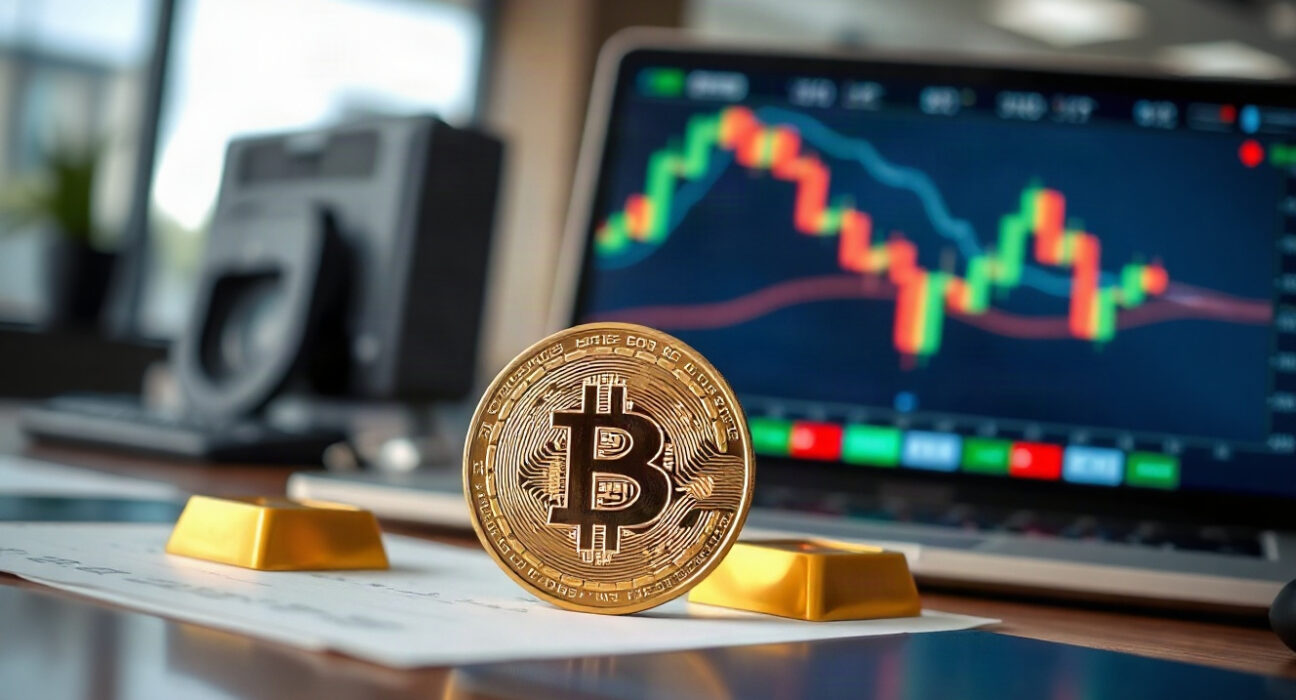
New data from Bloomberg Intelligence shows that two prominent exchange-traded funds—the SPDR Gold Shares (GLD) and the iShares Bitcoin Trust (IBIT)—have re-entered the top 10 list of most-traded ETFs by daily volume. This marks a notable shift from the summer months, when semiconductor and AI-focused funds dominated the upper rankings. According to senior ETF analyst Eric Balchunas, the movement suggests investors may be rotating some capital toward traditional and digital stores of value.
What the Volume Rankings Show
Balchunas highlighted the change in a recent post on social media platform X, noting that GLD and IBIT are once again among the ten most actively traded ETFs. During the summer, funds tied to the artificial intelligence boom—particularly those focused on semiconductor companies—held several spots in the top tier. Those funds still see significant trading activity, but their presence is no longer as overwhelming as before.
The shift is subtle but meaningful. While daily trading volume does not directly equate to net inflows, it reflects investor attention and short-term positioning. The return of gold and Bitcoin ETFs to the top ranks suggests a broadening of interest beyond the AI trade, with some market participants seeking assets that may act as hedges against currency debasement or inflation.
Understanding the ‘Debasement Trade’
The term “debasement trade” refers to buying assets perceived as stores of value—such as gold and, increasingly, Bitcoin—when investors worry about the erosion of purchasing power due to monetary expansion or fiscal policy. Gold has long been a classic hedge in this context. Bitcoin is sometimes described as “digital gold” by proponents, though it remains more volatile and is still establishing its role in institutional portfolios.
The re-emergence of GLD and IBIT in volume rankings could indicate that some investors are diversifying away from the concentrated AI and semiconductor theme. This does not mean the AI trade is collapsing; rather, it suggests a more balanced allocation across sectors and asset classes.
Why This Matters to Investors
For everyday investors, tracking ETF volume trends can offer a window into where institutional and retail money is moving. The recent uptick in gold and Bitcoin ETF activity may signal growing caution or a desire for portfolio diversification. It also reflects a broader market narrative that includes concerns about government debt levels, geopolitical uncertainty, and the long-term effects of stimulus measures.
However, volume rankings are just one metric. They do not reveal whether investors are buying or selling, nor do they indicate the size of net flows. To get a fuller picture, analysts look at data on shares created or redeemed, as well as weekly flow reports from issuers.
Conclusion
The return of GLD and IBIT to the top 10 ETF volume rankings is a noteworthy development, but it is not a definitive signal of a major market rotation. It does, however, underscore that investor interest in gold and Bitcoin remains robust, even as the AI trade continues to capture headlines. For now, the market appears to be in a phase where multiple themes are competing for attention, and ETFs are reflecting that diversity.
FAQs
Q1: What is the significance of an ETF being in the top 10 by volume?
A high daily trading volume indicates strong investor interest and liquidity. It means many shares are changing hands, which can reflect broad market sentiment or specific thematic demand.
Q2: Does high volume mean the ETF is receiving net inflows?
Not necessarily. Volume is the number of shares traded, while inflows/outflows measure net creations or redemptions. An ETF can have high volume but see outflows if more shares are redeemed than created.
Q3: Why are gold and Bitcoin considered ‘debasement trades’?
Investors buy these assets when they fear that central bank policies, such as excessive money printing, may reduce the value of fiat currencies. Gold and Bitcoin are seen as having limited supply, making them potential hedges against inflation or currency devaluation.
Disclaimer: The information provided is not trading advice, Bitcoinworld.co.in holds no liability for any investments made based on the information provided on this page. We strongly recommend independent research and/or consultation with a qualified professional before making any investment decisions.
