
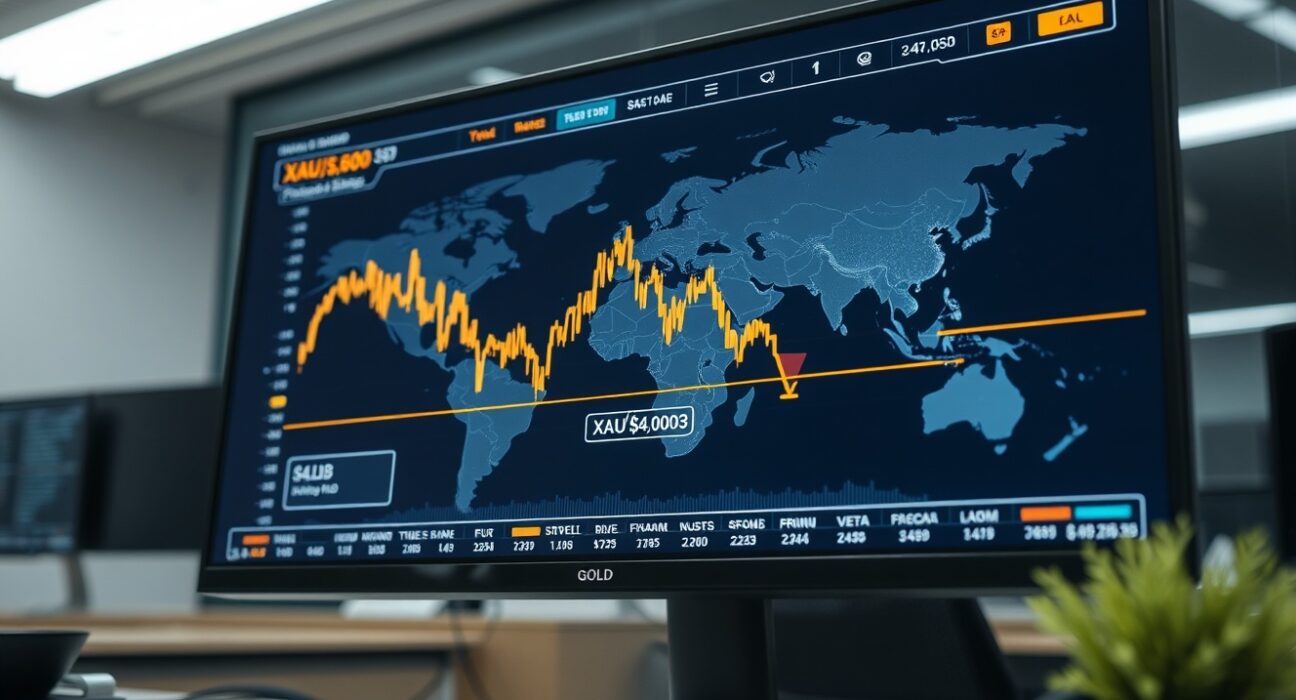
Gold prices have breached the critical $4,600 support level, tumbling to multi-week lows as former President Donald Trump’s latest foreign policy remarks bolster the US dollar and dampen investor hopes for near-term geopolitical de-escalation. This significant move, observed in global markets on Thursday, underscores the profound sensitivity of precious metals to both currency dynamics and political rhetoric.
Gold Price Breakdown and Technical Context
The spot gold price decisively fell below the $4,600 per ounce mark during the Asian trading session, extending losses from the previous week. Consequently, this decline marks a retreat of over 3.5% from the recent monthly high. Market analysts immediately pointed to a confluence of technical and fundamental factors driving the sell-off. Specifically, the breach of the $4,620 support zone triggered automated selling, accelerating the downward momentum. Moreover, the Relative Strength Index (RSI) dipped into oversold territory, signaling intense selling pressure. Historically, gold has demonstrated a strong inverse correlation with the US Dollar Index (DXY). Therefore, the current price action aligns with established market patterns, though the velocity of the move has caught some participants off guard.
The US Dollar’s Resurgent Strength
The primary catalyst for gold’s weakness is the sharp appreciation of the US dollar. The Dollar Index surged past the 105.50 level, reaching its highest point in over a month. This rally gained substantial momentum following public comments from former President Trump regarding ongoing international tensions. Trump characterized recent diplomatic efforts as “weak” and advocated for a more assertive stance, which markets interpreted as reducing the likelihood of a swift de-escalation. Consequently, global investors flocked to the dollar as the world’s primary reserve currency during periods of perceived uncertainty. This flight to liquidity and safety directly undermines demand for non-yielding assets like gold, which becomes more expensive for holders of other currencies.
Analyzing the Geopolitical Impact on Safe Havens
Typically, gold thrives as a classic safe-haven asset during geopolitical strife. However, the current scenario presents a nuanced dynamic. While tensions persist, Trump’s rhetoric has simultaneously bolstered the dollar’s safe-haven appeal. This creates a competitive environment for capital flows. Experts from major financial institutions, including analysts cited in Bloomberg and Reuters reports, note that when the dollar’s rally is driven by a unique mix of hawkish Fed expectations and specific geopolitical risk premiums, it can temporarily overshadow gold’s traditional role. The market is effectively pricing in a stronger dollar for longer, which exerts sustained pressure on dollar-denominated commodities.
Broader Commodity Market Reactions
The sell-off was not isolated to gold. The entire precious metals complex faced headwinds. For instance:
- Silver followed gold lower, dropping over 4%.
- Platinum and palladium, more tied to industrial demand, also saw declines, though less severe.
- Copper and oil prices exhibited volatility but were more influenced by separate supply-demand narratives.
This broad-based weakness highlights the dominant influence of macro forex movements. The following table contrasts the performance of key assets over the past 24 hours:
| Asset | Price Change (%) | Key Driver |
|---|---|---|
| Gold (XAU/USD) | -2.8% | USD Strength, Technical Break |
| US Dollar Index (DXY) | +1.1% | Geopolitical Rhetoric, Yield Spreads |
| US 10-Year Treasury Yield | +12 bps | Inflation Expectations |
| S&P 500 Index | -0.5% | Risk-Off Sentiment |
Federal Reserve Policy and Real Yields
Beneath the geopolitical headlines, the fundamental pressure on gold stems from shifting interest rate expectations. Stronger-than-expected US economic data has led markets to push back forecasts for Federal Reserve rate cuts. Higher for longer interest rates increase the opportunity cost of holding gold, which offers no yield. Furthermore, rising real yields—adjusted for inflation—make Treasury bonds a more attractive defensive asset. Recent speeches by Fed officials have reinforced a data-dependent, cautious approach, providing underlying support for the dollar. This monetary policy backdrop creates a challenging environment for gold to stage a sustained recovery without a clear dovish pivot from the central bank.
Institutional and Retail Investor Positioning
Data from the Commodity Futures Trading Commission (CFTC) shows that managed money accounts had built substantial long positions in gold ahead of this decline. The rapid price drop likely forced liquidations from these leveraged players, exacerbating the move. Conversely, physical demand from central banks, a key support pillar in recent years, remains a stabilizing factor but operates on a longer time horizon. Retail investor interest, as measured by bullion ETF flows, has been tepid, indicating a lack of broad-based buying to arrest the decline at current levels.
Conclusion
The gold price decline below $4,600 is a direct consequence of a potent mix of a surging US dollar and recalibrated geopolitical risk perceptions. While gold maintains its long-term status as a store of value, its short-term trajectory remains tightly coupled to dollar dynamics and real yield movements. The market’s reaction to political rhetoric highlights the fragile equilibrium in global commodities. Moving forward, traders will scrutinize upcoming US inflation data and Federal Reserve communications for clues on whether the dollar’s strength—and thus gold’s weakness—will persist. The breach of this key technical level now establishes a new resistance zone, suggesting the path of least resistance may remain lower until a fundamental catalyst shifts the narrative.
FAQs
Q1: Why does a stronger US dollar cause gold prices to fall?
Gold is priced in US dollars globally. When the dollar appreciates, it takes fewer dollars to buy an ounce of gold, making it cheaper in dollar terms. Conversely, for investors using other currencies, gold becomes more expensive, which can reduce international demand.
Q2: Is gold still considered a safe-haven asset?
Yes, historically gold is a prime safe-haven asset. However, in specific scenarios where geopolitical events trigger a sharp flight to the US dollar and US Treasuries, the dollar can act as a competing safe haven, temporarily pressuring gold prices.
Q3: What key support level did gold break?
The key support level breached was $4,620 per ounce. The break below $4,600 confirmed the bearish breakdown, triggering further technical selling and opening the potential for a test of lower supports near $4,550.
Q4: How do interest rates affect gold?
Gold does not pay interest or dividends. When interest rates rise, the opportunity cost of holding gold increases because investors can earn yield from bonds or savings accounts. Higher rates also typically strengthen the currency, further pressuring gold.
Q5: What could cause a recovery in gold prices?
A sustained recovery would likely require one or more of the following: a dovish shift in Federal Reserve policy signaling rate cuts, a meaningful pullback in the US dollar, a significant escalation in geopolitical tension that overwhelms dollar strength, or a sharp rise in inflation expectations that boosts demand for inflation hedges.
Disclaimer: The information provided is not trading advice, Bitcoinworld.co.in holds no liability for any investments made based on the information provided on this page. We strongly recommend independent research and/or consultation with a qualified professional before making any investment decisions.