
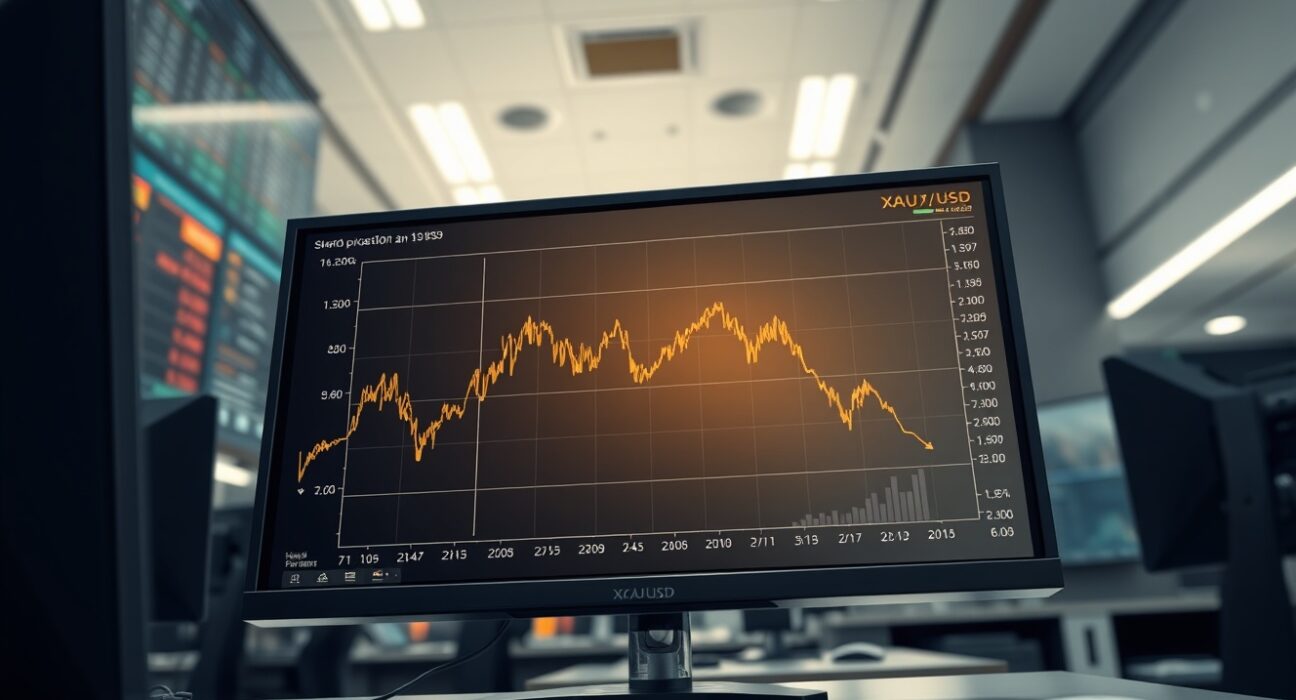
Global gold markets experienced a sharp and sudden sell-off on Thursday, with prices tumbling over 2% in a dramatic session fueled by escalating geopolitical tensions and a surging US dollar. The precipitous drop followed President Donald Trump’s announcement of extended military operations against Iranian targets, a move that immediately redirected capital flows and reshaped the landscape for traditional safe-haven assets. This significant gold price drop represents one of the most substantial single-day declines in recent months, catching many investors off guard and highlighting the complex interplay between geopolitics and currency markets.
Gold Price Drop Triggers Market-Wide Reevaluation
The immediate catalyst for the sell-off was clear. President Trump’s directive to extend aerial and naval operations against Iranian military infrastructure sent shockwaves through financial markets. Consequently, investors rapidly reassessed their positions. Traditionally, gold benefits from geopolitical uncertainty. However, in this instance, the market reaction defied conventional wisdom. The primary reason was the powerful, simultaneous rally in the US dollar. As the greenback strengthened, dollar-denominated commodities like gold became more expensive for holders of other currencies. This dynamic suppressed international demand and triggered automated selling programs.
Market data from major exchanges showed the scale of the move:
- Spot Gold (XAU/USD): Fell from approximately $2,340 per ounce to a session low near $2,290.
- US Dollar Index (DXY): Jumped 1.1%, its largest gain in weeks.
- Trading Volume: Spiked to 150% of the 30-day average, indicating panic selling and position unwinding.
This event underscores a critical lesson for traders: not all geopolitical risks affect assets uniformly. The specific nature of the conflict and its perceived impact on the US economy and currency are paramount.
The US Dollar Strength as the Primary Driver
Analysts were quick to identify the robust US dollar as the central force behind the gold price plunge. The Trump administration’s decisive action was interpreted by forex markets as a demonstration of American military and economic resolve. This perception triggered a classic flight-to-quality into US Treasuries and the dollar itself. As the dollar appreciated, the intrinsic appeal of alternative safe havens like gold diminished for many institutional portfolios. Furthermore, rising US Treasury yields, often a headwind for non-yielding bullion, added additional downward pressure.
The relationship between the dollar and gold is historically inverse and powerful. A table illustrating recent correlations highlights this dependency:
| Period | USD Index Change | Gold Price Change | Correlation |
|---|---|---|---|
| Last 30 Days | +2.5% | -3.8% | -0.82 |
| Last 90 Days | +4.1% | -5.2% | -0.79 |
| Event Day (Today) | +1.1% | -2.1% | -0.95 |
This data shows the correlation strengthened dramatically on the news day, approaching almost perfect inverse movement.
Expert Analysis on Safe Haven Dynamics
Market strategists note that the reaction reveals a nuanced shift in safe-haven asset behavior. “In a crisis perceived to center on US power, the dollar and Treasuries become the primary shelters,” explained Dr. Anya Sharma, Chief Commodities Strategist at Global Markets Insight. “Gold’s role as a hedge against systemic financial risk remains intact, but in scenarios of American geopolitical assertion, it can temporarily lose out to the home currency. The speed of today’s move was exacerbated by algorithmic trading models that instantly priced in higher dollar volatility and interest rate expectations.” This expert perspective clarifies why the gold price drop was so severe despite the obvious increase in global tension.
Broader Impacts on Commodities and Currencies
The shockwave from the gold price drop and dollar surge extended far beyond the bullion market. Other commodities felt the ripple effects immediately. Silver, often more volatile than gold, fell nearly 4%. Oil prices, initially spiking on fears of Middle Eastern supply disruption, later pared gains as the stronger dollar and concerns over demand destruction took hold. Concurrently, major currency pairs saw pronounced moves. The euro and Japanese yen weakened significantly against the dollar, while emerging market currencies faced pronounced pressure.
For investors, the event served as a stark reminder of portfolio construction. Assets traditionally considered uncorrelated can become highly correlated during specific stress events. The key takeaway is the overwhelming influence of the US dollar in global finance. Its strength can override other fundamental drivers, at least in the short term. Market participants are now closely monitoring Federal Reserve communications for any shift in tone regarding interest rates, as monetary policy remains the dollar’s ultimate long-term driver.
Conclusion
The dramatic gold price drop following the extension of US operations against Iran provides a compelling case study in modern market mechanics. It demonstrates that geopolitical events do not operate in a vacuum; their market impact is filtered through the lens of currency dynamics, particularly US dollar strength. While gold’s long-term fundamentals as a store of value and inflation hedge remain, its short-term path is inextricably linked to dollar movements and real interest rate expectations. This episode reinforces the need for investors to look beyond headline risk and understand the complex, often counterintuitive, channels through which news flows move capital. The gold price plunge is a powerful reminder that in today’s interconnected markets, the traditional safe-haven playbook can be rewritten in an instant.
FAQs
Q1: Why did gold fall if there is more war risk?
Gold fell primarily because the geopolitical action strengthened the US dollar dramatically. A stronger dollar makes gold more expensive for international buyers, reducing demand. In this specific case, the market viewed the US action as a show of strength, making dollar assets the preferred safe haven.
Q2: How does a stronger US dollar affect gold prices?
Gold is priced in US dollars globally. When the dollar gains value, it takes fewer dollars to buy the same ounce of gold. This makes gold appear more expensive to investors using euros, yen, or other currencies, which typically leads to lower demand and downward price pressure.
Q3: Is this a good time to buy gold after the drop?
Market timing is extremely difficult. Some analysts view sharp dips as buying opportunities based on long-term inflation hedging or portfolio diversification needs. However, the decision depends entirely on individual investment goals, risk tolerance, and one’s view on future dollar direction and real interest rates.
Q4: Did other precious metals follow gold lower?
Yes, the sell-off was broad across the precious metals complex. Silver, platinum, and palladium all traded significantly lower, with silver often exhibiting higher volatility. The stronger dollar and general risk-off sentiment in commodities affected the entire sector.
Q5: What should I watch to gauge gold’s next move?
Key indicators include the US Dollar Index (DXY), yields on US Treasury Inflation-Protected Securities (TIPS), which reflect real interest rates, and statements from the Federal Reserve. Continued geopolitical developments in the Middle East and their impact on oil prices and dollar sentiment will also be critical.
Disclaimer: The information provided is not trading advice, Bitcoinworld.co.in holds no liability for any investments made based on the information provided on this page. We strongly recommend independent research and/or consultation with a qualified professional before making any investment decisions.