

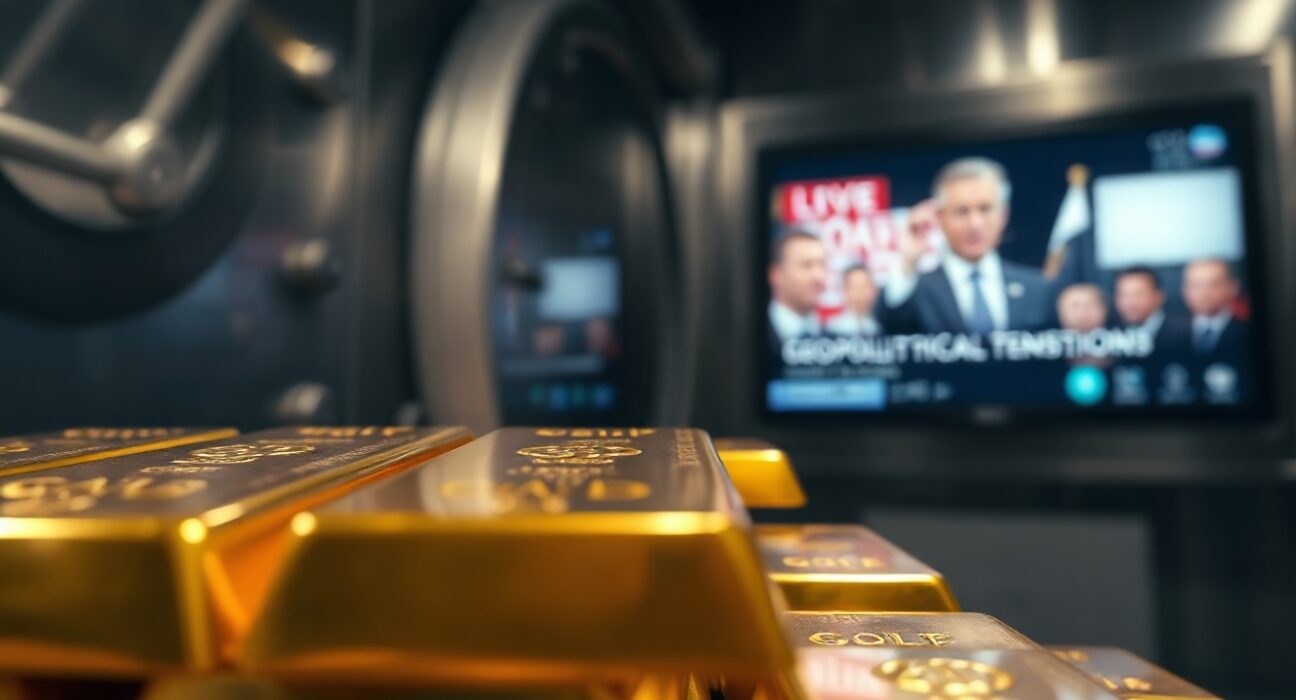
The price of gold edged lower in early trading on Tuesday after former President Donald Trump declared that the ceasefire with Iran is effectively over, reintroducing geopolitical uncertainty into financial markets. Spot gold fell by approximately 0.6% to $2,385 per ounce, reversing some of the gains recorded during the previous session.
Trump’s statement reignites market caution
Speaking at a campaign rally in Pennsylvania, Trump stated that the ceasefire agreement brokered earlier this year between the United States and Iran was no longer in effect, citing what he described as repeated violations by Tehran. The remarks caught many investors off guard, as the ceasefire had been seen as a stabilizing factor for energy markets and broader geopolitical risk.
The immediate market reaction was a modest sell-off in gold, which had rallied in recent weeks on expectations of a more dovish Federal Reserve. Analysts noted that the decline was likely driven by profit-taking rather than a fundamental shift in safe-haven demand. However, the renewed uncertainty could support gold prices in the medium term if tensions escalate.
Broader implications for safe-haven assets
Gold traditionally benefits from geopolitical turmoil, as investors seek assets perceived as stores of value. Yet, the metal’s price reaction on Tuesday suggests that markets are still weighing the credibility and timing of Trump’s statement, given that he is not currently in office. The Biden administration has not commented on the status of the ceasefire, leaving room for diplomatic ambiguity.
Meanwhile, the U.S. dollar index edged higher, adding pressure on gold prices. A stronger dollar makes gold more expensive for holders of other currencies, dampening demand. Crude oil prices also saw a slight uptick, reflecting concerns about potential disruptions in the Middle East.
What this means for investors
For retail and institutional investors, the key takeaway is that geopolitical risk remains a volatile factor in precious metals markets. While gold’s long-term outlook is supported by central bank buying and inflation hedging, short-term price movements are likely to remain sensitive to political headlines. Traders should monitor official statements from the current administration and any developments from Iran before adjusting positions.
Conclusion
The dip in gold prices following Trump’s ceasefire declaration underscores the market’s sensitivity to political rhetoric, even from figures not currently in power. While the immediate impact was a modest sell-off, the underlying geopolitical risk has not diminished. Investors should stay alert to further developments, as the situation could evolve quickly and drive renewed demand for safe-haven assets.
FAQs
Q1: Why did gold prices drop after Trump’s statement?
Gold fell primarily due to profit-taking and a slight strengthening of the U.S. dollar. The market is still assessing the practical implications of Trump’s remarks, given that he is not the current president.
Q2: Is the Iran ceasefire officially over?
As of now, only Trump has declared the ceasefire over. The Biden administration has not confirmed or denied this, leaving the official status unclear.
Q3: Should investors buy gold now?
Gold remains a valid hedge against geopolitical uncertainty and inflation. However, short-term volatility is expected. Investors should consider their risk tolerance and time horizon before making decisions.
Disclaimer: The information provided is not trading advice, Bitcoinworld.co.in holds no liability for any investments made based on the information provided on this page. We strongly recommend independent research and/or consultation with a qualified professional before making any investment decisions.
