
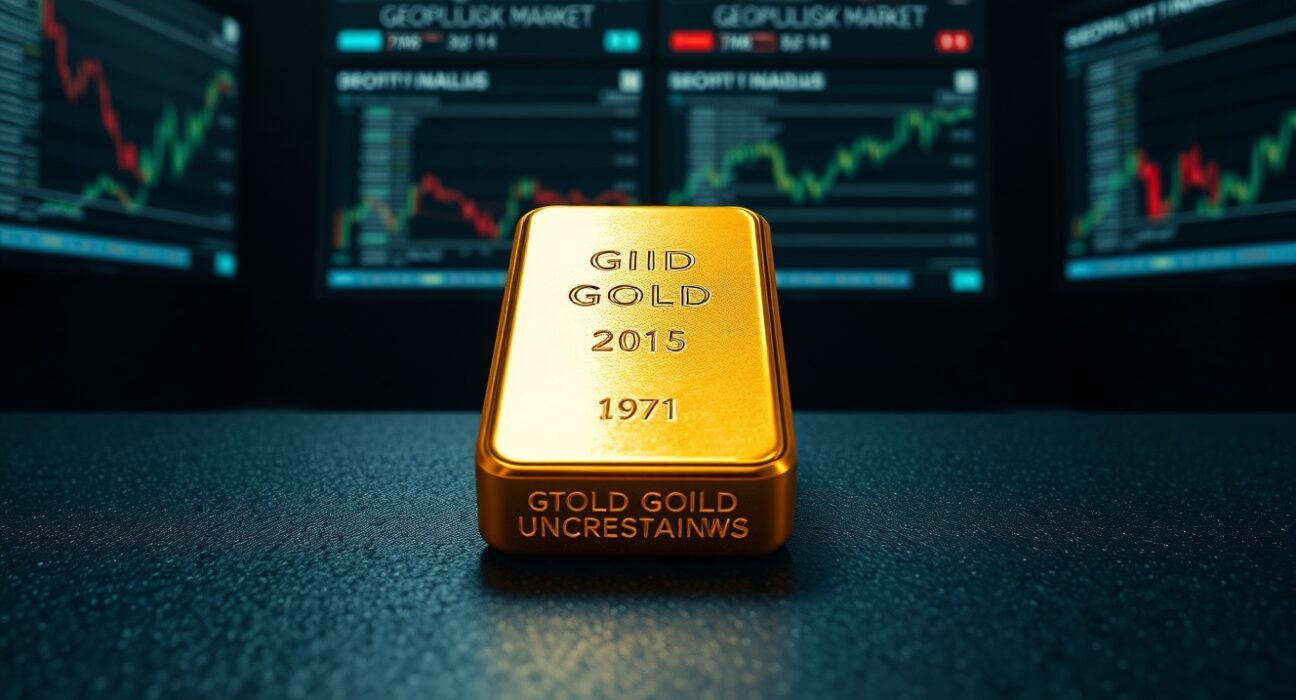
Global gold markets staged a significant recovery from their 2025 lows this week, with the precious metal’s price surging as President Trump’s decision to postpone military strikes against Iran’s energy infrastructure recalibrated immediate geopolitical risk. The dramatic pivot, confirmed by senior administration officials, triggered a classic flight to quality, illustrating gold’s enduring role as a financial safe haven during periods of international uncertainty. This price action underscores the complex interplay between diplomatic maneuvers, market psychology, and tangible asset valuation.
Gold Price Rebound: Analyzing the Market Catalyst
The spot price of gold climbed over 3.5% in a single trading session, decisively breaking above key technical resistance levels that had held for months. This move erased the year-to-date losses that had accumulated due to a previously strengthening U.S. dollar and hawkish signals from the Federal Reserve. Market analysts immediately linked the rally directly to breaking news from Washington. Consequently, traders rapidly adjusted their portfolios, moving capital out of risk-sensitive equities and into perceived stores of value. The volatility index (VIX) also spiked, confirming a broad market shift toward caution. Historical data consistently shows that gold often performs inversely to investor confidence in geopolitical stability.
The Geopolitical Trigger: A Decision to Delay
President Trump’s announcement, delivered via official channels, stated a deliberate pause in planned kinetic actions against Iranian oil refineries and export terminals. Administration sources cited ongoing back-channel communications and a desire to exhaust diplomatic avenues. However, they emphasized that all military options remain firmly on the table. This creates a state of protracted tension rather than immediate resolution. For commodity markets, this scenario is particularly potent. It removes the short-term shock of a supply disruption but installs a persistent, high-level risk premium across oil and, by extension, inflation-sensitive assets like gold. The delay itself became a market-moving event, demonstrating how policy tempo influences financial instruments.
Understanding Gold’s Role as a Geopolitical Hedge
Gold’s price behavior during this event provides a textbook case of its hedging characteristics. Unlike currencies or bonds, gold carries no counterparty risk and is not tied to the economic health of a single nation. Therefore, when the credibility of state actions or the stability of international relations comes into question, capital seeks its neutrality. The following factors specifically contributed to this rebound:
- Dollar Weakness: The U.S. dollar index (DXY) dipped as the news broke, as markets priced in potential long-term fiscal strain from extended Middle East engagement. A weaker dollar makes dollar-priced gold cheaper for holders of other currencies, boosting demand.
- Inflation Expectations: While immediate oil supply was not cut, the threat to a major producer’s infrastructure pushed future energy price expectations higher. Gold is historically sought as a protection against inflation.
- Real Yields: Anticipation of a more cautious Federal Reserve stance in a crisis environment pressured real (inflation-adjusted) bond yields. Lower real yields decrease the opportunity cost of holding non-yielding gold.
Expert Analysis and Market Sentiment
Financial institutions quickly issued revised forecasts. For instance, analysts at Global Macro Advisors noted, “The market is not pricing peace; it is pricing a more complex and drawn-out risk scenario. This environment typically supports gold more than a swift, decisive conflict, which often sees a sharp but brief spike.” Data from the Commodity Futures Trading Commission (CFTC) will be scrutinized in the coming week for changes in speculative positioning. Meanwhile, physical gold ETFs reported substantial inflows, indicating participation from both institutional and retail investors seeking a tangible asset hedge.
Historical Context and Comparative Impact
This event invites comparison to previous geopolitical flashpoints. The table below contrasts market reactions across different events:
| Event | Gold Initial Reaction | Subsequent 30-Day Trend | Key Driver |
|---|---|---|---|
| 2019 Iran General Strike | +4.2% | +8.1% | Immediate escalation fear |
| 2022 Russia-Ukraine Invasion | +6.8% | +12.5% | Sanctions & global uncertainty |
| 2025 Iran Strike Delay | +3.5% | TBD | Prolonged risk premium |
The current situation most closely resembles a “simmer” rather than a “boil,” which can lead to more sustained, albeit less volatile, support for gold prices. Market technicians are now watching the $2,150 per ounce level as a critical resistance point. A sustained break above could signal a longer-term bullish trend reversal.
Broader Market Implications and Future Outlook
The reverberations extend beyond the gold pit. Energy markets exhibited heightened volatility, while Treasury bonds saw a bid for safety. This interconnected response highlights the systemic nature of geopolitical shocks. Looking ahead, several key developments will dictate gold’s trajectory:
- The substance and public framing of any future diplomatic talks between the U.S. and Iran.
- Official U.S. strategic communications regarding the conditions that would trigger military action.
- Reactions from other global powers and their potential moves to stabilize or mediate.
- Upcoming U.S. economic data and Federal Reserve commentary, which will compete for market attention.
Ultimately, the gold price rebound serves as a real-time barometer of global anxiety. It reflects a market digesting not just an event, but a shift in the probability and character of future events. The precious metal’s performance will remain tightly coupled to the next headlines from the White House and Tehran.
Conclusion
The recent gold price rebound from its yearly lows powerfully demonstrates the asset’s fundamental role in global finance. President Trump’s decision to delay strikes on Iran’s energy sector did not resolve tensions but transformed them, creating a fertile environment for safe-haven demand. This event reinforces that gold remains a critical hedge against geopolitical uncertainty, currency fluctuations, and inflationary pressures stemming from resource conflicts. As the situation develops, market participants will continue to monitor both political statements and technical price levels to gauge the durability of this recovery. The precious metal’s journey offers a clear window into the complex relationship between statecraft and marketcraft.
FAQs
Q1: Why did gold prices go up if the U.S. decided *not* to strike immediately?
The delay creates sustained uncertainty rather than a one-off event. Markets now price in a prolonged period of elevated geopolitical risk and potential future supply disruptions, which supports gold’s value as a long-term hedge.
Q2: How does a weaker U.S. dollar affect the gold price?
Gold is priced in U.S. dollars globally. When the dollar weakens, it takes fewer units of other currencies (like euros or yen) to buy one ounce of gold, increasing demand from international buyers and pushing the dollar price higher.
Q3: Are other precious metals like silver reacting the same way?
Silver often moves in correlation with gold during geopolitical events due to its similar safe-haven properties, but its price is also more sensitive to industrial demand outlooks. It typically exhibits higher volatility.
Q4: What is a “risk premium” in commodity markets?
A risk premium is the additional amount investors are willing to pay for an asset (like gold or oil) due to the perceived increase in the risk of supply disruption, political instability, or future price spikes. The Iran delay embedded a new, higher risk premium.
Q5: Should retail investors consider gold in their portfolio now?
Financial advisors typically recommend gold as a small, diversifying portion of a balanced portfolio (often 5-10%) to hedge against systemic risks and inflation. Its performance during this event highlights that function, but it does not generate income like stocks or bonds.
Disclaimer: The information provided is not trading advice, Bitcoinworld.co.in holds no liability for any investments made based on the information provided on this page. We strongly recommend independent research and/or consultation with a qualified professional before making any investment decisions.