

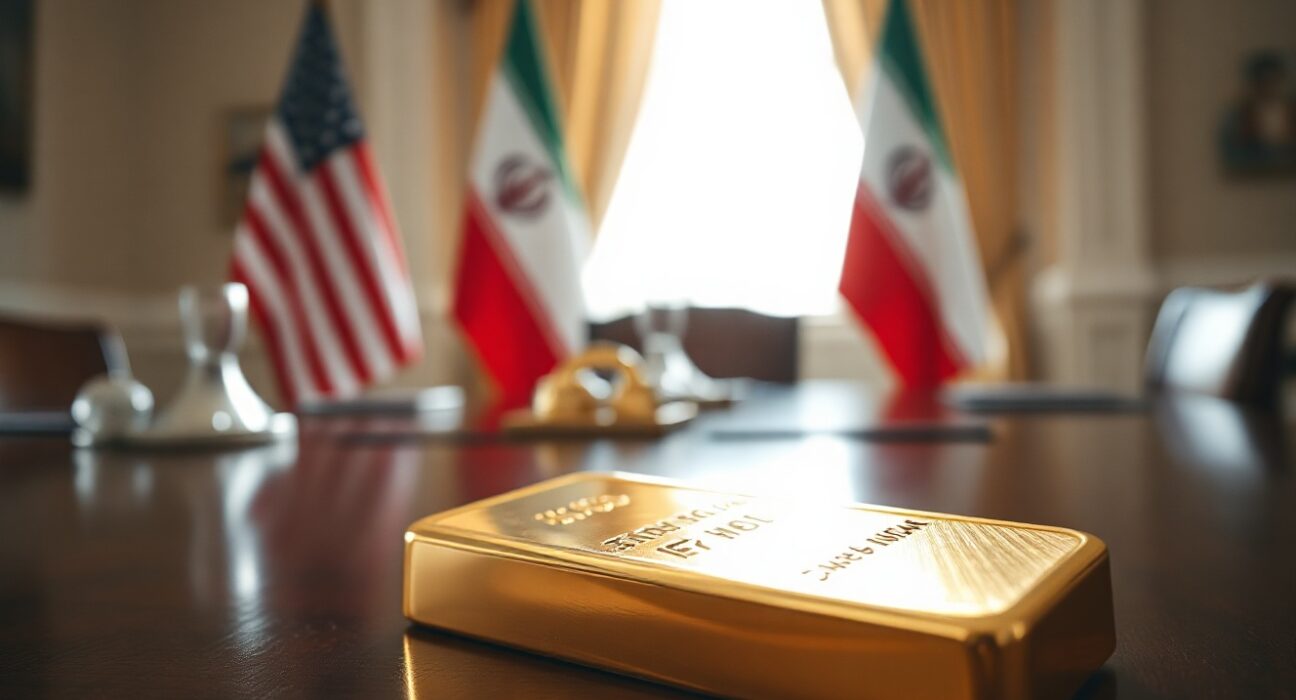
Gold prices rallied sharply on Monday following the unexpected announcement of a comprehensive peace agreement between the United States and Iran. The deal, brokered through backchannel negotiations over the past several weeks, marks a significant de-escalation of tensions that have defined the Middle East for decades.
Market Reaction and Price Action
Spot gold surged over 2.5% in early trading, crossing the $2,450 per ounce mark before stabilizing. The precious metal, traditionally viewed as a safe-haven asset, initially climbed on the uncertainty surrounding the announcement but continued to gain as investors assessed the broader economic implications. Analysts noted that the rally was driven by a combination of short-covering and fresh institutional buying.
The peace deal, which includes provisions for sanctions relief, nuclear program monitoring, and regional security guarantees, removes a key geopolitical risk that had supported gold prices for years. However, market participants are now recalibrating their expectations for inflation, currency markets, and global trade flows.
Why Gold Is Still Rising Despite Reduced Tensions
While a reduction in geopolitical risk typically reduces demand for safe-haven assets, several factors are underpinning gold’s current strength. First, the deal includes a significant devaluation of the US dollar against a basket of Middle Eastern currencies, making dollar-denominated gold cheaper for foreign buyers. Second, the agreement involves large-scale infrastructure spending in Iran, funded by released frozen assets, which could fuel global inflationary pressures.
Third, the peace deal opens the door for Iran to re-enter global oil markets, potentially lowering energy prices. Lower oil prices generally reduce production costs and can stimulate economic growth, but they also reduce the appeal of inflation-hedge assets. Gold’s resilience suggests investors are looking past short-term disinflation and focusing on long-term monetary policy implications.
Investor Implications and Strategic Outlook
For investors, the key takeaway is that gold’s rally reflects a shift in market dynamics rather than a simple flight to safety. The peace deal removes one layer of uncertainty but introduces new variables related to currency realignment, fiscal stimulus, and global trade patterns. Portfolio managers are now reassessing their commodity allocations, with some recommending a modest overweight to gold as a hedge against potential currency volatility.
Central banks, particularly in emerging markets, are also expected to continue their gold purchasing programs, which have been a major driver of demand over the past two years. The peace deal does not alter the structural reasons for central bank diversification away from the US dollar.
Conclusion
The US-Iran peace deal represents a historic diplomatic breakthrough with immediate and significant implications for global financial markets. Gold’s upward momentum, while initially counterintuitive, reflects a complex recalibration of risk, inflation, and currency expectations. Investors should monitor the implementation of the deal’s terms closely, as the pace of sanctions relief and oil market adjustments will shape the next phase of gold price action.
FAQs
Q1: Why did gold prices go up after a peace deal, not down?
Gold rose due to the US dollar weakening against regional currencies, expectations of higher inflation from Iran’s re-integration into the global economy, and institutional portfolio rebalancing. The removal of one risk factor does not eliminate all macroeconomic uncertainties.
Q2: How will the peace deal affect oil prices?
Iran’s return to oil markets is expected to increase global supply, putting downward pressure on crude prices. However, the pace of production ramp-up and compliance with OPEC+ quotas will determine the actual impact.
Q3: Should I buy gold now?
Gold remains a useful portfolio diversifier, especially in an environment of currency volatility and potential inflation. However, investors should consider their individual risk tolerance and investment horizon. The recent rally may present a buying opportunity on any pullbacks, but short-term volatility is likely.
Disclaimer: The information provided is not trading advice, Bitcoinworld.co.in holds no liability for any investments made based on the information provided on this page. We strongly recommend independent research and/or consultation with a qualified professional before making any investment decisions.
