

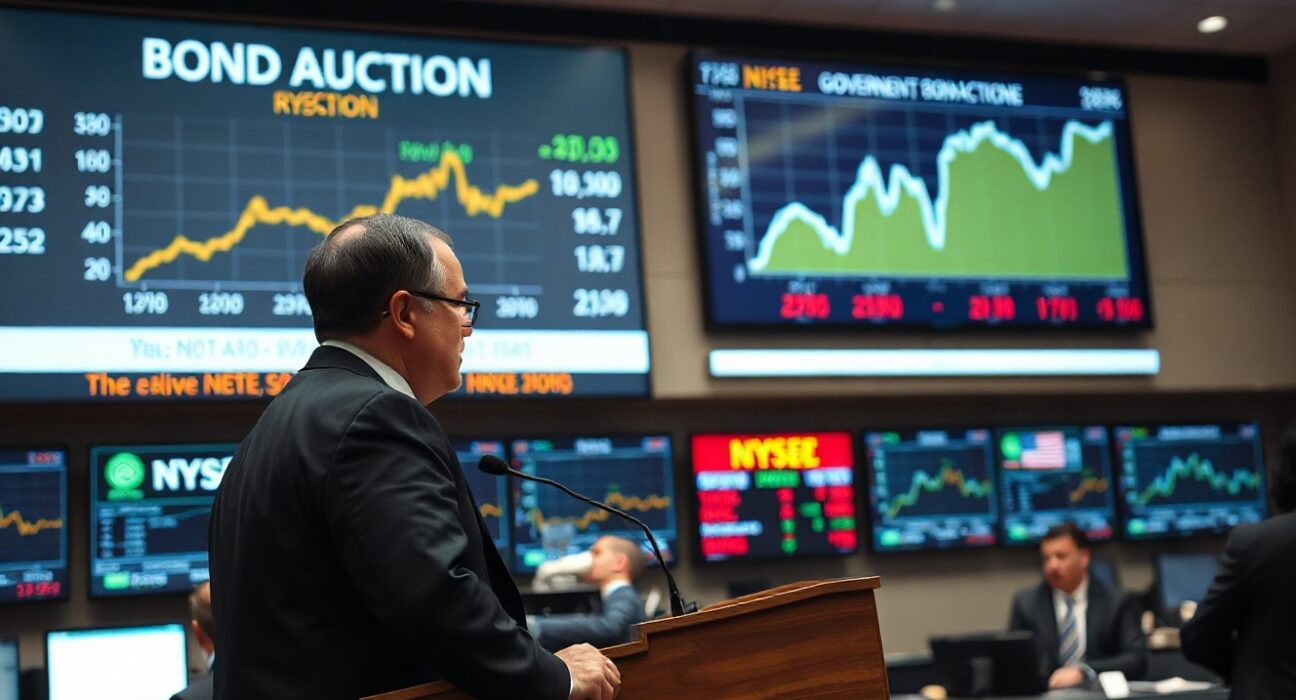
Government bond auctions, once a critical barometer of market confidence and fiscal credibility, are increasingly being viewed by analysts as scripted events that reveal little about genuine investor demand. As of 2025, several major economies have seen auction metrics—such as bid-to-cover ratios and tail lengths—that appear unusually stable, prompting questions about whether these sales still serve their traditional price-discovery function.
The Mechanics of Modern Bond Auctions
In a typical auction, the treasury sets a coupon and accepts bids, with the cut-off price determining the yield. The bid-to-cover ratio—the amount of bids relative to the amount offered—is a key indicator of demand. A high ratio suggests strong interest, while a low ratio signals weakness. However, in recent years, these ratios have become less informative as central banks and large institutional investors dominate the bidding, often with pre-arranged allocations.
For example, in the United States, the Federal Reserve’s ongoing reinvestment of maturing securities, along with the rise of passive index funds, has created a steady, predictable bid for Treasuries. Similarly, in the euro area, the European Central Bank’s quantitative easing programs have historically absorbed a significant portion of sovereign debt, muting market signals. This has led some economists to argue that auctions are now less about discovering a market-clearing price and more about fulfilling a procedural requirement.
Implications for Market Transparency
The shift toward ‘theater’ in bond auctions has several implications. For one, it can distort the yield curve, which is a critical benchmark for corporate borrowing, mortgage rates, and monetary policy transmission. If auction results are not truly reflective of supply and demand, the resulting yields may not accurately price risk.
Moreover, the lack of genuine price discovery can lull investors into a false sense of security. When auctions appear consistently well-subscribed, it may mask underlying fragilities, such as a narrowing investor base or growing reliance on central bank support. A sudden shock—such as a spike in inflation or a change in central bank policy—could then cause a sharp repricing, catching markets off guard.
What This Means for Investors and Policymakers
For investors, the diminishing informational value of auctions means they must look beyond headline numbers. Tracking the composition of bidders, the share of indirect bids (from foreign central banks and international investors), and the behavior of primary dealers can provide more nuanced signals. For policymakers, the challenge is to maintain credibility in the auction process while ensuring that fiscal policy remains sustainable.
The central bank independence is also at stake. When a central bank is seen as an active buyer of government debt, its ability to tighten monetary policy may be questioned, potentially fueling inflation expectations. This is why some economists advocate for a gradual unwinding of central bank balance sheets and a return to more market-driven auctions.
Conclusion
While bond auctions are not yet entirely meaningless, their effectiveness as a market signal has diminished in an era of quantitative easing and institutional dominance. Understanding this shift is crucial for anyone who relies on government bond yields as a benchmark. As central banks begin to shrink their balance sheets, the true test of market appetite will come, and auctions may once again become a source of valuable information.
FAQs
Q1: Why are bond auctions considered ‘theater’?
A: Because the outcomes are often predictable due to central bank participation and passive investment flows, reducing their value as a genuine indicator of market demand.
Q2: What is a bid-to-cover ratio?
A: It is the total value of bids received divided by the amount of securities offered. A higher ratio indicates stronger demand, but it can be misleading if a few large bidders dominate.
Q3: How can investors interpret bond auctions more effectively?
A: By analyzing the breakdown of bidder types (direct, indirect, dealer), the tail (difference between average and cut-off yield), and the overall trend in auction participation, rather than relying solely on the headline bid-to-cover ratio.
Disclaimer: The information provided is not trading advice, Bitcoinworld.co.in holds no liability for any investments made based on the information provided on this page. We strongly recommend independent research and/or consultation with a qualified professional before making any investment decisions.
