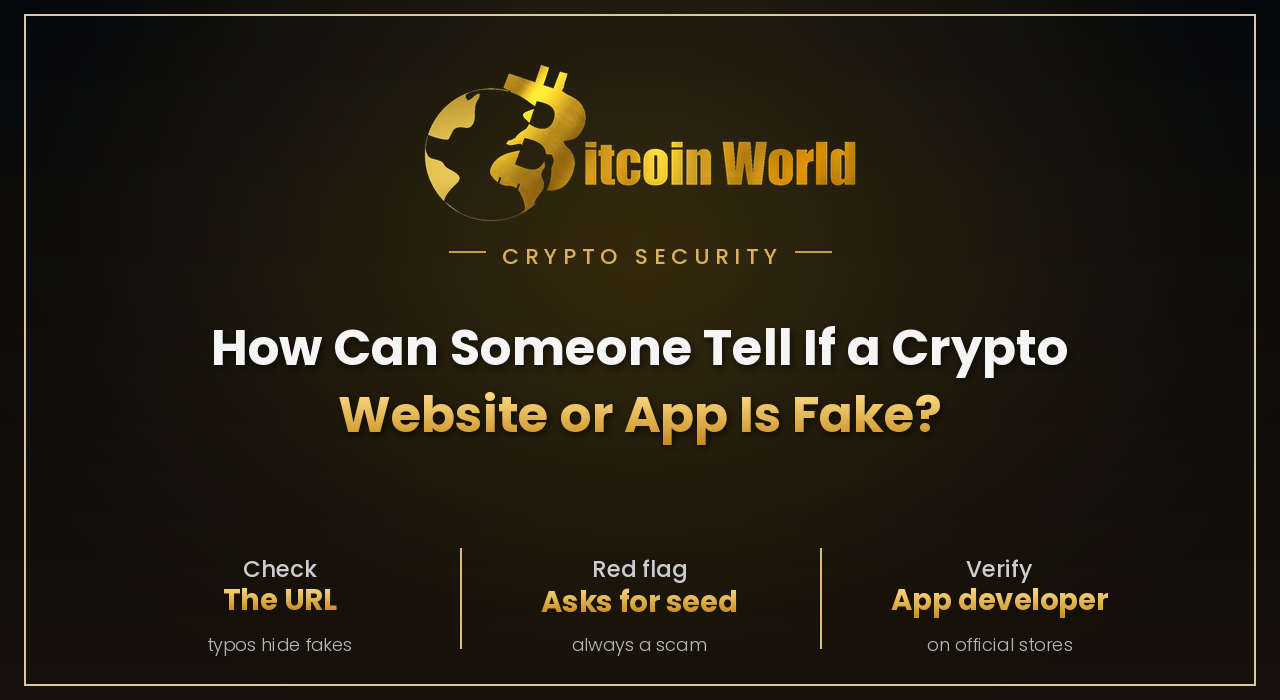
How Can Someone Tell If a Crypto Website or App Is Fake?
Telling if a crypto website or app is fake is an increasingly urgent skill as scam platforms grow more sophisticated and more numerous. A fake site or app can drain an entire wallet the moment you enter your seed phrase or make a deposit. This article covers the clear warning signs of a fraudulent platform, how to verify any site or app before using it, the specific tactics used against Indian users, and what to do if something already seems wrong.
How Can Someone Tell If a Crypto Website or App Is Fake?
Recognizing a fake crypto website or app starts with checking a few basic details that scammers almost always get slightly wrong.
- URL typos: Fake sites use near-identical URLs – “metamask.io” vs “metarnask.io” or “binance.com” vs “binannce.com.”
- Unofficial download sources: Legitimate wallets are only available from official websites or verified app store listings.
- Asks for seed phrase upfront: Any wallet or platform that requests your seed phrase to “connect,” “restore,” or “verify” is a scam.
- No verifiable history: Fake platforms have no credible team, no audit trail, and no presence on trusted review sites.
What Are the Most Common Red Flags on a Fake Crypto Platform?
Beyond the URL, several additional signals reveal a fraudulent platform.
- Guaranteed returns: No legitimate crypto platform promises fixed daily or weekly returns.
- Pressure tactics: “Limited time offer,” “your wallet will be suspended,” or “act now” language is engineered to bypass skepticism.
- Poorly written content: Grammar errors, inconsistent branding, and broken links are common on hastily built fake sites.
- Unverifiable team: Fake profiles, stock photos as team members, and no traceable history are serious warning signs.
How Can You Verify a Crypto Website or App Before Using It?
A short verification process protects you from almost all fake platforms.
- Go directly to the URL: Never click links in emails, Telegram messages, or ads – type the official URL yourself or use a bookmark.
- Check the app developer: On app stores, verify the exact developer name matches the official company, and check the number of reviews and ratings.
- Cross-reference on trusted sites: Confirm token or exchange details on CoinGecko or CoinMarketCap and follow the official links from there.
- Look for the padlock: A valid SSL certificate (https) is a basic minimum – though fake sites can have it too, so it’s a necessary but not sufficient check.
What Tactics Do Scammers Use Against Indian Crypto Users?
India sees several particularly common fake-platform patterns.
- WhatsApp and Telegram promotions: Fake investment platforms are heavily promoted via messaging apps, promising high returns.
- Google ad impersonation: Scam sites sometimes appear above official results through paid ads with similar URLs.
- Fake “Indian” exchanges: Counterfeit platforms claim to be regulated Indian exchanges with fake SEBI or RBI badges.
- Fake airdrop sites: Promises of free tokens that require connecting a wallet or entering a seed phrase to “claim.”
Frequently Asked Questions
How can you tell if a crypto app is fake before downloading it?
Check the exact developer name on the app store against the official company website, look at the number of downloads and reviews, and verify the app is listed on the official website you navigated to independently. Never download a crypto app from a link in a message or email. Legitimate apps have hundreds of thousands of reviews and are listed only on official stores.
What should you do if you’ve already used a fake crypto website?
If you entered your seed phrase, move all funds to a new wallet with a freshly generated seed phrase immediately – assume everything in the old wallet is compromised. If you made a deposit to a fake platform, report it to India’s cybercrime portal and the 1930 helpline. Acting within minutes after recognising a fake gives you the best chance of saving remaining funds.
Are fake crypto websites easy to spot?
They’re getting harder to detect visually, but the process of entry almost always reveals them – the URL is slightly wrong, they ask for a seed phrase, or they make impossible guarantees. The safest habit is never clicking crypto links from unverified sources, always navigating directly to known URLs, and treating any seed phrase request as an immediate disqualifier.
Conclusion: Why Verification Takes Seconds but Saves Everything
Knowing how to tell if a crypto website or app is fake is one of the most practical skills any Indian crypto user can build – because the platforms exist, they’re convincing, and they cause real, irreversible losses. The verification routine is short: check the URL character by character, confirm the developer, look it up on a trusted source, and refuse any seed phrase request. Build that habit once, and fake platforms lose almost all their power to deceive.
Disclaimer: The information provided is not trading advice, Bitcoinworld.co.in holds no liability for any investments made based on the information provided on this page. We strongly recommend independent research and/or consultation with a qualified professional before making any investment decisions.