

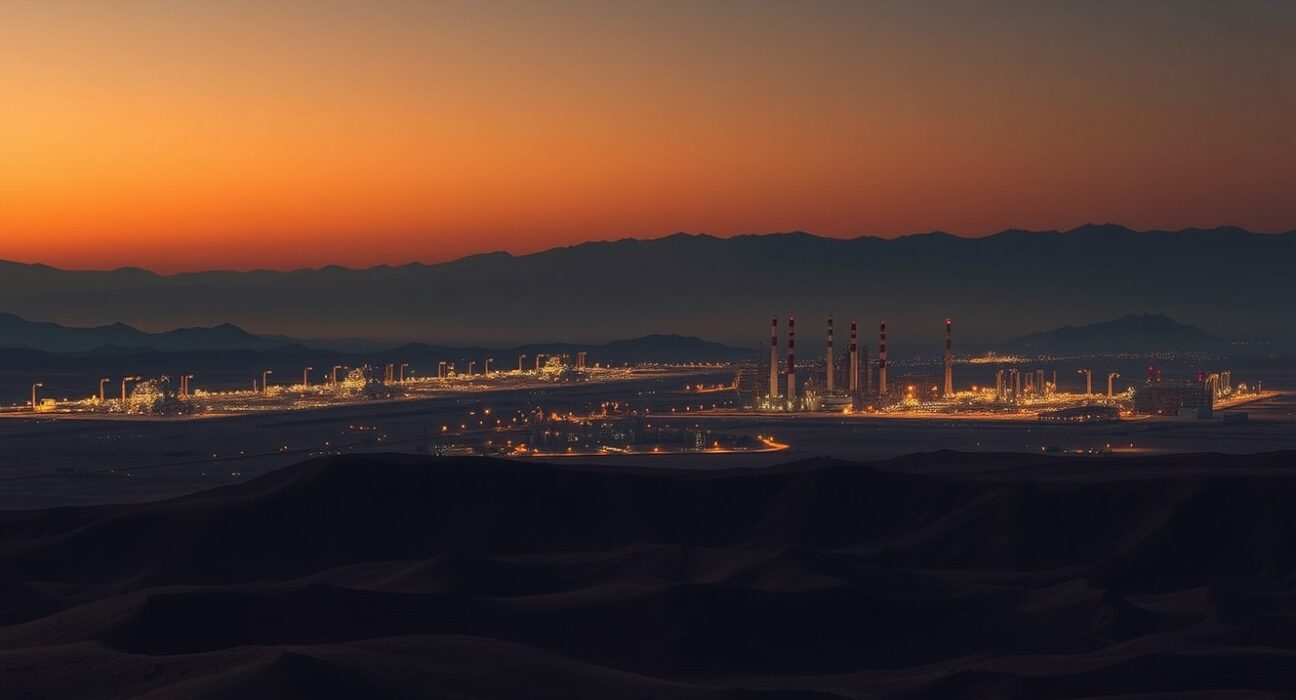
In a significant escalation of regional hostilities, the Israel Defense Forces (IDF) launched a series of targeted attacks on military and infrastructure sites in Isfahan, Iran, in March 2025. Consequently, these strikes mark a dangerous new phase in the long-standing shadow war between the two nations. Furthermore, the operation targeted facilities linked to Iran’s drone and missile programs, according to regional security analysts. This development immediately raises urgent questions about the potential for a wider, direct conflict.
IDF Attacks on Isfahan: Strategic Targets and Immediate Aftermath
The IDF conducted precision strikes on several locations within the Isfahan province. This region hosts critical Iranian defense infrastructure. Specifically, analysts identify targets likely included drone manufacturing complexes and missile storage depots. Initial reports from international observers indicated explosions and significant fire activity at the sites. However, Iranian state media initially downplayed the extent of the damage. Subsequently, satellite imagery analysts provided visual evidence of impact craters and structural damage at several facilities. The Israeli government maintained its customary policy of strategic ambiguity, offering no official comment on the operation.
Isfahan’s strategic importance cannot be overstated. The province is a cornerstone of Iran’s military-industrial complex. For instance, key installations include:
- UAV Production Facilities: Centers for manufacturing Shahed-136 drones used by Iranian proxies.
- Missile Technology Centers: Research and development sites for ballistic and cruise missiles.
- Nuclear Research Sites: The Isfahan Uranium Conversion Facility, though reports suggest it was not struck.
Regional powers monitored the situation with extreme concern. Moreover, global oil markets reacted with immediate volatility. Brent crude prices jumped over 4% in early trading following the news. This reaction underscores the high stakes for international energy security.
Historical Context and Escalating Shadow War
The March 2025 strikes did not occur in a vacuum. Instead, they represent a sharp intensification of a years-long conflict. Previously, Israel has conducted numerous covert operations inside Iran. These actions targeted nuclear scientists, cyber infrastructure, and individual facilities. However, the scale and overt nature of the Isfahan attacks represent a clear shift in tactics. This move from covert sabotage to overt military strikes signals a calculated escalation.
A brief timeline of recent escalations includes:
| Date | Event | Context |
|---|---|---|
| Early 2024 | Major cyberattack on Iranian fuel distribution | Attributed to Israel by security firms. |
| Late 2024 | Strike on Iranian IRGC officials in Syria | Led to vows of retaliation from Tehran. |
| Jan 2025 | Iranian proxy attacks on northern Israel | Increased rocket and drone barrages. |
| Mar 2025 | IDF strikes on Isfahan | Direct attack on Iranian sovereign territory. |
This pattern reveals a deteriorating deterrence equation. Both nations have progressively tested red lines. Therefore, the risk of miscalculation is now critically high.
Military and Geopolitical Analysis
Security experts point to several strategic calculations behind the IDF’s move. Primarily, the operation aims to degrade Iran’s capacity to arm its proxies. These groups, like Hezbollah and the Houthis, have sustained attacks on Israeli and international interests. By striking production sources, Israel hopes to constrict the supply chain at its origin. Additionally, the strikes demonstrate a capability and willingness to penetrate Iranian air defenses. This demonstration serves as a powerful deterrent message.
Nevertheless, the risks are profound. A direct Iranian military response against Israel remains possible. Such a response could involve ballistic missile launches or activating Hezbollah’s extensive rocket arsenal. Consequently, the entire Levant could be drawn into a major war. Global diplomacy is now intensely focused on de-escalation. The United Nations Security Council held an emergency session following the attacks.
Global Reactions and Economic Implications
International responses were swift and varied. The United States reiterated its “ironclad” commitment to Israel’s security but called for restraint. European Union foreign policy chiefs expressed deep alarm and urged immediate de-escalation. Conversely, Russia and China condemned the strikes as a violation of international law and Iranian sovereignty. Regional actors like Saudi Arabia and the UAE, while quietly aligned against Iranian influence, publicly called for calm.
The economic implications extend far beyond the initial oil price spike. Key concerns include:
- Strait of Hormuz Security: Any conflict threatens this vital chokepoint for 20% of global oil.
- Global Supply Chains: Disruption to shipping routes in the Persian Gulf and Red Sea.
- Defense Postures: Nations may increase military spending, affecting global budgets.
Market analysts are preparing for sustained volatility. Furthermore, insurance premiums for shipping in the region have already increased sharply.
Conclusion
The IDF attacks on Isfahan represent a pivotal and perilous moment in Middle Eastern geopolitics. This direct military action significantly raises the stakes in the Israel-Iran conflict. The immediate focus is on whether Iran will choose a proportional response or a major escalation. Meanwhile, the international community faces a formidable challenge in preventing a regional war. Ultimately, the events in Isfahan underscore the fragile nature of security in a region where a single strike can alter the strategic landscape for years to come.
FAQs
Q1: What is the significance of Isfahan to Iran’s military?
Isfahan province is a major hub for Iran’s defense industry, hosting critical facilities for drone manufacturing, missile technology, and nuclear research, making it a high-value strategic target.
Q2: Why did Israel likely choose to strike now?
Analysts suggest the strikes aim to preemptively degrade Iran’s ability to supply weapons to proxies like Hezbollah, following increased attacks, and to demonstrate capability against Iranian air defenses.
Q3: Has Iran directly retaliated against Israel before?
Iran has largely relied on its network of proxy forces for retaliation. Direct state-on-state military strikes between Iran and Israel have been rare, making this escalation particularly significant.
Q4: What are the risks of a wider war?
The primary risk is an Iranian direct missile attack on Israel, which could trigger a full-scale Israeli counterattack and potentially draw in Iranian proxies, leading to a multi-front regional conflict.
Q5: How are global markets affected?
Oil prices surged due to fears of supply disruption from the Persian Gulf. Continued instability could lead to higher energy costs globally and disrupt key shipping lanes, impacting supply chains.
Disclaimer: The information provided is not trading advice, Bitcoinworld.co.in holds no liability for any investments made based on the information provided on this page. We strongly recommend independent research and/or consultation with a qualified professional before making any investment decisions.
