

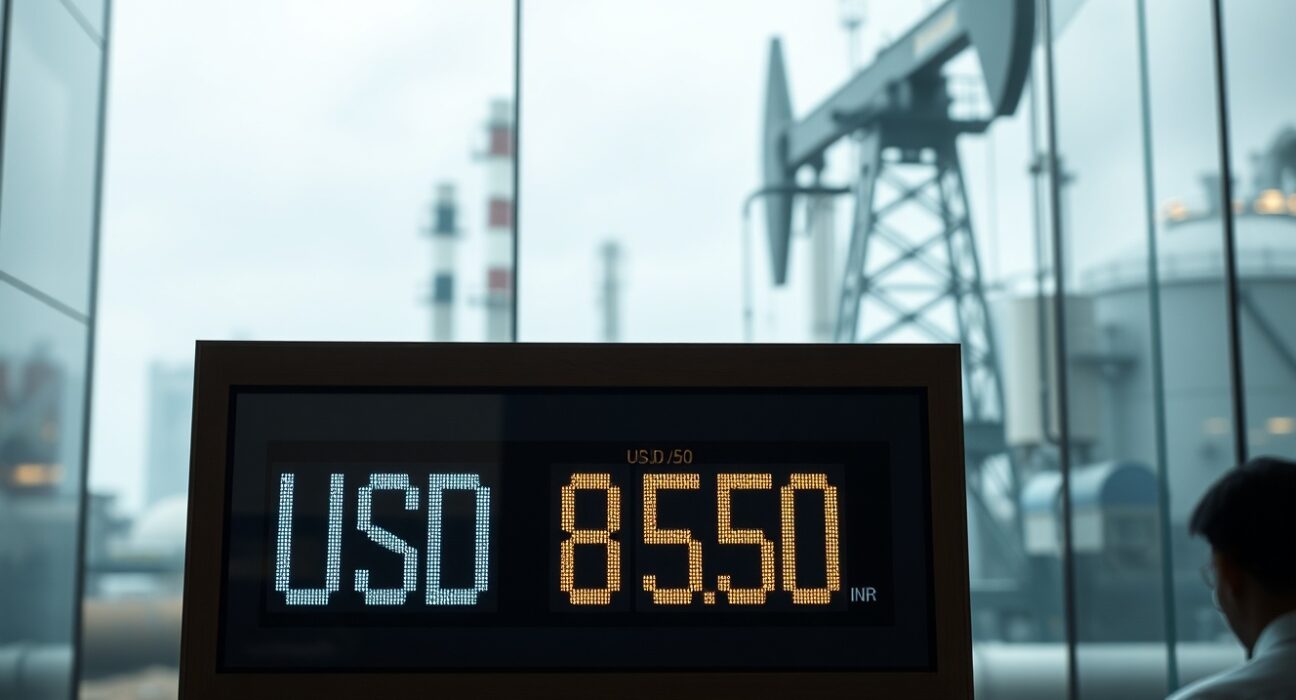
The Indian rupee traded in a narrow range against the US dollar on Tuesday, holding near its previous close as a recovery in global crude oil prices dampened the currency’s outlook. The local unit opened at 85.52 per dollar and moved within a tight band, reflecting caution among traders ahead of key domestic and global economic data.
Oil price recovery pressures rupee
Brent crude futures climbed above $78 per barrel during Asian trading hours, extending gains from the previous session. The rise in oil prices is a headwind for the rupee, as India imports roughly 85% of its crude oil requirements. A sustained increase in the import bill widens the current account deficit and adds to inflationary pressures, making the currency more vulnerable to depreciation.
The recovery in oil prices comes amid supply concerns following output cuts by major producers and geopolitical tensions in the Middle East. Analysts note that any further escalation could push crude higher, putting additional strain on the rupee.
RBI intervention and dollar dynamics
The Reserve Bank of India (RBI) is widely believed to have intervened in the forex market through state-run banks, selling dollars to prevent a sharp depreciation of the rupee. Such interventions have historically helped cap volatility, but they deplete foreign exchange reserves over time.
Meanwhile, the US dollar index remained firm near 104.5, supported by expectations that the Federal Reserve will keep interest rates higher for longer. A strong dollar typically exerts downward pressure on emerging market currencies, including the rupee.
Impact on importers and consumers
A weaker rupee raises the cost of imported goods, from crude oil to electronics and machinery. For Indian consumers, this could translate into higher fuel prices and imported inflation. Companies that rely on imported raw materials may see margins squeezed, potentially affecting corporate earnings.
On the positive side, export-oriented sectors such as IT services, textiles, and pharmaceuticals may benefit from a weaker rupee, as their products become more competitive in global markets.
Conclusion
The Indian rupee remains caught between opposing forces: rising oil prices and a strong dollar on one side, and RBI intervention and relatively stable domestic macroeconomic fundamentals on the other. Traders are now watching for cues from US inflation data and the RBI’s monetary policy stance later this month. For now, the currency is likely to remain range-bound with a slight depreciation bias.
FAQs
Q1: Why does the Indian rupee weaken when oil prices rise?
India is a major crude oil importer. Higher oil prices increase the country’s import bill, widening the current account deficit and putting downward pressure on the rupee.
Q2: How does the RBI defend the rupee?
The RBI intervenes in the forex market by selling US dollars from its reserves through public sector banks. It can also raise interest rates or use macroprudential measures to support the currency.
Q3: What is the outlook for the USD/INR pair?
Most analysts expect the rupee to trade between 85.20 and 85.80 in the near term, with the bias tilted toward depreciation if oil prices continue to rise or if the dollar strengthens further.
Disclaimer: The information provided is not trading advice, Bitcoinworld.co.in holds no liability for any investments made based on the information provided on this page. We strongly recommend independent research and/or consultation with a qualified professional before making any investment decisions.
