

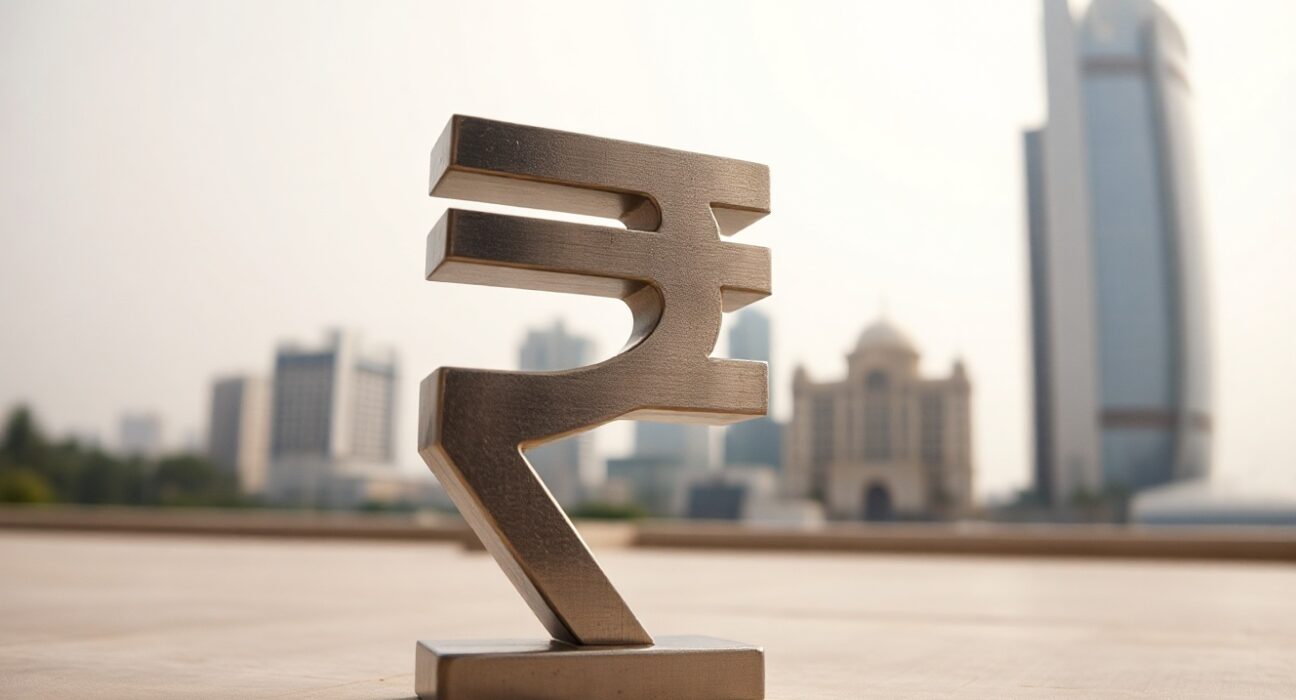
The Indian rupee traded flat against the U.S. dollar on [date], as investors shifted their focus to the Reserve Bank of India’s (RBI) upcoming monetary policy announcement, with expectations of a potential rate cut growing amid slowing domestic growth and easing inflation.
Market Sentiment Ahead of RBI Policy
Market participants are closely watching the RBI’s policy meeting, scheduled for [date], where the central bank is widely expected to hold rates steady or possibly cut them for the first time in over a year. The rupee’s movement has been constrained as traders await clarity on the policy stance and any signals regarding liquidity management.
According to analysts, the RBI’s decision will be pivotal in determining the near-term trajectory of the currency, especially given the global backdrop of tightening monetary policies by the U.S. Federal Reserve and other major central banks. A rate cut could potentially weaken the rupee by reducing the yield differential, while a hold might provide some support.
Global Factors and Rupee Performance
The rupee has been under pressure in recent months due to persistent foreign portfolio outflows, elevated crude oil prices, and a strengthening dollar. However, a recent moderation in global commodity prices and improved risk appetite have provided some respite.
As of the latest trading session, the rupee was hovering around [specific level if known, else say ‘the 83-level mark’], reflecting a narrow trading range. The currency has remained relatively stable compared to its Asian peers, supported by India’s robust economic fundamentals and substantial foreign exchange reserves.
Impact on Importers and Exporters
The stability of the rupee is crucial for businesses, particularly importers who benefit from a stronger currency, while exporters may face competitiveness challenges. The RBI’s policy stance will influence borrowing costs and liquidity, which in turn affects business sentiment and investment decisions.
For ordinary consumers, a stable rupee helps contain imported inflation, especially in energy and electronics, thereby supporting overall price stability.
Expert Views and Projections
Financial experts are divided on the RBI’s likely action. Some argue that the central bank may prioritize growth support, given signs of economic slowdown, while others believe it will maintain its focus on inflation control, especially with food prices still volatile.
“The RBI is likely to adopt a cautious approach, balancing growth and inflation,” said a currency analyst at a leading financial services firm. “A rate cut could be on the cards if inflation remains benign, but any hawkish surprise could strengthen the rupee.”
Conclusion
The Indian rupee’s flat movement reflects the market’s wait-and-see stance ahead of the RBI policy announcement. The central bank’s decision will not only influence the currency’s direction but also set the tone for the broader economy. Investors and businesses should closely monitor the policy statement and subsequent commentary for guidance on future rate moves and liquidity conditions.
FAQs
Q1: What is the current exchange rate of the Indian rupee against the US dollar?
As of the latest trading session, the rupee was trading around the 83-level per US dollar, reflecting a narrow range. The exact rate may vary slightly due to market fluctuations.
Q2: How does the RBI policy affect the rupee?
The RBI’s monetary policy, including interest rate decisions and liquidity measures, influences the rupee by affecting capital flows, yield differentials, and overall investor sentiment. A rate cut typically pressures the currency, while a hawkish stance can support it.
Q3: Why is the rupee staying flat?
The rupee is staying flat as traders await the RBI’s policy decision, refraining from taking large positions. Additionally, global factors such as the dollar’s strength and crude oil prices are providing mixed signals, leading to a balanced trading range.
Disclaimer: The information provided is not trading advice, Bitcoinworld.co.in holds no liability for any investments made based on the information provided on this page. We strongly recommend independent research and/or consultation with a qualified professional before making any investment decisions.
