

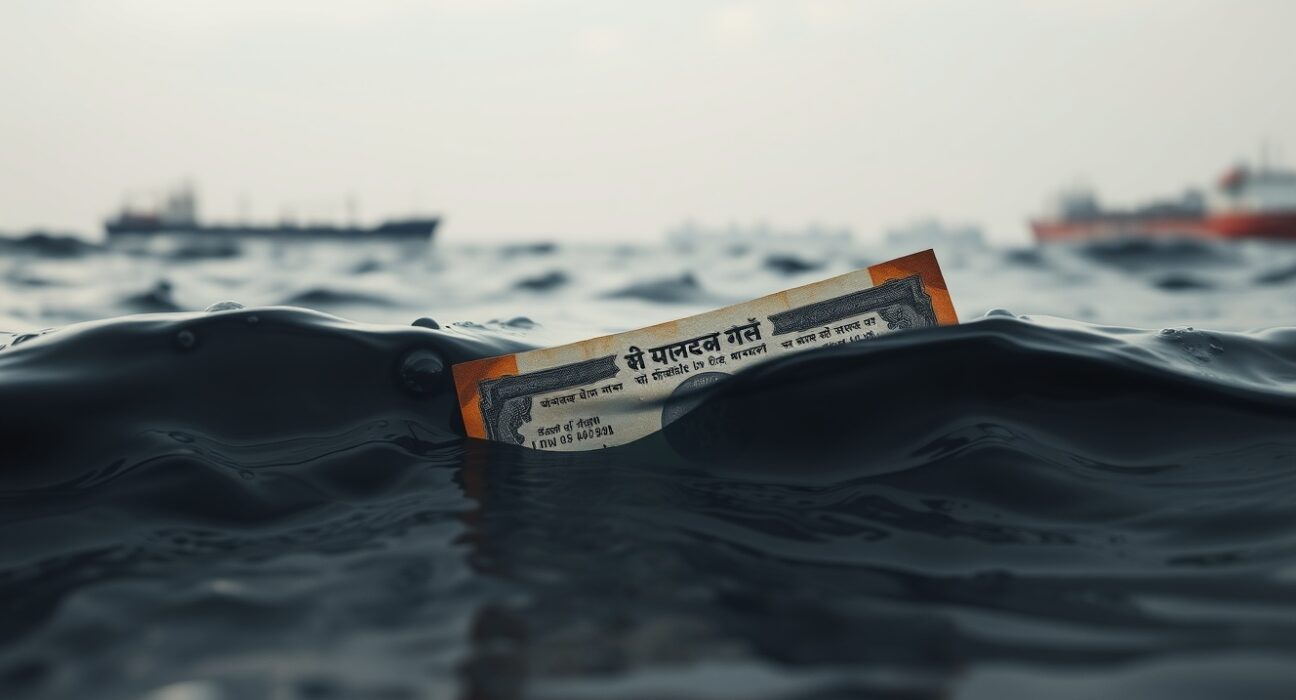
The Indian Rupee experienced a sharp decline against the US Dollar on Monday, following reports that the United States has asserted its right to collect a toll fee from vessels transiting the Strait of Hormuz. The move has raised concerns about increased trade costs and potential disruptions to oil supplies, sending shockwaves through currency markets.
What Triggered the Rupee’s Decline?
The US administration’s claim to levy a toll on commercial shipping passing through the strategic waterway has been met with surprise and concern. The Strait of Hormuz is a critical chokepoint for global oil shipments, with a significant portion of India’s crude oil imports passing through it. The prospect of an additional fee has heightened uncertainty, prompting investors to move away from risk-sensitive assets like the Rupee.
Immediate Market Reaction
In early trading, the Rupee weakened past the 84 mark against the US Dollar, a level not seen in recent weeks. The decline was broad-based, with the currency falling against the Euro and other major currencies as well. The Indian stock market also saw a dip, with the BSE Sensex and Nifty 50 indices losing ground as energy and logistics stocks were hit hardest.
Why This Matters for India
India is heavily dependent on oil imports, and any increase in shipping costs or disruption in supply can have a cascading effect on the economy. A weaker Rupee makes imports more expensive, potentially fueling inflation and widening the trade deficit. For consumers, this could mean higher prices for fuel and imported goods. The government and the Reserve Bank of India are likely to monitor the situation closely, with possible interventions to stabilize the currency.
Broader Geopolitical Context
The US claim to a Hormuz toll fee is part of a broader strategy to exert control over global shipping lanes. While the legal basis for such a fee remains contested under international maritime law, the US has signaled its intent to enforce it. This has drawn criticism from several nations, including India, which views the move as a violation of freedom of navigation. The situation remains fluid, with diplomatic channels expected to be active in the coming days.
Conclusion
The sharp fall in the Indian Rupee underscores the vulnerability of emerging market currencies to geopolitical shocks. As the situation in the Strait of Hormuz develops, market participants will be watching for any signs of de-escalation or further escalation. For now, the Rupee remains under pressure, with the immediate outlook hinging on diplomatic outcomes and the response from global shipping and oil markets.
FAQs
Q1: What is the Strait of Hormuz toll fee?
The US has claimed the right to charge a fee for vessels passing through the Strait of Hormuz, a key oil shipping route. The legal basis and enforcement mechanism are still unclear.
Q2: How does this affect the Indian Rupee?
The Rupee weakened due to fears of higher trade costs and potential oil supply disruptions, which could increase India’s import bill and fuel inflation.
Q3: What can the RBI do to support the Rupee?
The Reserve Bank of India can intervene in the forex market by selling US Dollars from its reserves, or adjust interest rates to attract foreign investment and stabilize the currency.
Disclaimer: The information provided is not trading advice, Bitcoinworld.co.in holds no liability for any investments made based on the information provided on this page. We strongly recommend independent research and/or consultation with a qualified professional before making any investment decisions.
