

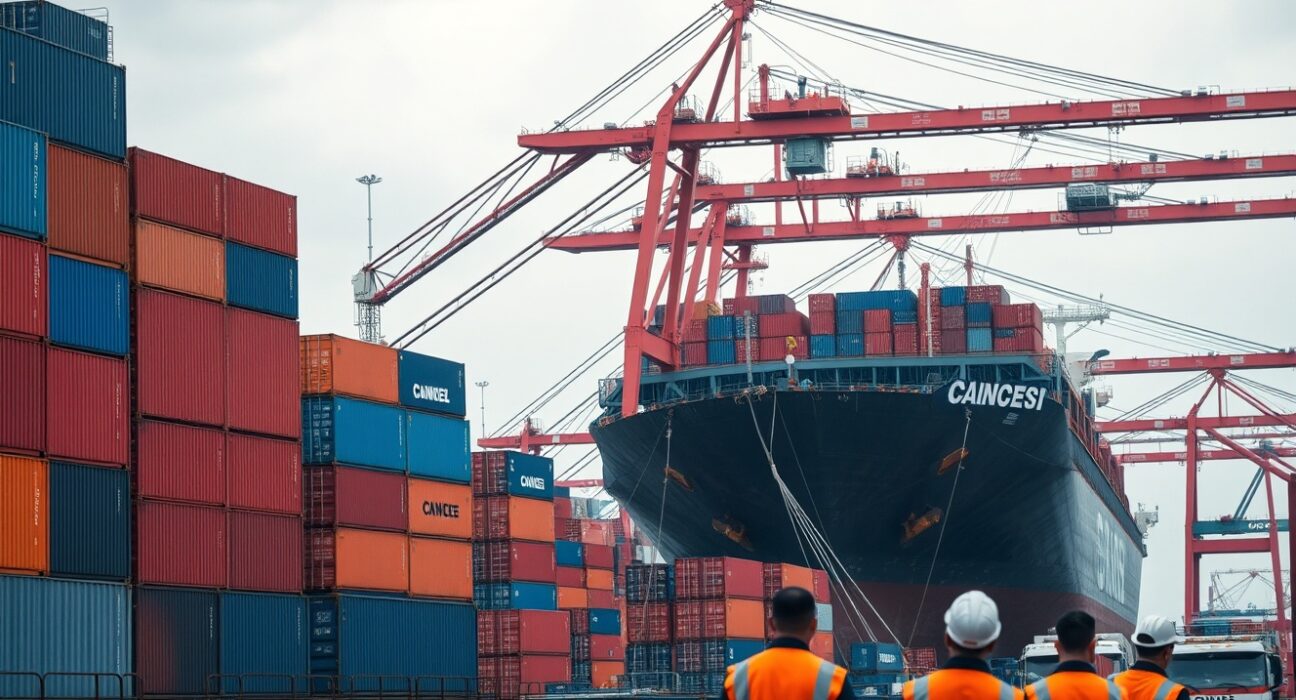
Indonesia’s export performance in May fell short of market expectations, recording a year-on-year contraction of 5.73%, according to official data released by the Central Statistics Agency (BPS). Economists had forecast a modest growth of 6.4%, making the actual figure a significant miss that underscores ongoing headwinds in global trade.
Trade Data Breakdown
The decline was primarily driven by lower shipments of key commodities, including coal, palm oil, and nickel products, which together account for a substantial share of Indonesia’s export revenue. On a month-on-month basis, exports also fell by 2.1%, signaling weakening demand from major trading partners such as China, India, and Japan.
Imports, meanwhile, rose by 2.8% year-on-year, narrowing Indonesia’s trade surplus to $2.9 billion in May, down from $3.5 billion in the same month last year. The shrinking surplus could put pressure on the rupiah and influence Bank Indonesia’s monetary policy stance in the coming months.
Commodity Price Headwinds
Global commodity prices have softened since the post-pandemic rally, with thermal coal prices dropping nearly 30% from their 2023 highs. Palm oil prices have also retreated amid ample global supplies and weaker demand from the biofuel sector. Indonesia, as the world’s largest exporter of both thermal coal and palm oil, is particularly sensitive to these price fluctuations.
The mining sector, which includes nickel and copper, also faced headwinds. While Indonesia has aggressively expanded its nickel processing capacity to supply the electric vehicle battery supply chain, lower global nickel prices have squeezed margins for local producers.
Impact on Economic Growth
The weaker export data adds to concerns about Indonesia’s economic momentum in the second quarter. Gross domestic product (GDP) grew 5.11% year-on-year in the first quarter, but analysts now expect a potential slowdown if the export slump continues. Private consumption, which contributes more than half of GDP, remains resilient, but a prolonged trade downturn could dampen business investment and employment in export-oriented sectors.
Finance Minister Sri Mulyani Indrawati has previously acknowledged that global economic uncertainty and geopolitical tensions pose risks to Indonesia’s trade outlook. The government is relying on domestic demand and infrastructure spending to offset external weakness.
Regional and Global Context
Indonesia’s export performance mirrors broader trends across Southeast Asia. Vietnam and Thailand have also reported weaker-than-expected trade data in recent months, as the global economic recovery remains uneven. The International Monetary Fund (IMF) has warned that trade fragmentation and rising protectionism could further disrupt supply chains and dampen export growth for emerging economies.
For Indonesia, the challenge is compounded by its reliance on a narrow range of commodity exports. Efforts to diversify into higher-value manufactured goods, such as electronics and automotive components, are still in early stages.
Conclusion
Indonesia’s May export contraction of 5.73% against a 6.4% forecast highlights the vulnerability of the country’s trade sector to global commodity price cycles and weakening demand from key partners. While domestic consumption remains a buffer, policymakers face mounting pressure to accelerate economic diversification and safeguard external balances. The coming months will be critical in determining whether this is a temporary dip or the start of a more prolonged slowdown.
FAQs
Q1: Why did Indonesia’s exports fall in May?
Exports declined primarily due to lower global prices for key commodities such as coal, palm oil, and nickel, combined with weaker demand from major trading partners like China and India.
Q2: How does the export miss affect Indonesia’s economy?
A sustained export slump could narrow the trade surplus, pressure the rupiah, and slow GDP growth, though private consumption and government spending provide some offset.
Q3: What is the outlook for Indonesia’s trade in the second half of 2024?
Outlook remains uncertain, hinging on global commodity price trends, China’s economic recovery, and potential shifts in monetary policy. Diversification away from commodity exports is seen as a long-term solution.
Disclaimer: The information provided is not trading advice, Bitcoinworld.co.in holds no liability for any investments made based on the information provided on this page. We strongly recommend independent research and/or consultation with a qualified professional before making any investment decisions.
