

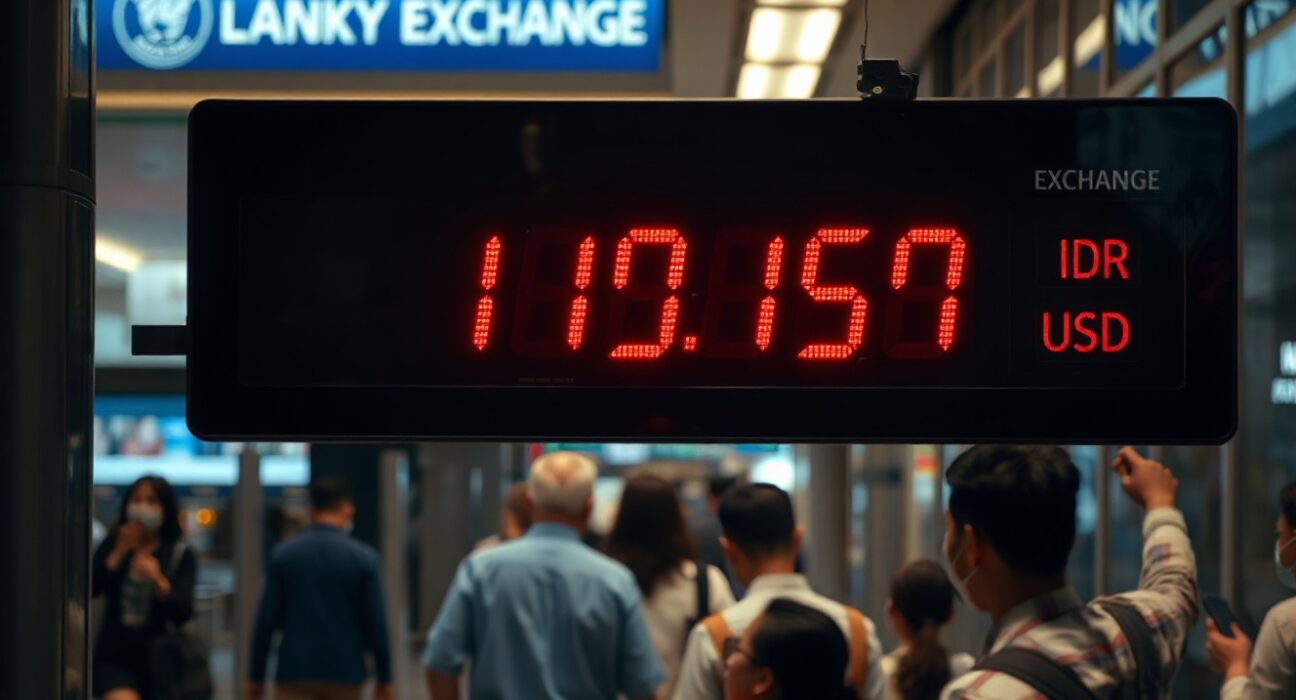
The Indonesian rupiah extended its decline against the US dollar on Wednesday, as renewed military friction between the United States and Iran triggered a flight to safe-haven assets, putting additional pressure on emerging market currencies already navigating a volatile global environment.
Renewed Geopolitical Risk Weighs on Sentiment
Reports of increased US military deployments near the Persian Gulf and heightened rhetoric from both Washington and Tehran over the past 48 hours have reignited fears of a broader conflict in the Middle East. For emerging markets like Indonesia, which rely heavily on energy imports and foreign capital flows, geopolitical instability often translates into currency depreciation and higher borrowing costs.
The rupiah, which had been trading in a relatively narrow range in recent weeks, weakened past the 15,600 level against the greenback in early Asian trading, according to data from local foreign exchange brokers. The currency has now lost roughly 2.5% of its value since the beginning of the year, with the latest slide accelerating as investors rotated into the US dollar, gold, and other traditional safe havens.
Market Mechanics: Why Tensions Hit the Rupiah
Currency analysts point to two primary channels through which US-Iran tensions affect the Indonesian rupiah. First, the risk-off sentiment drives capital outflows from emerging markets, as global investors reduce exposure to higher-yielding but riskier assets. Second, the threat of supply disruptions in the Middle East pushes global oil prices higher, increasing Indonesia’s import bill and widening its current account deficit.
Indonesia is a net importer of crude oil and petroleum products. A sustained rise in global oil prices, such as the 3% jump seen in Brent crude on Wednesday, directly pressures the country’s trade balance and, by extension, the rupiah. Bank Indonesia has intervened in the spot and forward markets to smooth volatility, but analysts say the central bank’s ability to defend a specific level is limited if geopolitical risks persist.
Broader Emerging Market Contagion
The rupiah’s decline is not an isolated event. Other Asian currencies, including the Thai baht, South Korean won, and Indian rupee, also weakened against the dollar on Wednesday. The MSCI Emerging Markets Currency Index fell for a second consecutive session, reflecting a broad-based shift in sentiment. However, the rupiah has been among the worst performers in the region this year, partly due to domestic factors such as uncertainty over fiscal policy and slower-than-expected export growth.
“The rupiah is particularly vulnerable because Indonesia’s external financing needs are high, and foreign ownership of local government bonds remains significant,” said a senior currency strategist at a Jakarta-based brokerage. “Any escalation in the Middle East triggers a double whammy — capital outflows and higher import costs.”
Conclusion
The Indonesian rupiah’s decline reflects the immediate market reaction to fresh US-Iran military tensions, but the currency’s underlying vulnerability stems from structural factors, including a reliance on energy imports and foreign capital. While Bank Indonesia has tools to manage short-term volatility, the direction of the rupiah in the coming weeks will largely depend on whether the geopolitical situation de-escalates or deteriorates further. Investors and businesses with exposure to Indonesian markets should monitor developments closely and consider hedging strategies.
FAQs
Q1: Why does US-Iran military tension affect the Indonesian rupiah?
Geopolitical tensions drive global investors toward safe-haven assets like the US dollar, reducing demand for emerging market currencies. Additionally, the risk of higher oil prices increases Indonesia’s import costs, worsening its trade balance and putting downward pressure on the rupiah.
Q2: Has Bank Indonesia intervened to support the rupiah?
Yes, Bank Indonesia has conducted intervention in both the spot foreign exchange market and the domestic non-deliverable forward (DNDF) market to smooth excessive volatility. However, sustained intervention is limited by foreign reserves and market conditions.
Q3: What level could the rupiah reach if tensions escalate further?
Forecasts remain uncertain due to the fluid geopolitical situation. Some analysts suggest the rupiah could test the 15,800 level against the US dollar if oil prices rise above $90 per barrel and capital outflows accelerate. A de-escalation could see the currency recover toward 15,300.
Disclaimer: The information provided is not trading advice, Bitcoinworld.co.in holds no liability for any investments made based on the information provided on this page. We strongly recommend independent research and/or consultation with a qualified professional before making any investment decisions.
