

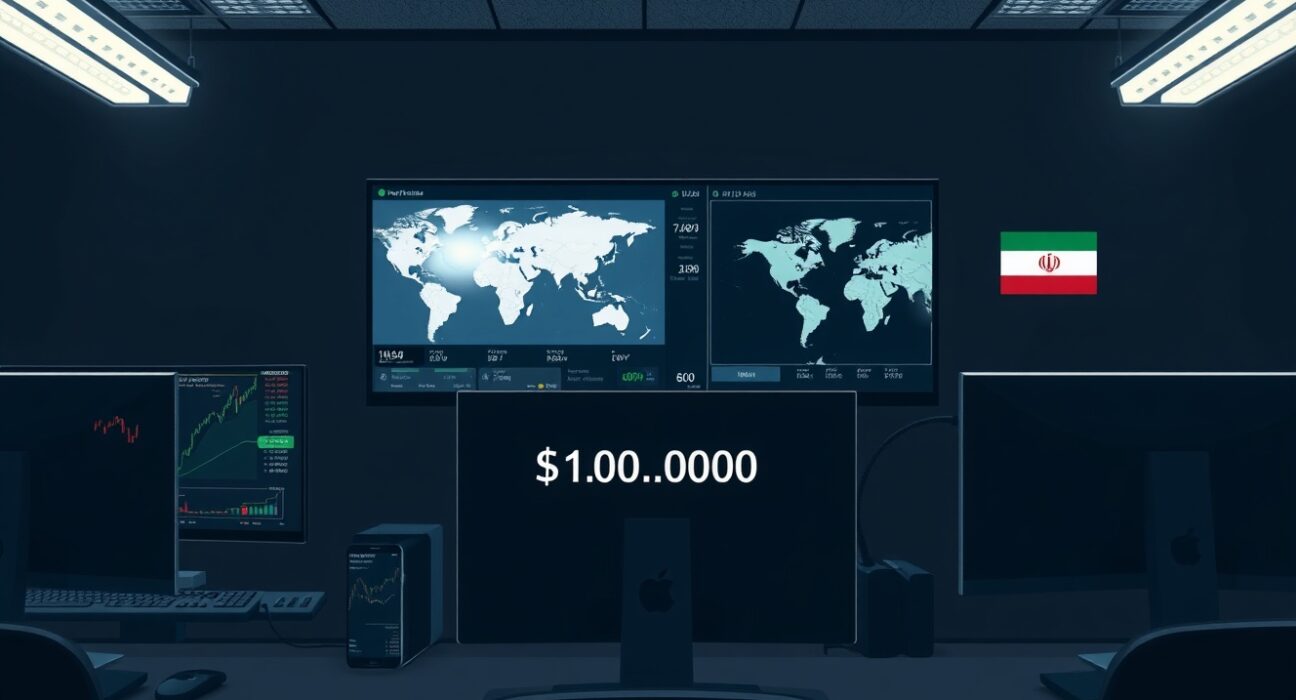
In a stunning development that merges high-stakes geopolitics with decentralized finance, six cryptocurrency wallets suspected of insider trading have placed a $100,000 wager predicting a ceasefire between the United States and Iran by March 31, 2025. This bold move follows their previous, highly accurate bet that netted $1.2 million. The activity, first reported by BeInCrypto, spotlights the growing intersection of global events and blockchain-based prediction markets, raising urgent questions about market integrity and regulatory oversight in the digital age.
Suspected Insider Wallets Target Geopolitical Ceasefire
The core of this story involves a specific cluster of digital wallets on the Ethereum blockchain. These wallets recently deployed $100,000 in USDC stablecoin on the prediction market platform Polymarket. Their bet is straightforward: they predict the United States and Iran will formally agree to a ceasefire before the clock strikes midnight on March 31, 2025. This is not their first foray into geopolitical forecasting. Notably, these same wallets previously executed a highly profitable trade. They accurately predicted a U.S. military action against Iran on February 28, 2025. That single wager generated a staggering profit of approximately $1.2 million for the entities behind the addresses.
Blockchain analysts immediately flagged the pattern. The sequence of events—a large, precise bet on a specific future military action followed by a similarly large bet on its diplomatic resolution—suggests access to non-public information. Consequently, the term “insider trading” now applies beyond traditional stock markets. It now extends to the nascent world of crypto prediction markets. These markets allow users to speculate on real-world outcomes, from election results to weather events.
- Prediction Market: A platform where users trade shares based on the outcome of future events.
- USDC (USD Coin): A cryptocurrency stablecoin pegged 1:1 to the U.S. dollar.
- Blockchain Analysis: The process of inspecting public ledger data to track transactions and identify patterns.
The Mechanics and Risks of Crypto Prediction Markets
Platforms like Polymarket operate using smart contracts on blockchain networks. Users buy “Yes” or “No” shares on specific event resolutions. If the event occurs as predicted, “Yes” shares settle at $1.00 each. “No” shares become worthless. This creates a transparent, global betting pool. However, this transparency is a double-edged sword. While all transactions are public, the identities behind wallet addresses are typically pseudonymous. This pseudonymity presents a significant challenge for enforcement agencies. They must connect digital activity to real-world individuals.
The current US-Iran ceasefire market on Polymarket has seen a notable surge in trading volume. It followed the placement of the $100,000 wager. This activity often influences market sentiment. Other traders may interpret large bets as credible signals. They might then follow suit, potentially distorting the market’s predictive accuracy. The core question remains: Do these wallets possess confidential diplomatic intelligence? Alternatively, are they executing a sophisticated, high-risk financial strategy based on public analysis? The wallets’ perfect track record on the prior military action bet heavily suggests the former.
Expert Analysis on Market Integrity and Regulation
Financial compliance experts point to a significant regulatory gap. Traditional insider trading laws, like those enforced by the U.S. Securities and Exchange Commission (SEC), govern securities markets. Prediction markets currently occupy a legal gray area. They are not clearly classified as securities, commodities, or gambling in many jurisdictions. This ambiguity complicates prosecution. However, legal scholars argue that using material, non-public information for profit constitutes fraud regardless of the platform. The Commodity Futures Trading Commission (CFTC) has previously targeted prediction markets for operating unregistered futures exchanges.
“This case is a canonical example of how decentralized technology outpaces regulation,” explains Dr. Anya Sharma, a professor of fintech law at Stanford University. “The blockchain provides an immutable record of the potential crime, yet the legal framework to definitively charge someone is still evolving. Authorities must prove the information was truly non-public and that the traders had a duty to abstain from using it—a complex task with anonymous global actors.” The situation underscores the need for updated financial regulations that address the unique attributes of decentralized finance (DeFi) and prediction markets.
Geopolitical Context of the US-Iran Conflict
To understand the magnitude of this bet, one must examine the underlying geopolitical event. Tensions between the United States and Iran have persisted for decades. They have centered on Iran’s nuclear program and regional influence. The reported U.S. military action on February 28, 2025, likely represents a significant escalation. A ceasefire by March 31 would indicate a rapid and unexpected diplomatic de-escalation. Such a turnaround would have profound global implications. It would affect oil markets, regional stability, and international security alliances.
Diplomatic sources often maintain strict confidentiality during sensitive negotiations. The mere existence of a large, confident bet on a specific short-term deadline could, in theory, jeopardize ongoing talks. If leaked, it might harden negotiating positions or reveal confidential progress timelines. This creates a dangerous feedback loop where financial markets could actively influence the very events they are trying to predict. The following table outlines the recent timeline of events connecting the markets to the conflict:
| Date | Event | Market Impact |
|---|---|---|
| Feb 28, 2025 | Reported U.S. military action against Iran | Suspected wallets earn ~$1.2M profit on accurate prediction |
| Early March 2025 | Diplomatic communications rumored | Polymarket ceasefire market opens |
| Mid-March 2025 | Suspected wallets place $100K bet | Market trading volume and price for “Yes” shares increase |
| March 31, 2025 | Contract resolution deadline | Wallets profit if ceasefire is formally declared |
Conclusion
The case of suspected insider wallets betting $100,000 on a US-Iran ceasefire represents a pivotal moment for cryptocurrency and prediction markets. It demonstrates their powerful role as sentiment gauges for global events. Simultaneously, it exposes critical vulnerabilities related to insider trading and market manipulation. The outcome of this wager will be closely watched. It will not only determine the profitability of the anonymous traders but also will likely intensify calls for regulatory clarity. As blockchain technology continues to permeate finance, establishing robust legal frameworks to ensure fair and transparent markets is an urgent global priority. The integrity of these new financial systems depends on it.
FAQs
Q1: What is Polymarket?
Polymarket is a decentralized prediction market platform built on blockchain technology. It allows users to trade cryptocurrency-based shares on the outcome of real-world events, such as elections, economic data releases, and geopolitical events like a potential US-Iran ceasefire.
Q2: How can wallets be suspected of insider trading?
Blockchain analysts can track wallet activity on public ledgers. A series of highly specific, large, and accurate bets on hard-to-predict future events—especially following a pattern of prior success on related confidential events—creates a strong circumstantial case for access to non-public information.
Q3: Is betting on prediction markets legal?
The legality varies by jurisdiction. In some regions, it may be considered a form of gambling or an unregulated financial market. In the United States, regulatory bodies like the CFTC have challenged certain prediction markets, arguing they may be illegal futures contracts.
Q4: What happens if no ceasefire is declared by March 31?
On Polymarket, if the ceasefire event does not resolve to “Yes” by the deadline, all “Yes” shares become worthless. The individuals behind the suspected wallets would lose the $100,000 used to purchase those shares.
Q5: Can the people behind these wallets be identified?
While wallet addresses are pseudonymous, identification is possible through investigative techniques. These include analyzing blockchain transactions for links to known, regulated cryptocurrency exchanges that require identity verification (KYC). Law enforcement can subpoena these exchanges for user data.
Disclaimer: The information provided is not trading advice, Bitcoinworld.co.in holds no liability for any investments made based on the information provided on this page. We strongly recommend independent research and/or consultation with a qualified professional before making any investment decisions.
